Lions Gate Bridge · 88th Birthday · 12 November 1938–2026 · 1938–2026
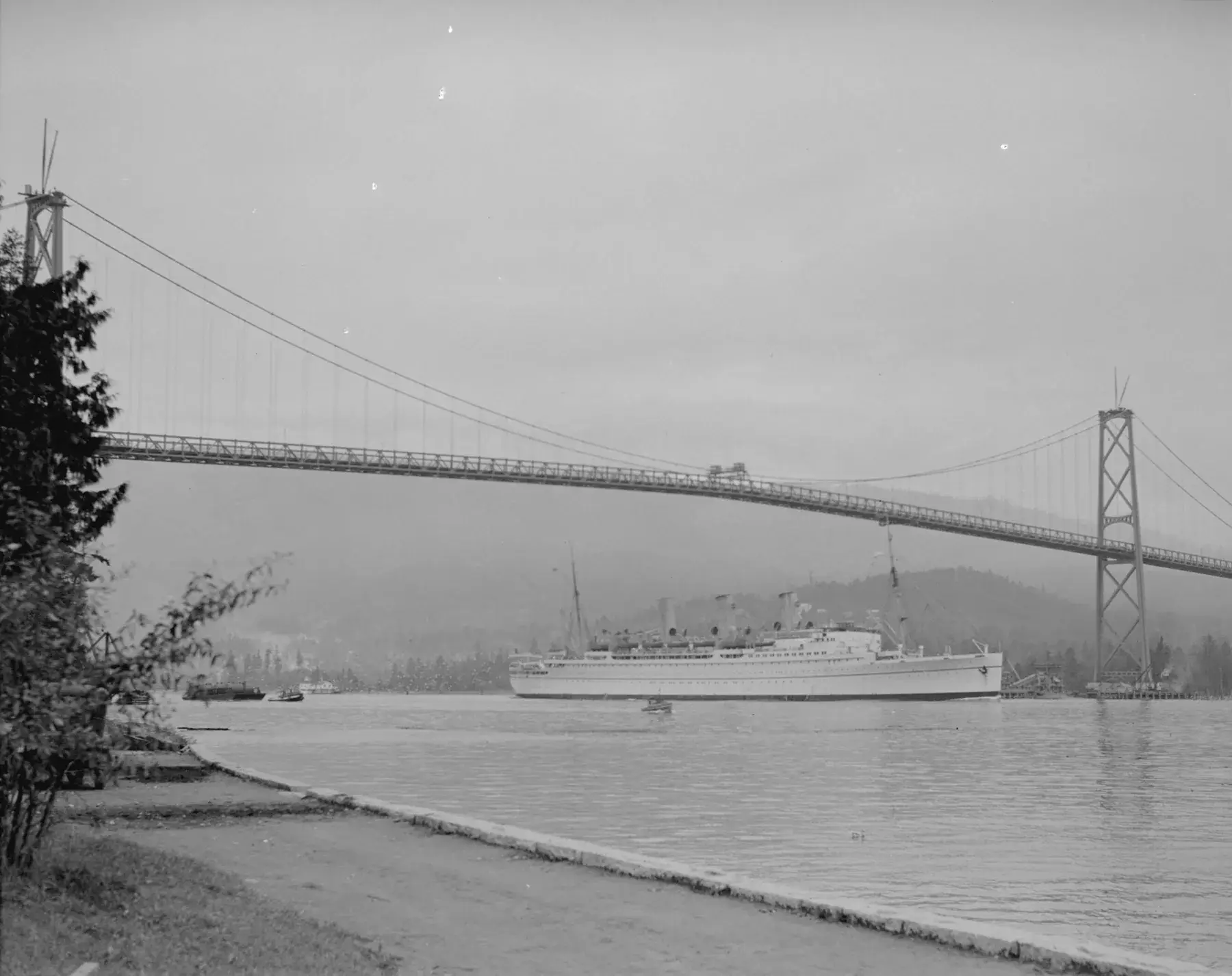
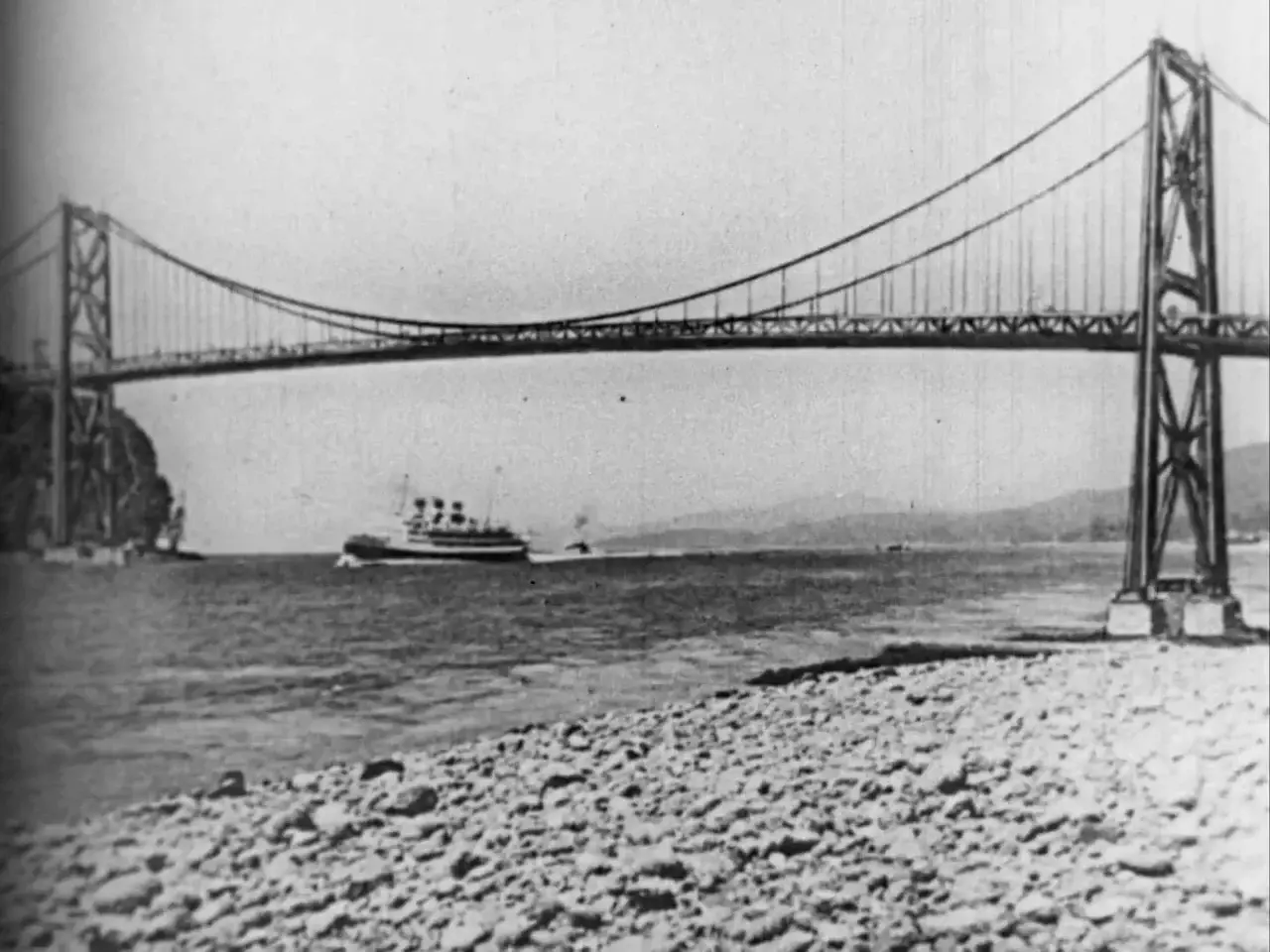
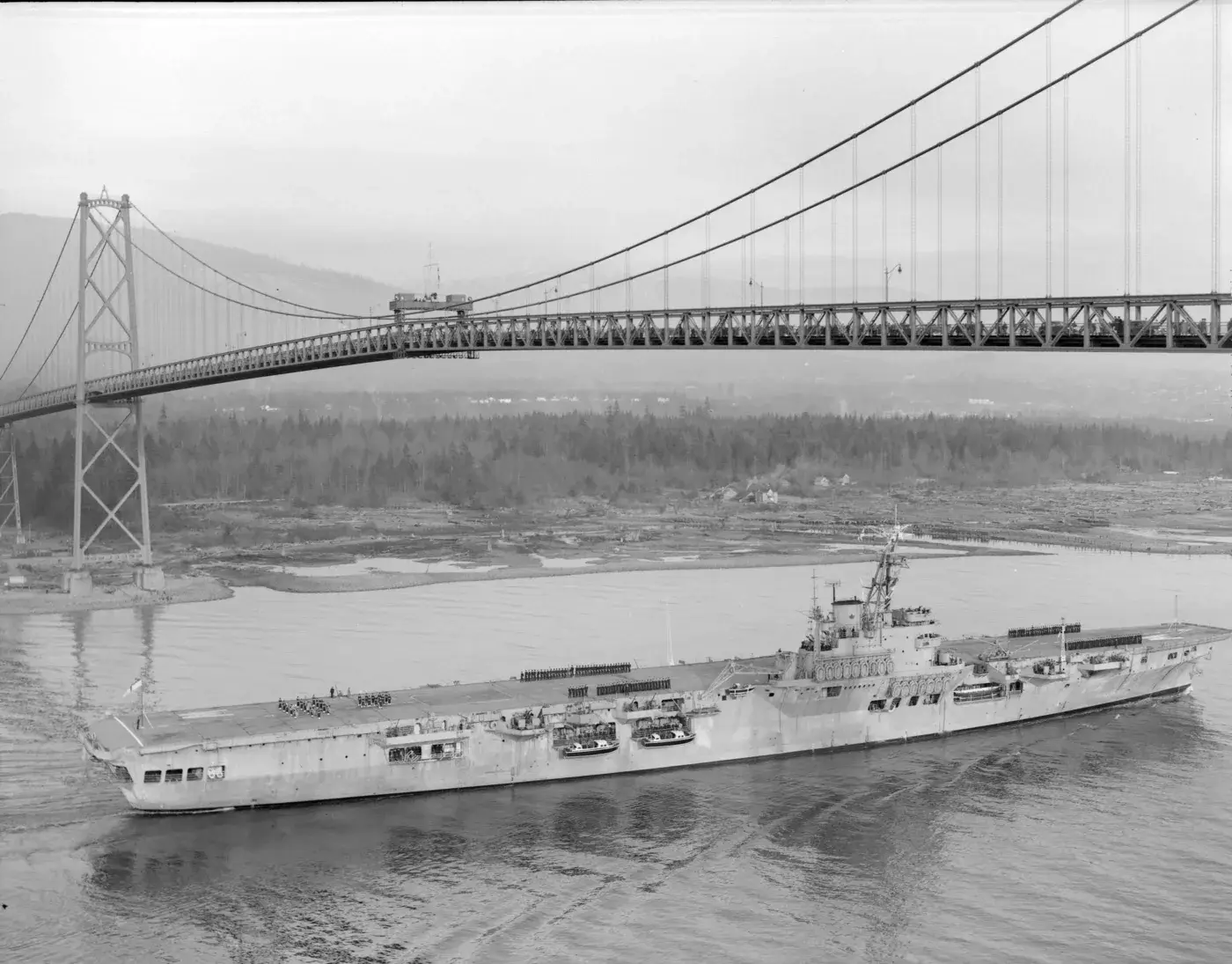
Black-and-white photograph from the Stanley Park shore, December 1939: a large white three-funnelled liner passes under the Lions Gate Bridge, forested slopes in mist behind.

88th Birthday · 1938–2026

December 1939. Photograph by Stuart Thomson, City of Vancouver Archives, CVA 99-2949. Public domain.

Lions Gate Bridge Museum

The Lions Gate Bridge, date by date

The Lions Gate Bridge crosses the First Narrows of Vancouver’s harbour. It opened to people on foot on 12 November 1938. It still carries about 56,600 vehicles a day.

201 entries in date order, from the rock of Prospect Point to the lane that changes direction today. Every date, number, photo and film says where it comes from.

Published Updated

Corrections

On this page: How the dates connect · People · The lane that changes direction

Another page: The birthday story

I

Before the bridge to 1925

The North Shore could be reached by ferry and, from 1925, by a low bridge at the Second Narrows.

30 to 35 million years ago

The south shore is rock.

Prospect Point is a volcanic dyke, harder than the sandstone around it. It has held against the waves. The south tower would stand on that sandstone.

Label, source and rights
Sources
J. E. Armstrong, Vancouver Geology, 1990, pp.40, 71; Geological Survey of Canada, Geoscape Vancouver, 1996; company booklet, 1939, p.23, for the sandstone at the south pier.
Evidence
Published geology. Sources give 30 to 35 million years.
Cite
Lions Gate Bridge Museum, “The south shore is rock”, lionsgatebridge.org/museum#prospect-point

About 14,000 years ago

The ice leaves Vancouver. The sea, then nearly 200 metres above today’s level, falls quickly as the land rises.

Jackson et al., 2024, p.44, for about 14,000 years (Clague & Ward, 2011, p.570, give 13,000 radiocarbon years, an older way of counting); Booth et al., 2003, pp.31–32. Figures are for the Vancouver area.

The past 10,000 years

The north shore is gravel.

The Capilano River pushed a delta out towards Prospect Point. Left to itself, a geologist wrote, it “would probably have extended across First Narrows in a few thousand years”. The north tower would have to go down through that gravel.

Label, source and rights
Sources
J. E. Armstrong, Vancouver Geology, 1990, p.58.
Evidence
Published geology. No dated core for this delta was found.
Cite
Lions Gate Bridge Museum, “The north shore is gravel”, lionsgatebridge.org/museum#capilano-delta

A British naval surveyor, George Henry Richards, names the First Narrows and the Second Narrows.

BC Geographical Names, “First Narrows”, no. 12769.

A judge, John Hamilton Gray, proposes the name Lion’s Gate for the entrance, after the twin peaks above it.

BC Geographical Names, “First Narrows”, no. 12769, which names Judge Gray.

A land speculator, George Grant Mackay, predicts a bridge across the First Narrows. The Museum found no first-hand source for the words usually quoted.

Company booklet, 1939, p.6; Kheraj, 2013.

The dredge Mastodon widens the shipping channel from about 900 feet to 1,400.

Thirkell, 2000, by way of a later account.

A low bridge opens at the Second Narrows, with two narrow lanes either side of a railway track.

d’Acres & Luxton, 1999, p.19.

II

The argument 1926–36

Two votes, rival companies and a federal refusal, until British money and approval from Ottawa came together.

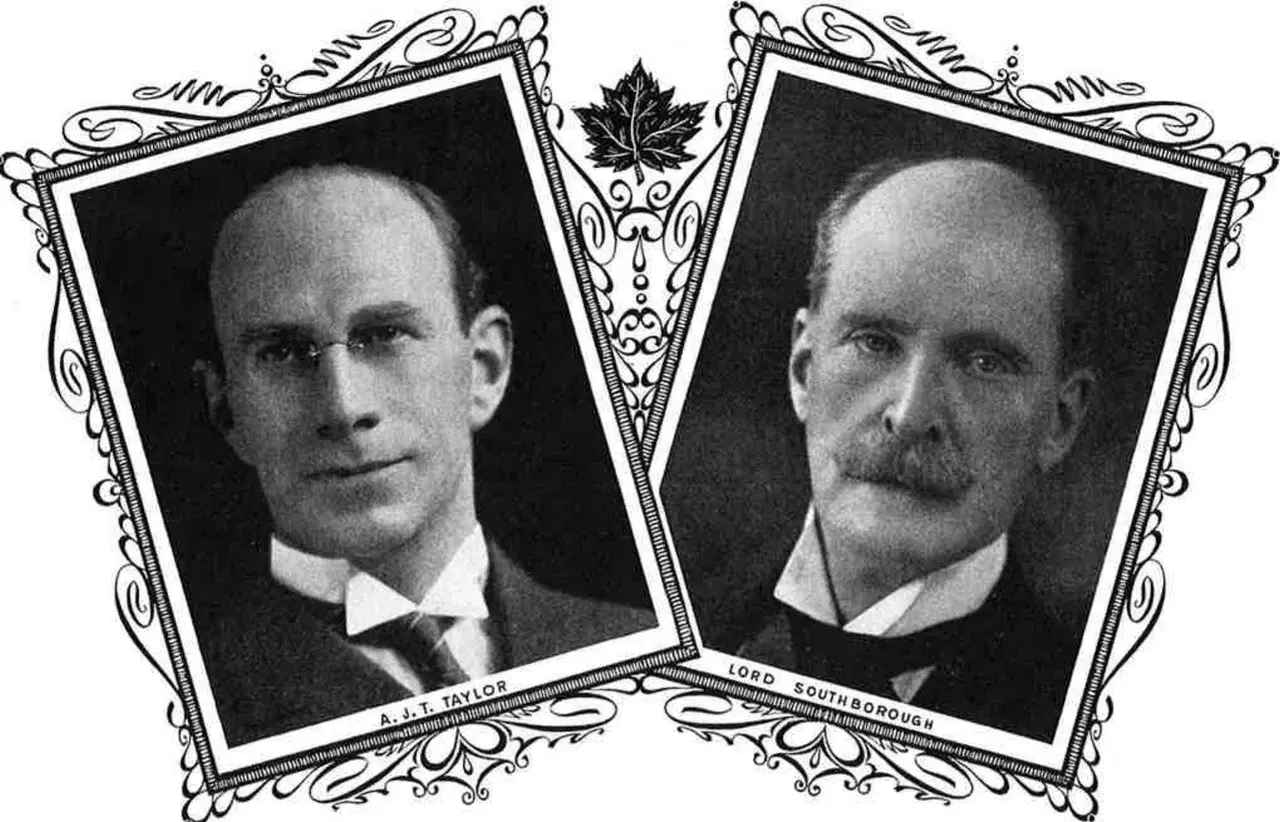
A.J.T. Taylor goes to England to find the money.

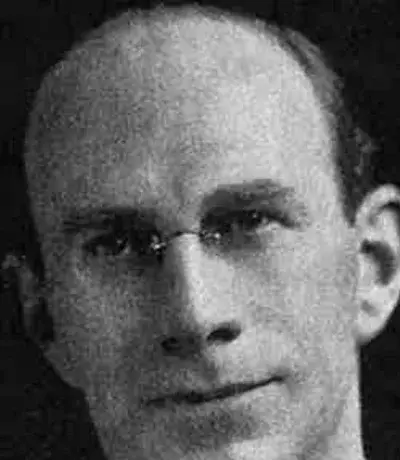
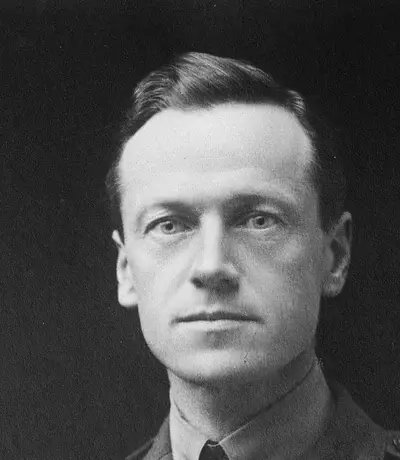
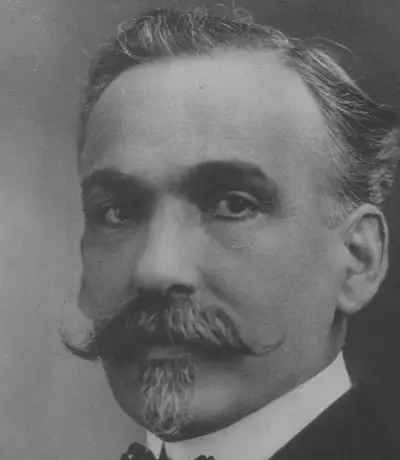
He was an engineer from Victoria, not yet forty. There he met a retired banker, W. S. Eyre. Through Lord Southborough his plans reached the three Guinness brothers, who put up most of the money.

Label, source and rights
Object
Printed portraits, in a 49-page booklet
Reference
Lions Gate Bridge, Vancouver, Canada, 1939, p.4. Digitized by Langara College Library, Internet Archive
Rights
Public Domain Mark 1.0, on the item
Sources
Encyclopedia of British Columbia; d’Acres & Luxton, Lions Gate, 1999, p.30; North Shore Heritage Preservation Society, 2024.
Evidence
Later accounts
Cite
Lions Gate Bridge Museum, “A.J.T. Taylor goes to England to find the money”, lionsgatebridge.org/museum#1926
Two framed portraits from the 1939 booklet, captioned A.J.T. Taylor and Lord Southborough.
A.J.T. Taylor and Lord Southborough, as the company’s booklet showed them in 1939.Lions Gate Bridge, Vancouver, Canada, 1939, p.4. Digitized by Langara College Library, Internet Archive · Public domain

Two rival companies appear, both run by Vancouver men: First Narrows Bridge and Lions Gate Bridge.

First Narrows Bridge Co., Lions Gate Bridge, Vancouver, Canada (1939 booklet), p.8.

The West Vancouver News argues that “Lion’s Gate” suits the bridge better than “First Narrows”.

West Vancouver News, 14 May 1926, as cited in North Shore News, 14 November 2018.

Vancouver voters turn down the road through Stanley Park, 4,724 to 2,099. Not one of the city’s eight wards votes yes. Museum find

The Vancouver Daily Province, 27 June 1927, pp.1, 7; d’Acres & Luxton, Lions Gate, 1999, p.34.

Taylor and W. S. Eyre form British Pacific Securities, which helps win Guinness money.

Anne-Marie Lawrence, ‘Taylor Made’, North Shore Heritage Preservation Society, 2024.

The freighter Losmar hits the Second Narrows Bridge and disturbs its foundations. Ships had hit it in 1927 and 1928 too.

Victoria Daily Times, 25 April 1930, p.14; 11 March 1927, p.9; 25 April 1928, p.20; MONOVA, Building a Vancouver Icon.

The two rival companies merge as the First Narrows Bridge Company, with W. C. Ditmars as president.

d’Acres & Luxton, Lions Gate, 1999, p.36; 1939 booklet, p.8 (year only).

A provincial act lets North and West Vancouver give the company land, cash or tax breaks.

First Narrows Bridge Company, Limited, Act Amendment Act, 1931 (SBC 1931, c.73).

A Guinness company buys a mountainside in West Vancouver.

acres
4,000
paid
$75,000
promised within five years
$1 million

British Pacific Properties paid the municipality for the land and promised to improve it. The bridge became the road to that land.

Label, source and rights
Sources
British Pacific Properties, company history; d’Acres & Luxton, Lions Gate, 1999; company booklet, 1939. Other sources give 4,700 acres.
Evidence
Later accounts. 4,000 acres is the company’s 1931 figure.
Cite
Lions Gate Bridge Museum, “A Guinness company buys a mountainside in West Vancouver”, lionsgatebridge.org/museum#1931-11-18

A federal order sets aside up to 4.5 acres of Stanley Park, east of the Prospect Point lighthouse, for the bridge approach.

Library and Archives Canada, RG10 vol. 7745, file 23167-4, P.C. 1846, 22 August 1932.

The bridge appears on film before it exists.

Museum find

The promoters’ silent film opens like a newsreel: “Proposed new bridge over First Narrows to link North Shore with City of Vancouver.” It compares the plan with the Sydney Harbour Bridge and the Burrard Bridge, draws the route over air photos, and shows a montage of the bridge as if it were already built.

A composite, not a photograph: the bridge as its promoters pictured it.City of Vancouver Archives, AM1487-F07-: 2017-055.5, at 02:06 · Public domain
Label, source and rights
Object
Film frame, 16 mm, silent, black and white
Made by
Made for A.J.T. Taylor’s promoters, about 1933–35
Reference
City of Vancouver Archives, AM1487-F07-: 2017-055.5, at 02:06
Rights
Public domain, archive’s determination of 13 June 2018
Sources
A.J.T. Taylor films, reel 2017-055.5. The year can only be narrowed to 1933–35.
Evidence
Primary, read by the Museum
Cite
Lions Gate Bridge Museum, “The bridge appears on film before it exists”, lionsgatebridge.org/museum#1933

Vancouver’s planning commission votes 5 to 4 against the bridge, two days before the public vote.

d’Acres & Luxton, Lions Gate, 1999, p.46.

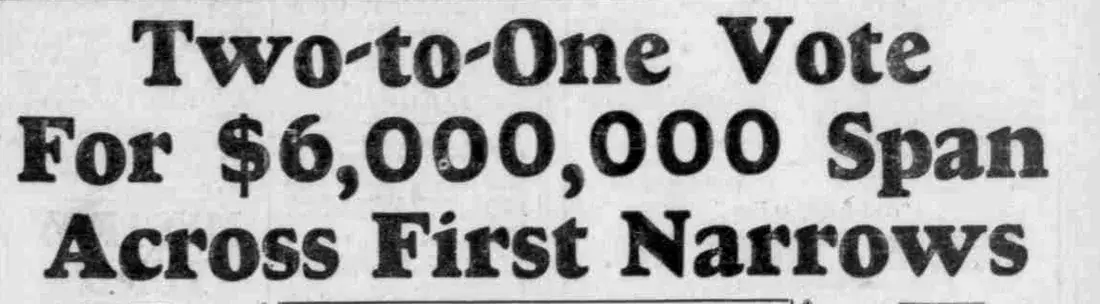
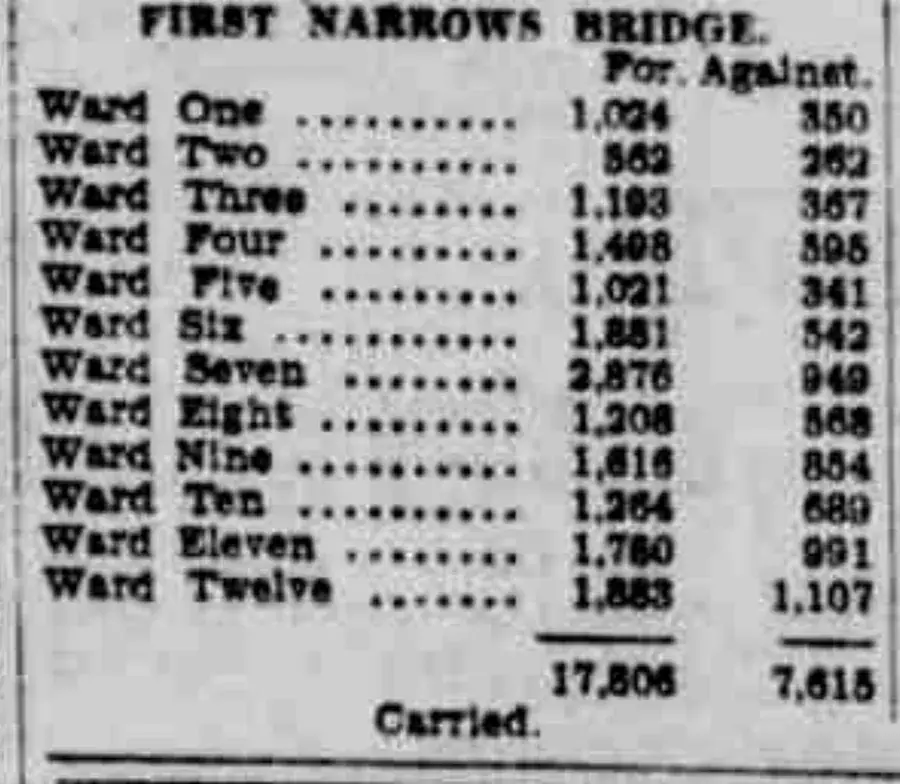
Vancouver votes for the bridge, 17,806 to 7,615.

Museum find

for
17,806
against
7,615
wards in favour
12 of 12

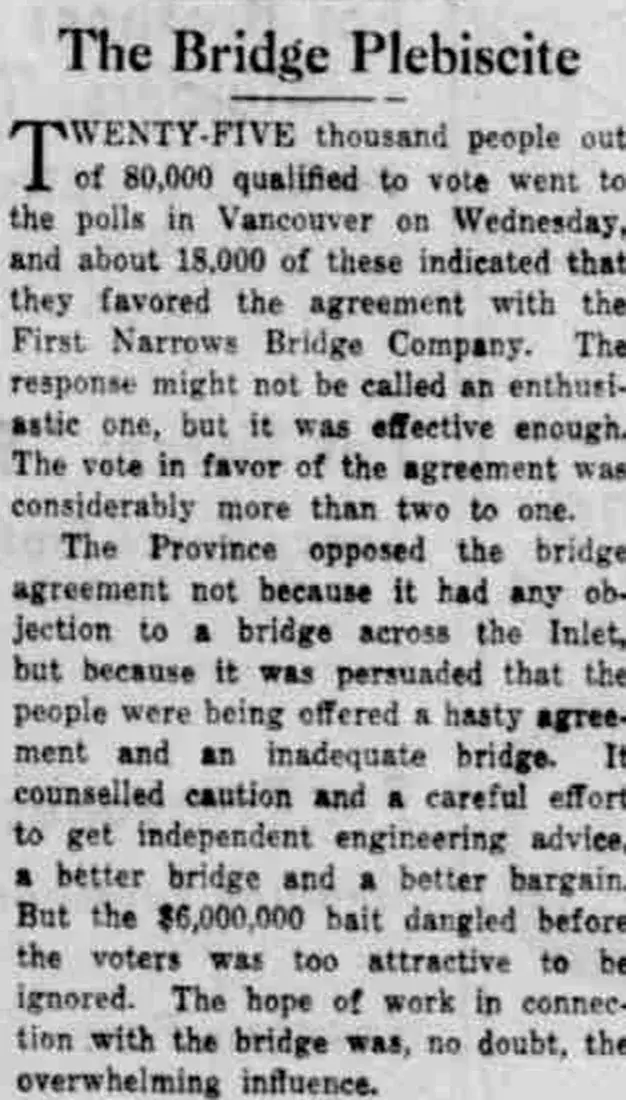
Every one of the city’s twelve wards said yes. The Province had argued against the agreement, though not against a bridge, and put the result down to hard times: “The hope of work in connection with the bridge was, no doubt, the overwhelming influence.”

The agreement the voters approved also said that “no Asiatic person shall be employed in or upon any part of the undertaking.” The Province printed it in full on 1 December, twelve days before the vote. A provincial review found the same ban in Vancouver agreements of 1911 and 1913. The Museum records the clause as part of the bridge’s history.

Masthead of The Vancouver Sun, Thursday, December 14, 1933.Front-page headline: Two-to-One Vote For $6,000,000 Span Across First Narrows.Table of returns headed First Narrows Bridge, ward by ward, totals 17,806 for and 7,615 against, Carried.Province editorial headed The Bridge Plebiscite: about 18,000 favoured the agreement, considerably more than two to one.

The Vancouver Sun, 14 December 1933, p.1. The Vancouver Daily Province, 14 December 1933, pp.2, 6 · Extract, with credit

Label, source and rights
Object
Newspaper pages, extracts
Made by
The Vancouver Sun; The Vancouver Daily Province
Reference
The Vancouver Sun, 14 December 1933, p.1. The Vancouver Daily Province, 14 December 1933, pp.2, 6
Rights
Short extract with credit (fair dealing)
Sources
The Vancouver Sun and The Vancouver Daily Province, 14 December 1933; The Vancouver Daily Province, 1 December 1933, p.29, for the agreement; Province of British Columbia, Chinese Legacy BC review, 2017.
Evidence
Primary. The two papers give the same figures.
Cite
Lions Gate Bridge Museum, “Vancouver votes for the bridge, 17,806 to 7,615”, lionsgatebridge.org/museum#1933-12-13

Five months later

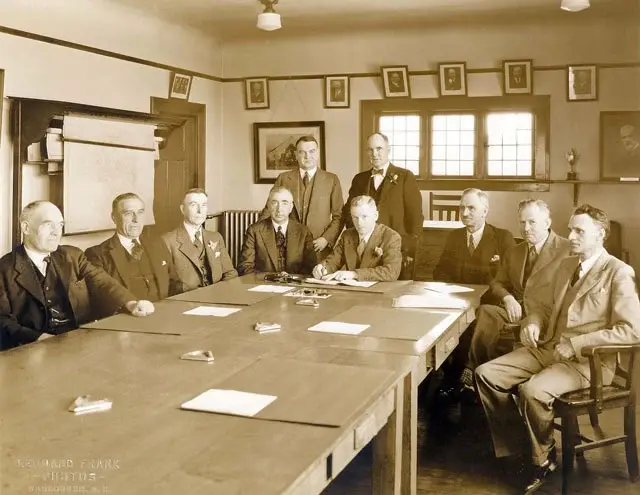
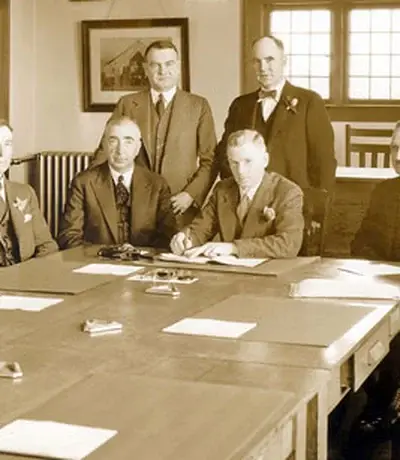
West Vancouver signs the bridge agreement.

The reeve and council signed with the company. Shipping interests still opposed the bridge, and a federal hearing that July gave them their say.

Label, source and rights
Object
Photograph
Reference
West Vancouver Archives, by way of Wikimedia Commons
Rights
CC BY 2.0
Picture
Leonard Frank, 1934, West Vancouver Archives. CC BY 2.0. Wikimedia Commons file page.
Sources
d’Acres & Luxton, 1999, p.47; Library and Archives Canada, RG10 vol. 7745, file 23167-4, for the hearing.
Evidence
Later accounts; the hearing is primary
Cite
Lions Gate Bridge Museum, “West Vancouver signs the bridge agreement”, lionsgatebridge.org/museum#1934-05-12
Black-and-white photograph: West Vancouver council members around a table, signing the First Narrows Bridge Agreement.
Signing the First Narrows Bridge Agreement.Leonard Frank, 1934, West Vancouver Archives · CC BY 2.0 · Wikimedia Commons

At a federal hearing, the CPR, the Merchants Exchange and the Chamber of Shipping object. Museum find

Library and Archives Canada, RG10 vol. 7745, file 23167-4, hearing record, 17 July 1934.

The application on file: a main span of 1,500 feet and 200 feet of clearance, the height left for ships under the deck. The objectors want 1,800 feet. Museum find

Library and Archives Canada, RG10 vol. 7745, file 23167-4, federal chief engineer’s memo, 2 August 1934.

The Sun reports that Ottawa wants the main span lengthened to 1,800 feet. The company says it has had no official word.

The Vancouver Sun, 6 September 1934, p.1.

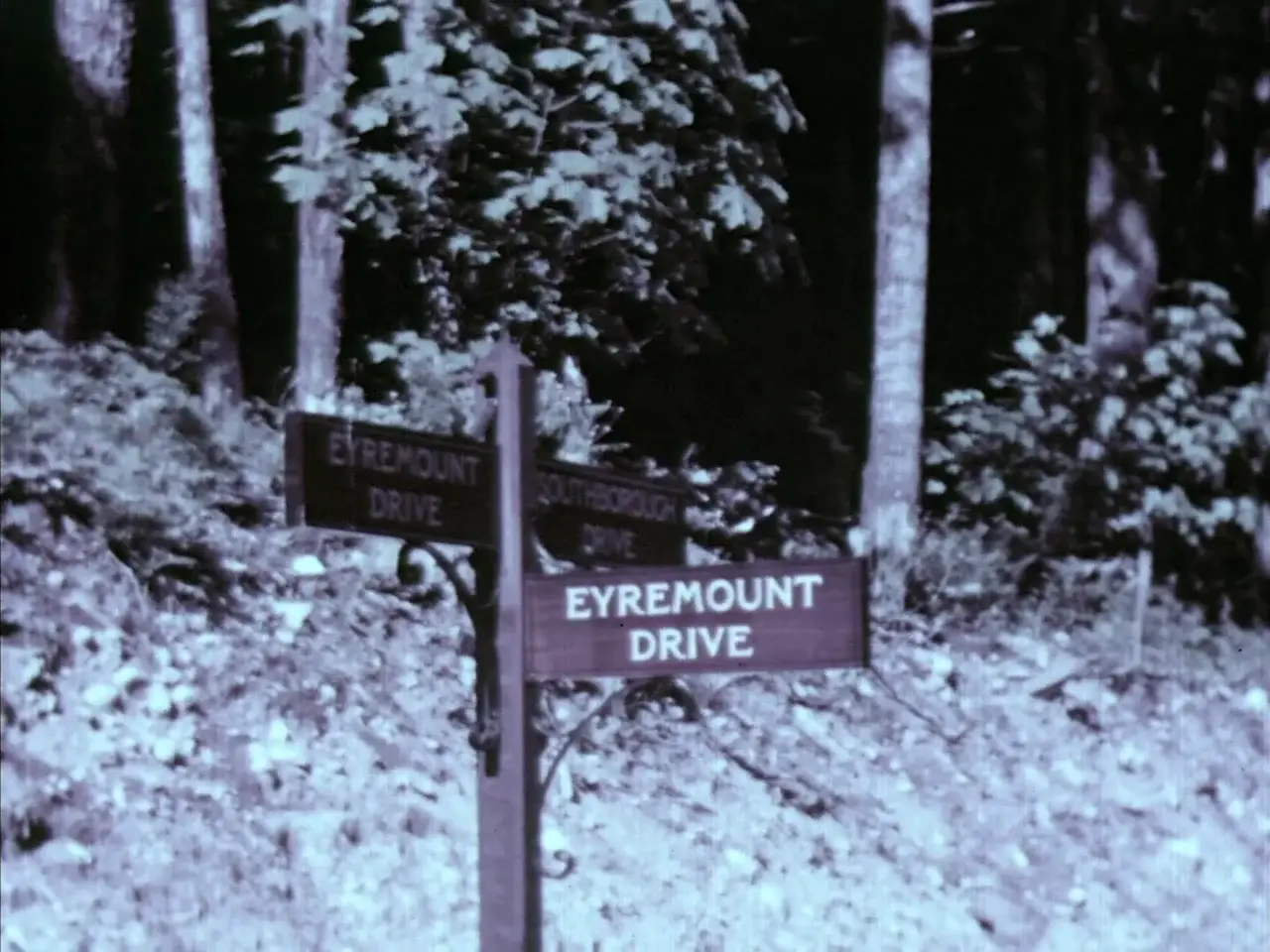
Street signs go up on the cleared hillside: Eyremount, Southborough.

Museum find

Taylor’s film of the clearing catches them among the trees. The streets took the names of the men behind the money, W. S. Eyre and Lord Southborough, before there was a bridge to reach them.

Label, source and rights
Object
Film frame, 16 mm, silent
Made by
A.J.T. Taylor films
Reference
City of Vancouver Archives, AM1487-F07-: 2017-055.7, at 14:07
Rights
Public domain, archive’s determination of 13 June 2018
Sources
A.J.T. Taylor films, reel 2017-055.7, at 14:07–14:16.
Evidence
Primary, read by the Museum
Cite
Lions Gate Bridge Museum, “Street signs go up on the cleared hillside: Eyremount, Southborough”, lionsgatebridge.org/museum#1935
Eyremount Drive, about 1935.City of Vancouver Archives, AM1487-F07-: 2017-055.7, at 14:07 · Public domain

W. S. Eyre, Taylor’s main financial partner, dies.

d’Acres & Luxton, Lions Gate, 1999, p.52.

Ottawa approves the design and the site.

Museum find

Order in Council P.C. 21 came with nine conditions. One moved the main piers north. Another gave the company a year to start and four to finish.

What the Museum makes of it. The date is 30 April. A federal letter of 22 May 1936 encloses a copy of the order “dated April 30, 1936”.

Label, source and rights
Sources
Library and Archives Canada, RG10 vol. 7745, file 23167-4, images 302–308; company booklet, 1939, p.8.
Evidence
Primary, read by the Museum
Cite
Lions Gate Bridge Museum, “Ottawa approves the design and the site”, lionsgatebridge.org/museum#1936-04-30

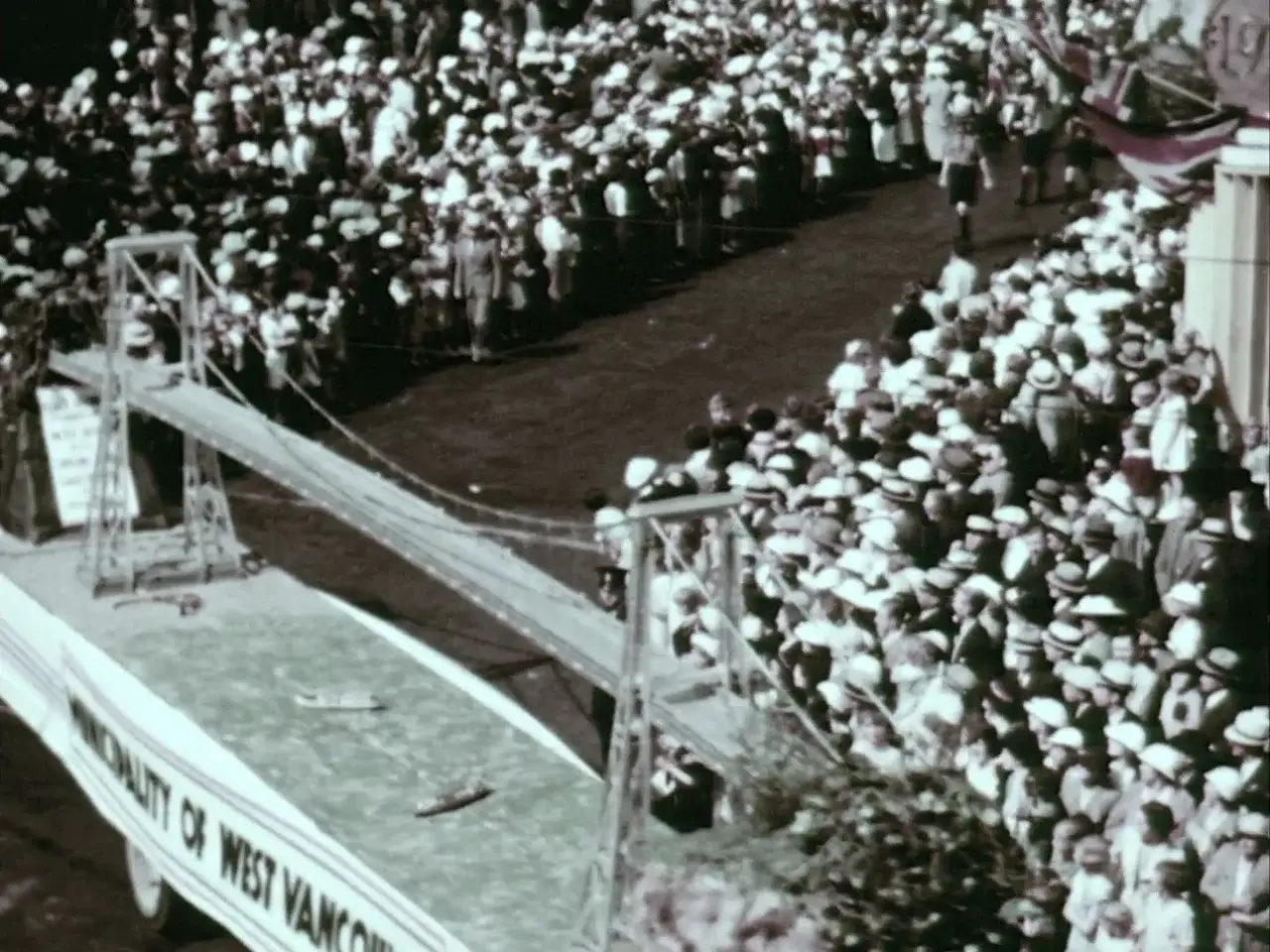
A model of the bridge rides through the city on a parade float.

West Vancouver’s float carried a suspension bridge past crowds packed along the route, the year before work began. The reel is labelled July 1936, in Vancouver’s Golden Jubilee summer. Which parade it was is not confirmed.

Label, source and rights
Object
Film frame, 16 mm, silent, colour
Made by
A.J.T. Taylor films, 1936
Reference
City of Vancouver Archives, AM1487-F07-: 2017-055.6, at 08:37
Rights
Public domain, archive’s determination of 13 June 2018
Sources
Reel title “July 1936”.
Evidence
Primary, read by the Museum
Cite
Lions Gate Bridge Museum, “A model of the bridge rides through the city on a parade float”, lionsgatebridge.org/museum#1936-07
The side of the float reads “Municipality of West Vancouver”.City of Vancouver Archives, AM1487-F07-: 2017-055.6, at 08:37 · Public domain

A federal plan records the transfer of land in Capilano Indian Reserve No. 5 to the bridge company, by an order in council of this date.

Canada Lands Survey Records, plan RD2677. The record is the government’s own.

A citizens’ banquet marks the Golden Jubilee and the bridge’s approval. West Vancouver Archives holds the menu.

West Vancouver Archives, Leyland fonds, ‘Lions Gate Bridge ephemera’.

Stuart Cameron & Co. wins the contract for the substructure and approaches, about $2 million.

Engineering News-Record, 1 October 1936.

A 71-year lease for the Stanley Park end lets federal forces and federal employees on duty cross without paying. Museum find

Library and Archives Canada, RG10 vol. 7745, file 23167-4, lease of 27 November 1936, clause 5.

III

The build 1937–38

About nineteen months, from the first clearing in Stanley Park to the first walkers.

Ninety men are at work on both sides of the Narrows, says the contractor’s underwater supervisor.

The Vancouver Sun, 15 May 1937, p.1.

The north pier starts down through the gravel.

tons, north caisson
8,700
feet into the gravel
about 70

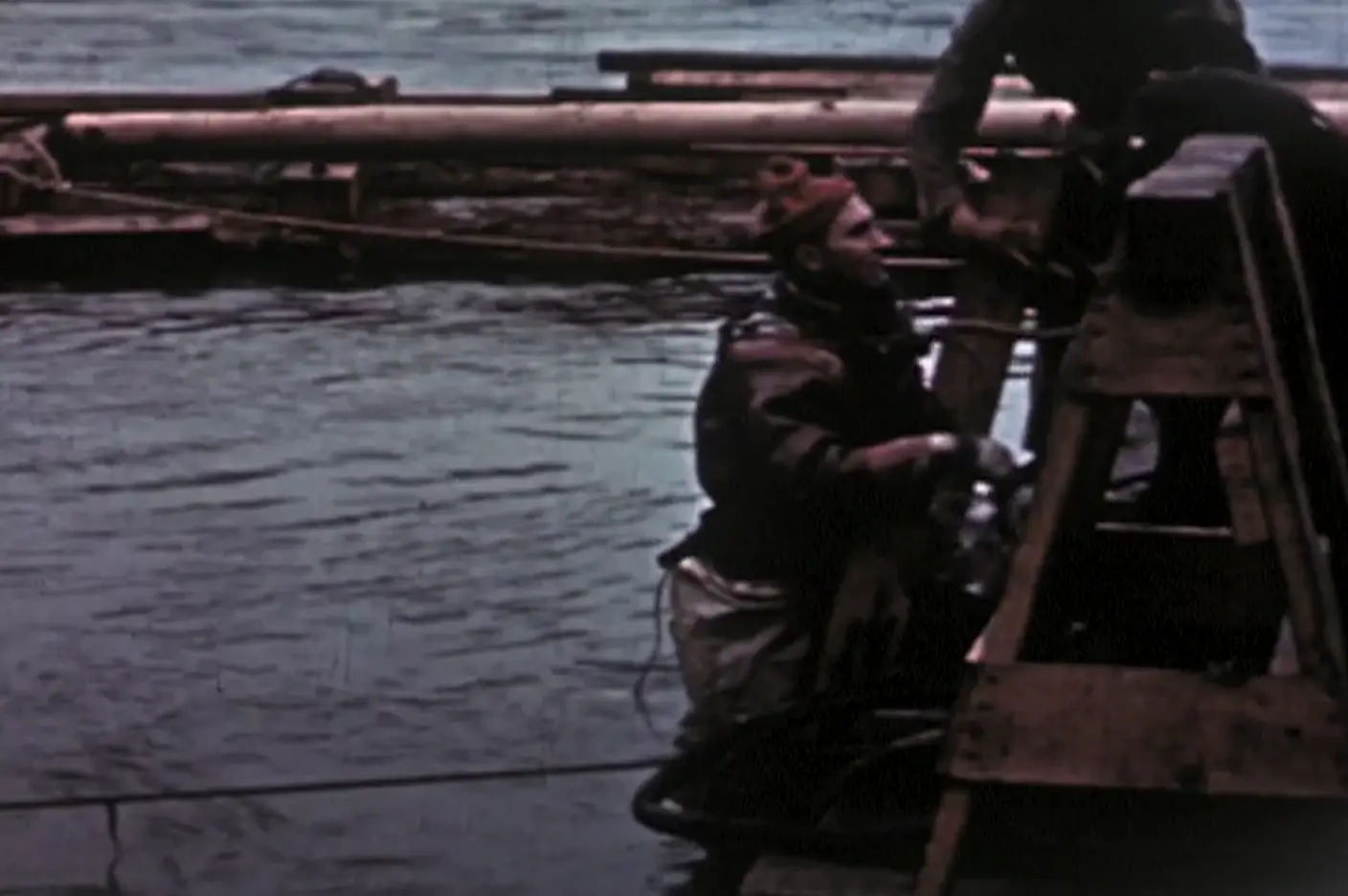
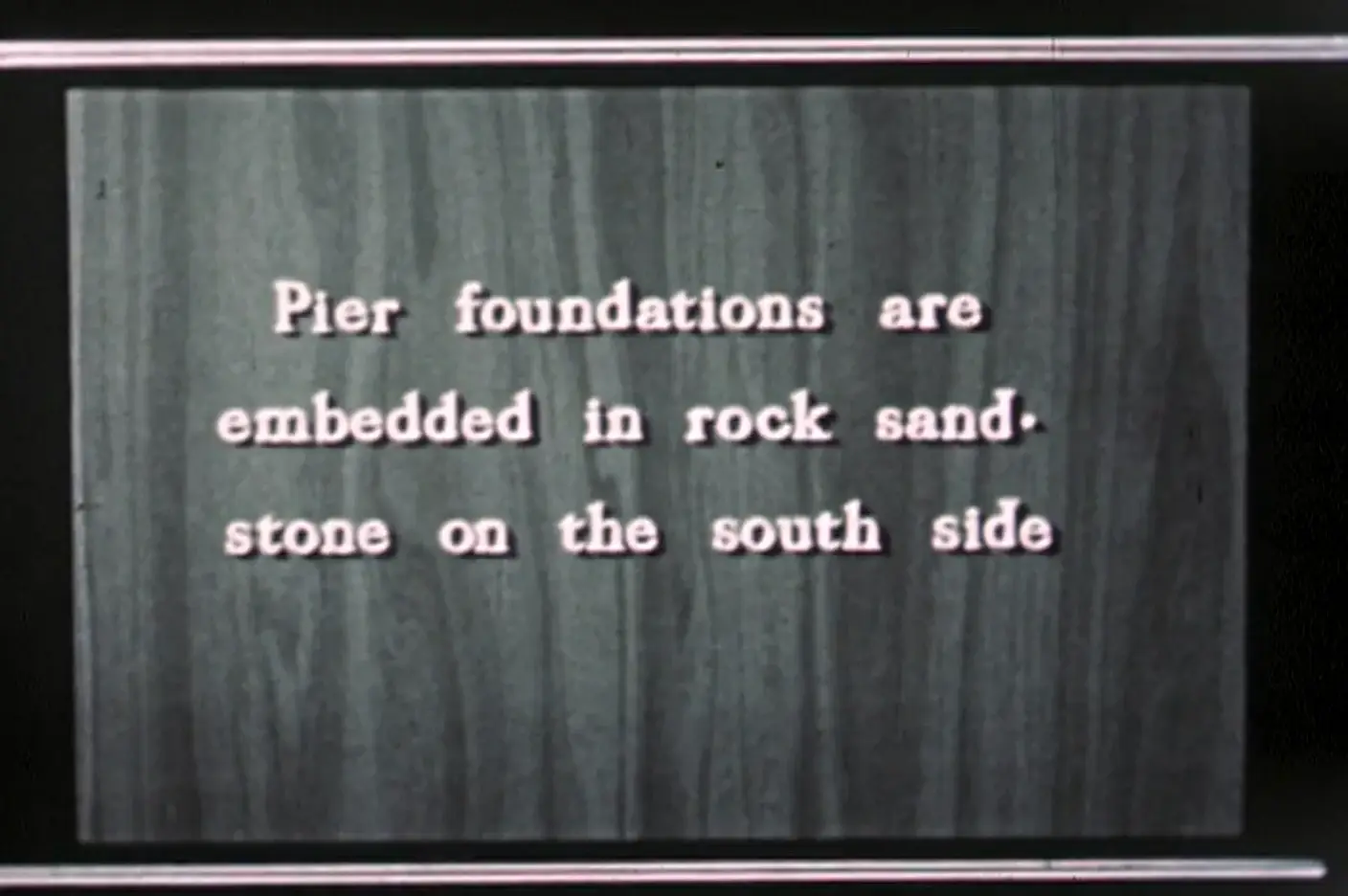
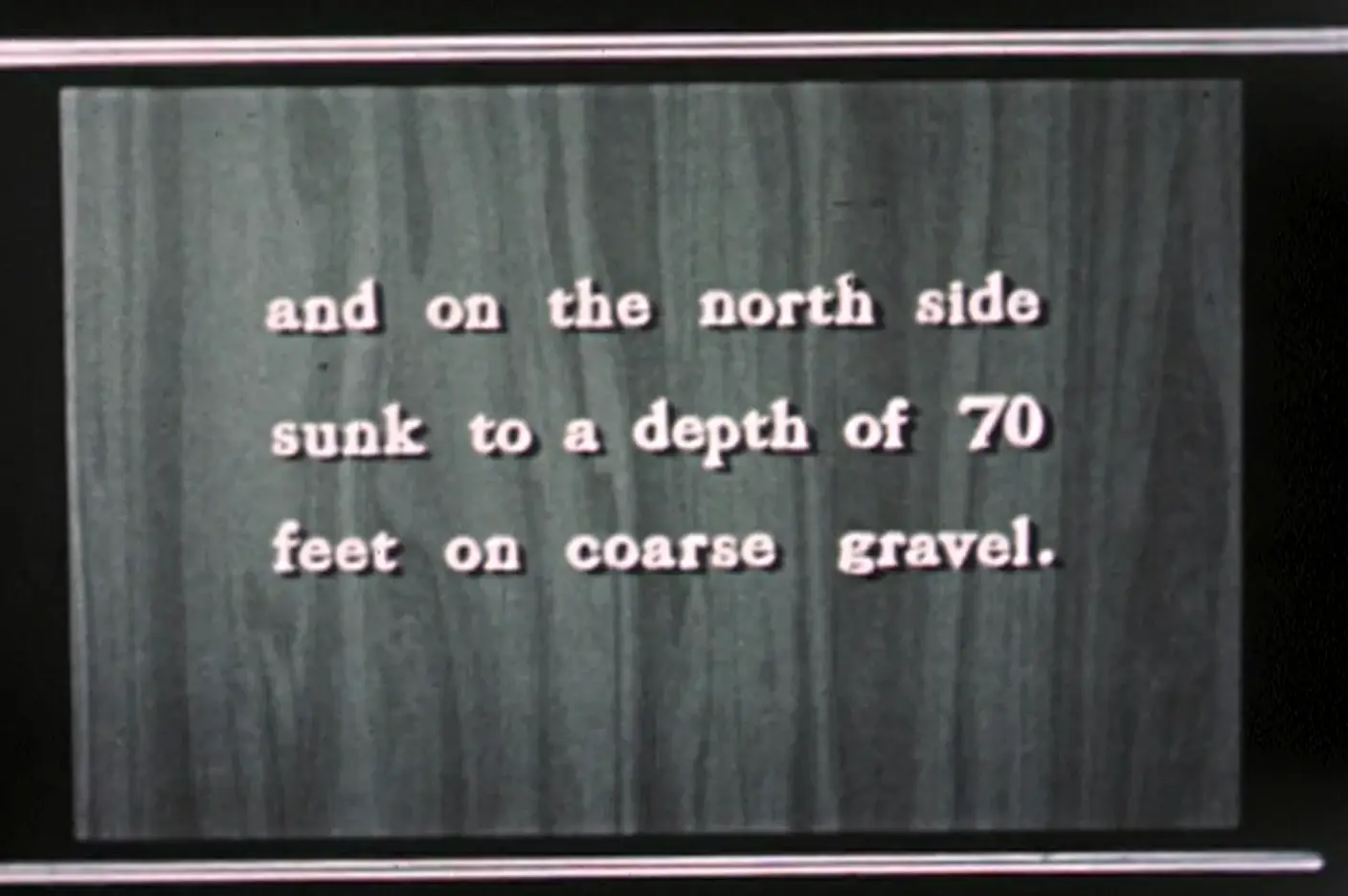
On the north side a caisson, a box of steel and concrete weighing 8,700 tons, began to sink through the gravel of the delta. On the south side the footings were set into sandstone, with divers working on the rock. “The two main piers were constructed by entirely different methods,” the company’s booklet says, “because conditions differ widely on opposite sides of the channel.”

Label, source and rights
Object
Film frames, 16 mm Kodachrome, silent
Made by
A.J.T. Taylor films, 1937–39
Reference
City of Vancouver Archives, AM1487-F07-: 2012-091.1, “1st Narrows Bridge” (A.J.T. Taylor films), at 05:53 and 10:56
Rights
Public domain (Canada), archive’s determination of 22 October 2013
Sources
Company booklet, 1939, p.23; MONOVA, Building a Vancouver Icon, and d’Acres & Luxton, 1999, p.74, for the date and the 8,700 tons (which give 72 feet; the film’s card says 70).
Evidence
Primary for the film and booklet; later accounts for the date
Cite
Lions Gate Bridge Museum, “The north pier starts down through the gravel”, lionsgatebridge.org/museum#1937-08-13
A diver at the caisson foundations.
Film title card: Pier foundations are embedded in rock sandstone on the south side.
The film’s card on the south side.
Film title card: and on the north side sunk to a depth of 70 feet on coarse gravel.
The next card, on the north side.City of Vancouver Archives, AM1487-F07-: 2012-091.1, “1st Narrows Bridge” (A.J.T. Taylor films), at 05:53 and 10:56 · Public domain

Work on site peaks at 334 men.

MONOVA, Building a Vancouver Icon.

A slide traps Lester Thorstad in the south anchorage pit.

Museum find

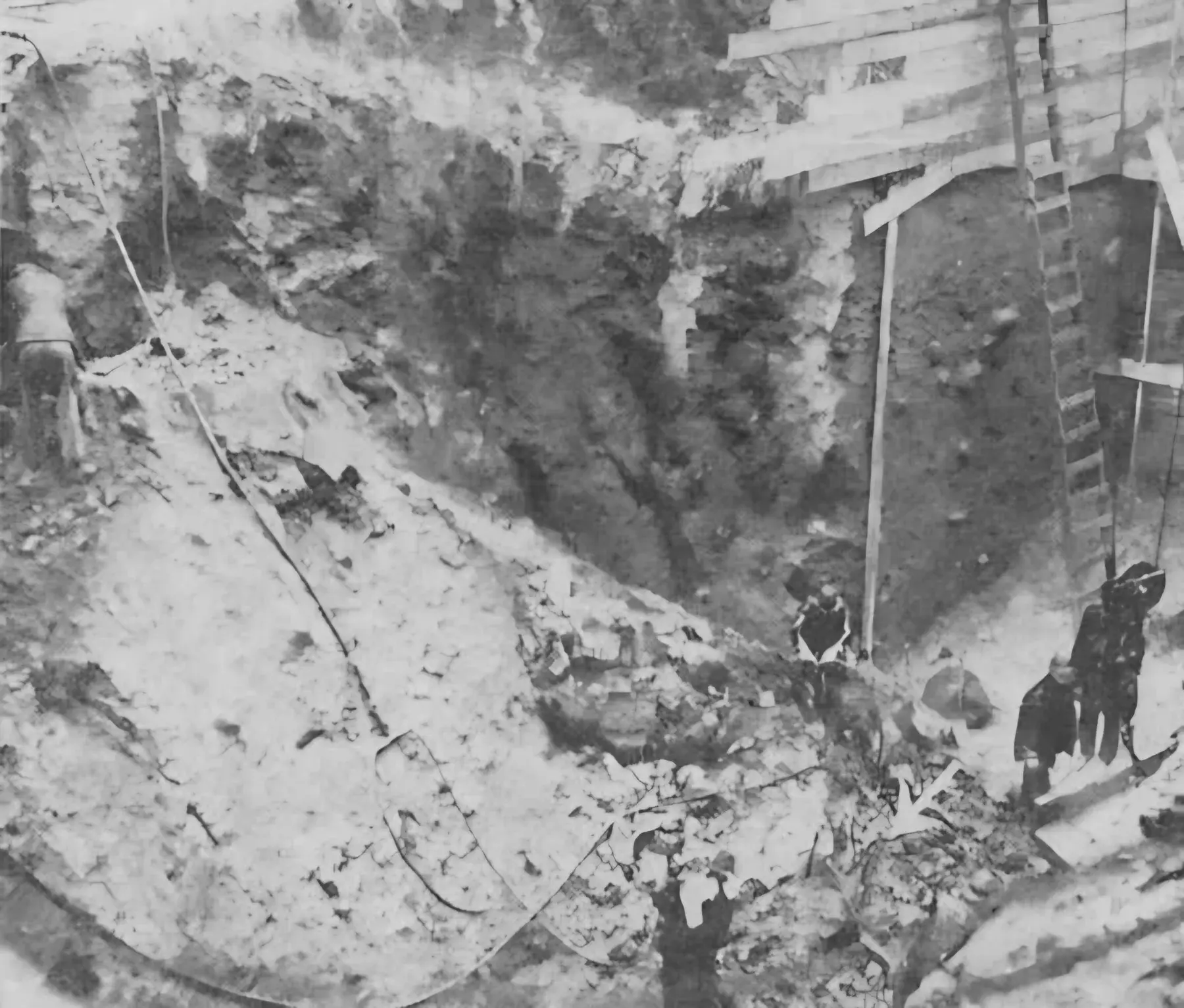
It was 8:50 at night and his first shift. Thorstad, a 32-year-old labourer, was at the bottom of the pit dug for the concrete block that would anchor the cables, when the clay wall bulged and fell. Workmen and firemen dug for almost an hour to get him out. He lost a leg, and died in St. Paul’s Hospital at 7:20 a.m. on Wednesday 27 October. That same day a coroner’s jury found the death accidental, with no blame on anyone.

Two later accounts name him as the one worker killed building the bridge.

Black-and-white newspaper photograph: a deep excavation with a collapsed clay wall and workmen clearing the debris at the bottom.
The pit at Prospect Point after the slide. Photograph by a Sun staff cameraman, AI-assisted restoration by the Museum.The Vancouver Sun, 26 October 1937, p.1 · Public domain
Label, source and rights
Object
Photograph, from a newspaper page
Made by
The Vancouver Sun
Reference
The Vancouver Sun, 26 October 1937, p.1
Rights
Public domain (Canada): photograph published before 1949
Sources
The Vancouver Sun, 26 October 1937, p.1; 27 October 1937, p.5; 28 October 1937, p.4; MONOVA, Building a Vancouver Icon; d’Acres & Luxton, Lions Gate, 1999, p.100.
Evidence
Primary
Cite
Lions Gate Bridge Museum, “A slide traps Lester Thorstad in the south anchorage pit”, lionsgatebridge.org/museum#1937-10-25

The chief engineer says the bridge can carry every 20-ton truck that can be put on it, and that mid-span can move 9 feet with temperature and load. Museum find

The Vancouver Sun, 3 November 1937.

The first steel goes up the towers.

Company booklet, 1939, pp.15, 23. A later date is sometimes given.

The south tower is finished, and a Union Jack goes up on top.

MONOVA; d’Acres & Luxton, Lions Gate, 1999, p.85.

Both towers are finished: 2,056 tons of steel. The company’s film gives their height as 364 feet.

Company booklet, 1939, pp.16, 23; film card at 17:20. Two later accounts give 29 April for the north tower.

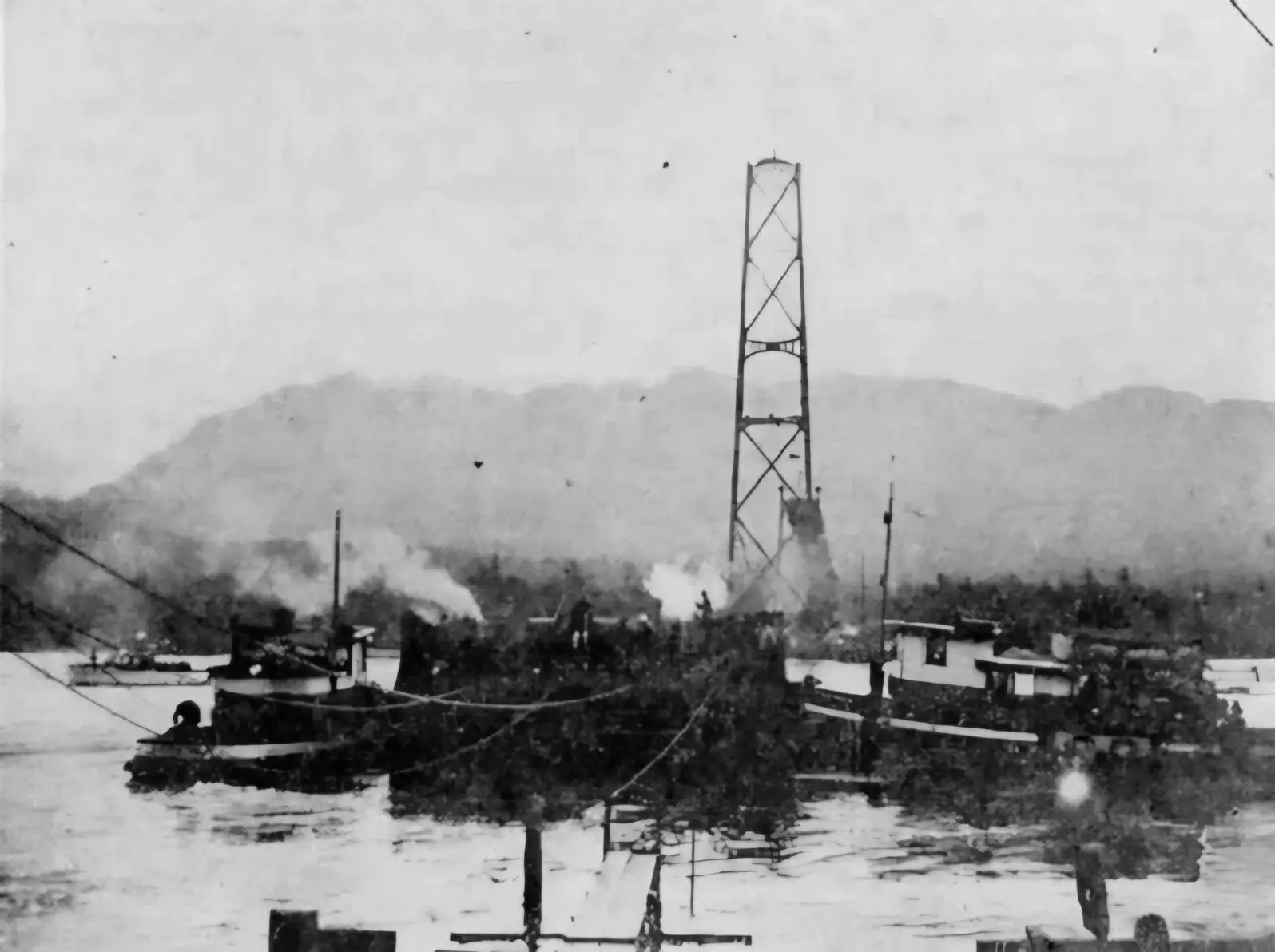
The harbour closes for the first time, to lift the first cables.

Museum find

catwalk cables
4
tons each
8
minutes closed
80

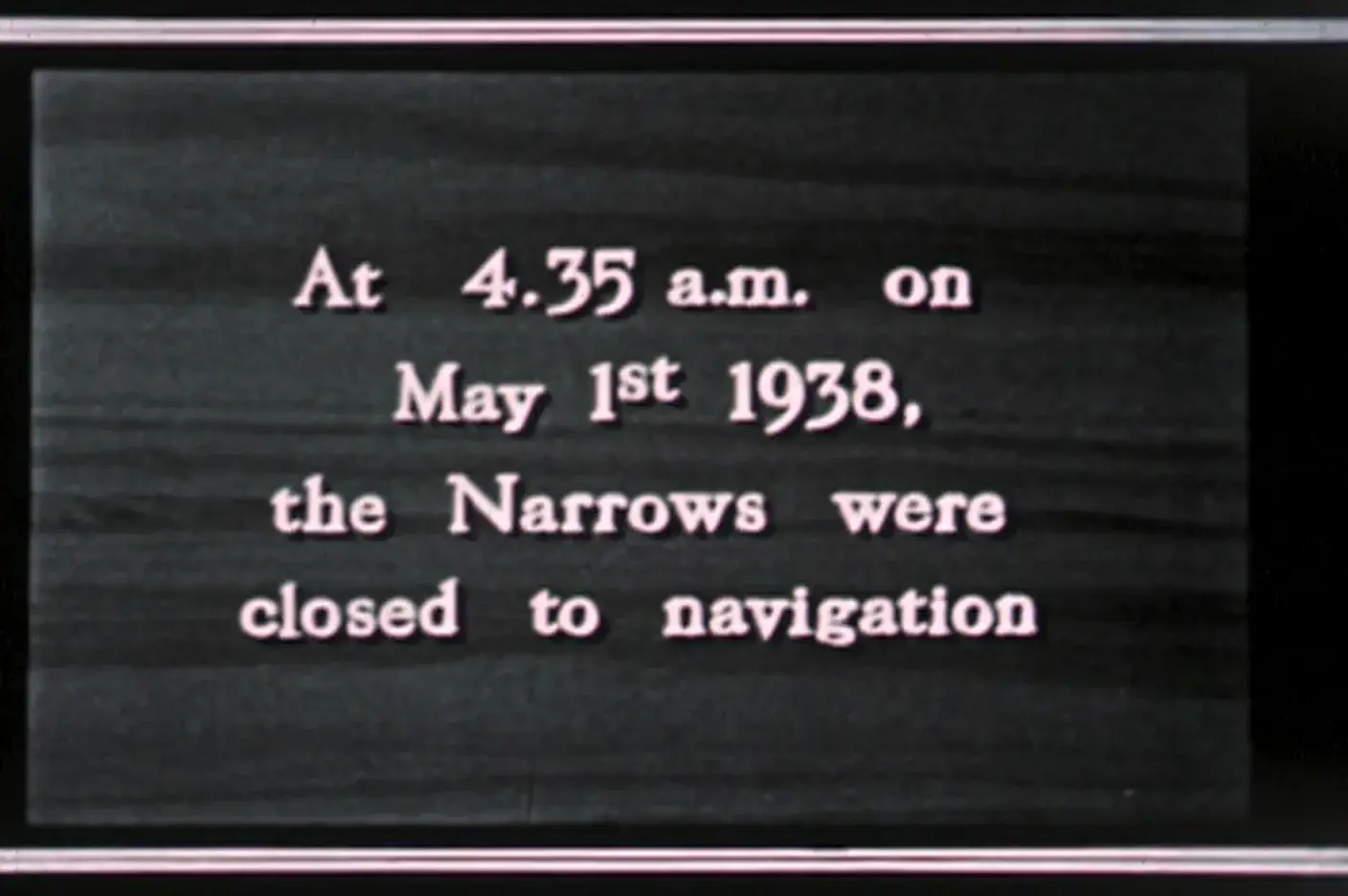
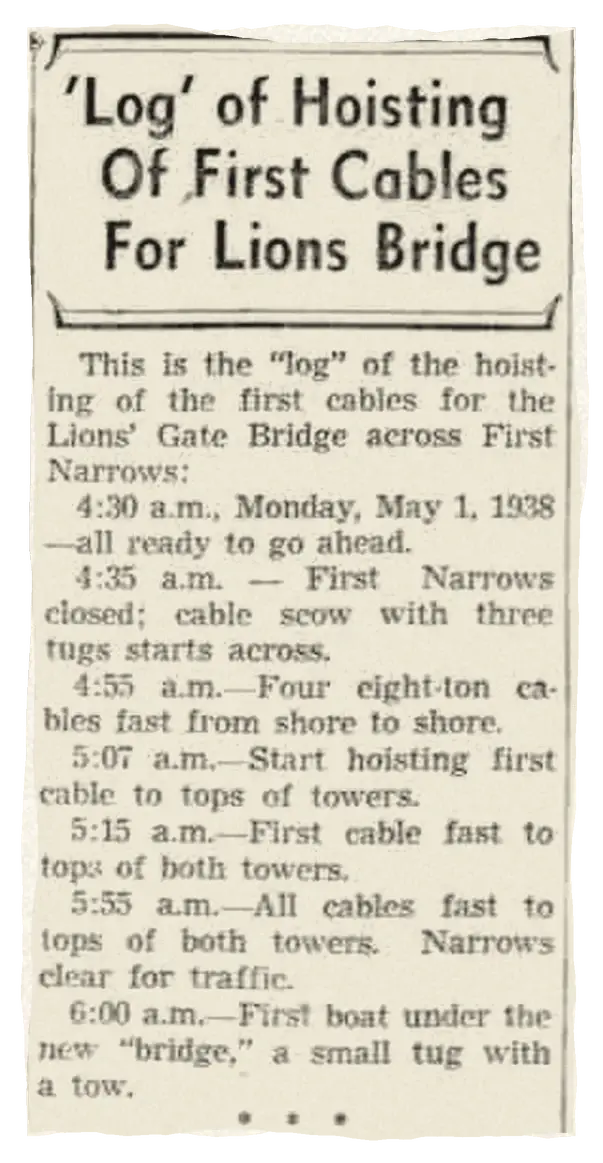
A scow and three tugs crossed the Narrows, laying four cables of eight tons each for the first of two catwalks. The tide ran at two knots; for 20 minutes the tug fought it to reach the north pier. The Vancouver Sun printed the morning as a log:

  1. 4:35 a.m. First Narrows closed; cable scow with three tugs starts across.
  2. 4:55 Four eight-ton cables fast from shore to shore.
  3. 5:07 Start hoisting first cable to tops of towers.
  4. 5:55 All cables fast to tops of both towers. Narrows clear for traffic.
  5. 6:00 First boat under the new “bridge,” a small tug with a tow.

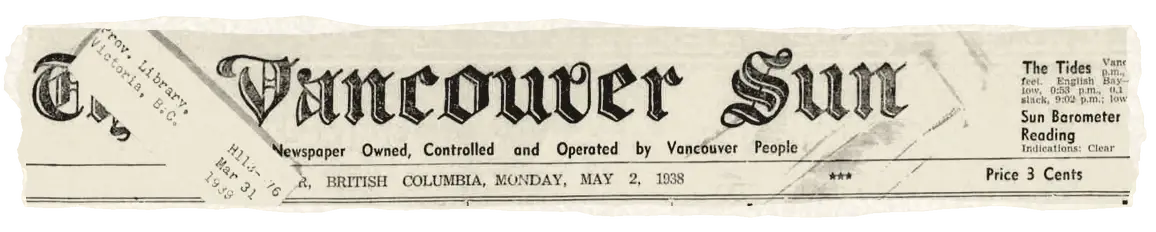
What the Museum makes of it. The log says “Monday, May 1”, and the company’s film card says May 1st too. That Monday was 2 May. The same front page is dated May 2, and the Canadian Press report and the 1939 booklet agree.

Black-and-white newspaper photograph: tugs push a scow across the water, smoke from their funnels, a steel tower and mountains behind.
The cable scow and two of its tugs “battling the strong current”. Photo by W. B. Shelly, The Vancouver Sun, 2 May 1938, p.20, AI-assisted restoration by the Museum.The Vancouver Sun, 2 May 1938, p.1. Card: City of Vancouver Archives, AM1487-F07-: 2012-091.1, “1st Narrows Bridge” (A.J.T. Taylor films), at 19:44. Photograph: The Vancouver Sun, 2 May 1938, p.20 · Extract, with credit
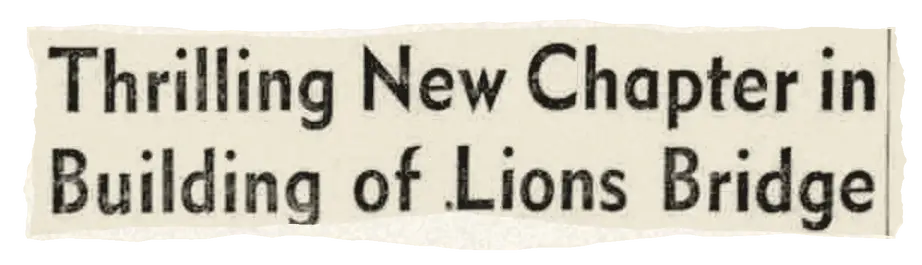
Masthead of The Vancouver Sun, Monday, May 2, 1938.Headline: Thrilling New Chapter in Building of Lions Bridge.Column headed Log of Hoisting of First Cables for Lions Bridge, listing the times of the morning.Film title card: At 4.35 a.m. on May 1st 1938, the Narrows were closed to navigation.
Label, source and rights
Object
Newspaper front page, extract; film title card; photograph from a newspaper page
Made by
The Vancouver Sun; A.J.T. Taylor films; W. B. Shelly, Sun staff cameraman
Reference
The Vancouver Sun, 2 May 1938, p.1. Card: City of Vancouver Archives, AM1487-F07-: 2012-091.1, “1st Narrows Bridge” (A.J.T. Taylor films), at 19:44. Photograph: The Vancouver Sun, 2 May 1938, p.20
Rights
Short extract with credit (fair dealing). Card: public domain (Canada), on the archive’s record. Photograph: public domain (Canada), published before 1949
Sources
The Vancouver Sun, 2 May 1938, p.3, for the tide and the crossing; Daily Colonist, 3 May 1938 (Canadian Press); company booklet, 1939, p.16.
Evidence
Primary, read by the Museum
Cite
Lions Gate Bridge Museum, “The harbour closes for the first time, to lift the first cables”, lionsgatebridge.org/museum#1938-05-02

Three weeks later

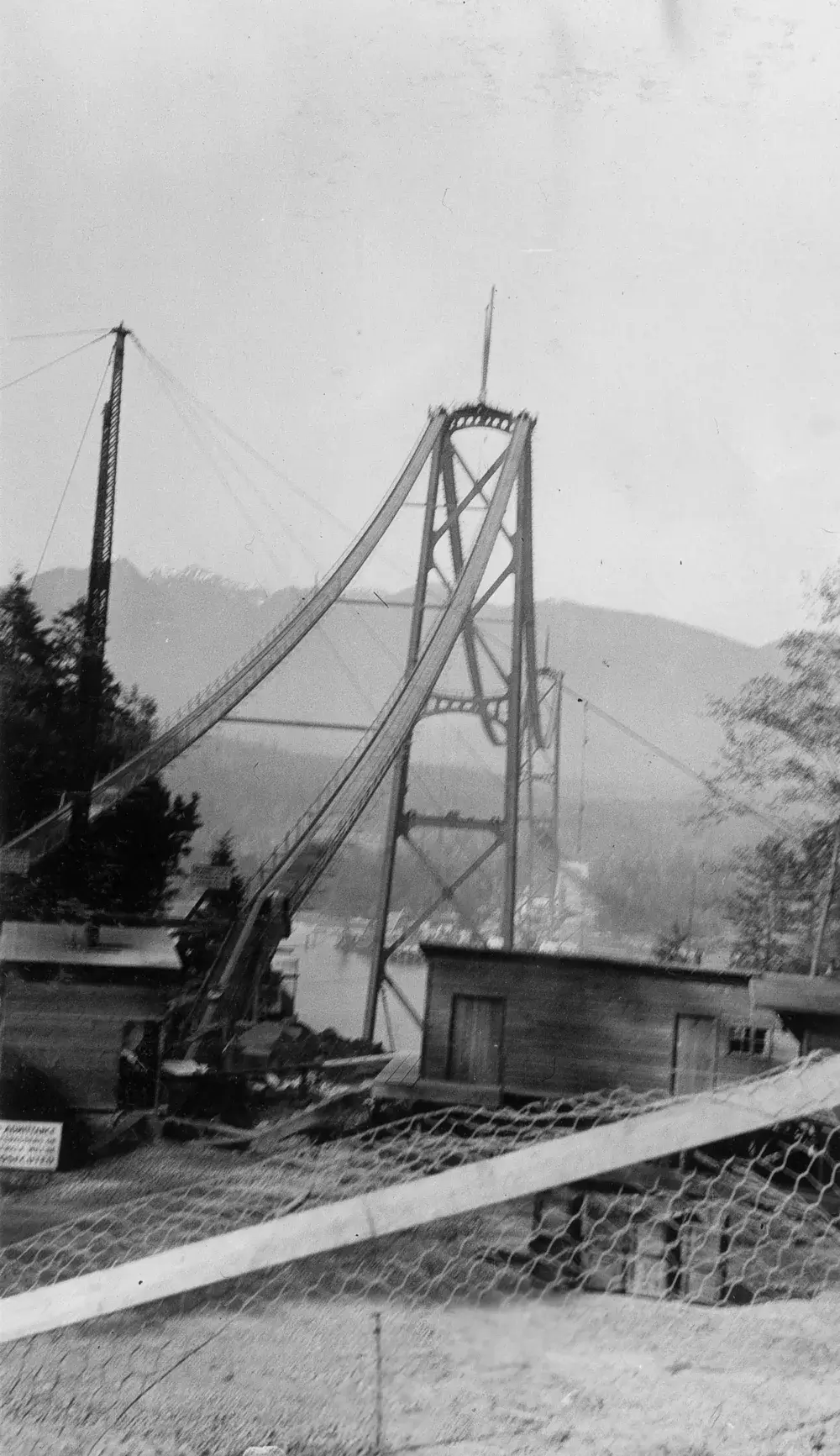
Two catwalks, temporary walkways for the cable crews, hang from the towers.

The photograph is dated 24 May. The cables for the catwalks went across from 2 May. Over the catwalks crews then drew the 122 strands of the main cables, in 16 working days.

Label, source and rights
Object
Photograph, silver gelatin print
Reference
City of Vancouver Archives, AM1576-S6-16-F024-: 2011-010.127
Rights
Public domain (Canada), archive’s determination of 4 January 2016
Sources
d’Acres & Luxton, Lions Gate, 1999, pp.94, 96; company booklet, 1939, p.17; Daily Colonist, 3 May 1938 (Canadian Press).
Evidence
Primary for the photograph
Cite
Lions Gate Bridge Museum, “Two catwalks, temporary walkways for the cable crews, hang from the towers”, lionsgatebridge.org/museum#1938-05-24
Black-and-white photograph through a wire fence: wooden huts in front, the south tower behind them with two catwalks sweeping down towards the anchorage, the north tower and mountains beyond.
From the Stanley Park side.City of Vancouver Archives, AM1576-S6-16-F024-: 2011-010.127 · Public domain

One month later

The last of 174 deck sections is hoisted into place.

sections
174
working days
12
tons
1,572

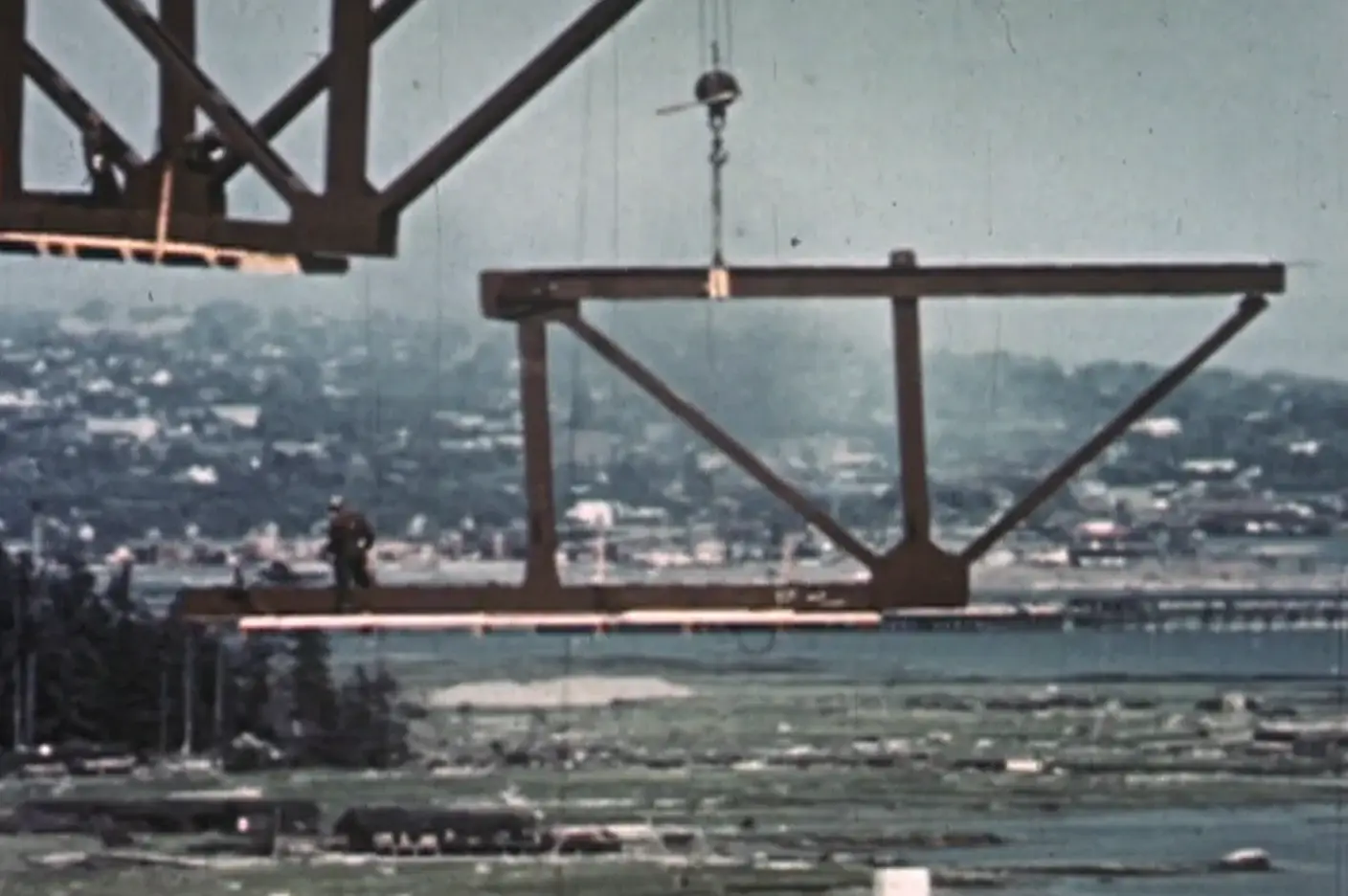
The lifting began on 9 June. In 12 working days, 1,572 tons of stiffening truss came up from barges and railcars and hung from the cables. “Altogether 174 of these sections are hoisted into position,” says the company’s film.

Label, source and rights
Object
Film frame, 16 mm Kodachrome, silent
Made by
A.J.T. Taylor films, 1937–39
Reference
City of Vancouver Archives, AM1487-F07-: 2012-091.1, “1st Narrows Bridge” (A.J.T. Taylor films), at 26:00
Rights
Public domain (Canada), archive’s determination of 22 October 2013
Sources
Company booklet, 1939, pp.23–24.
Evidence
Primary
Cite
Lions Gate Bridge Museum, “The last of 174 deck sections is hoisted into place”, lionsgatebridge.org/museum#1938-06-24
A section on its way up, with a man standing on it.City of Vancouver Archives, AM1487-F07-: 2012-091.1, “1st Narrows Bridge” (A.J.T. Taylor films), at 26:00 · Public domain

One month later

Before it opens, the army works out how to drop it.

Museum find

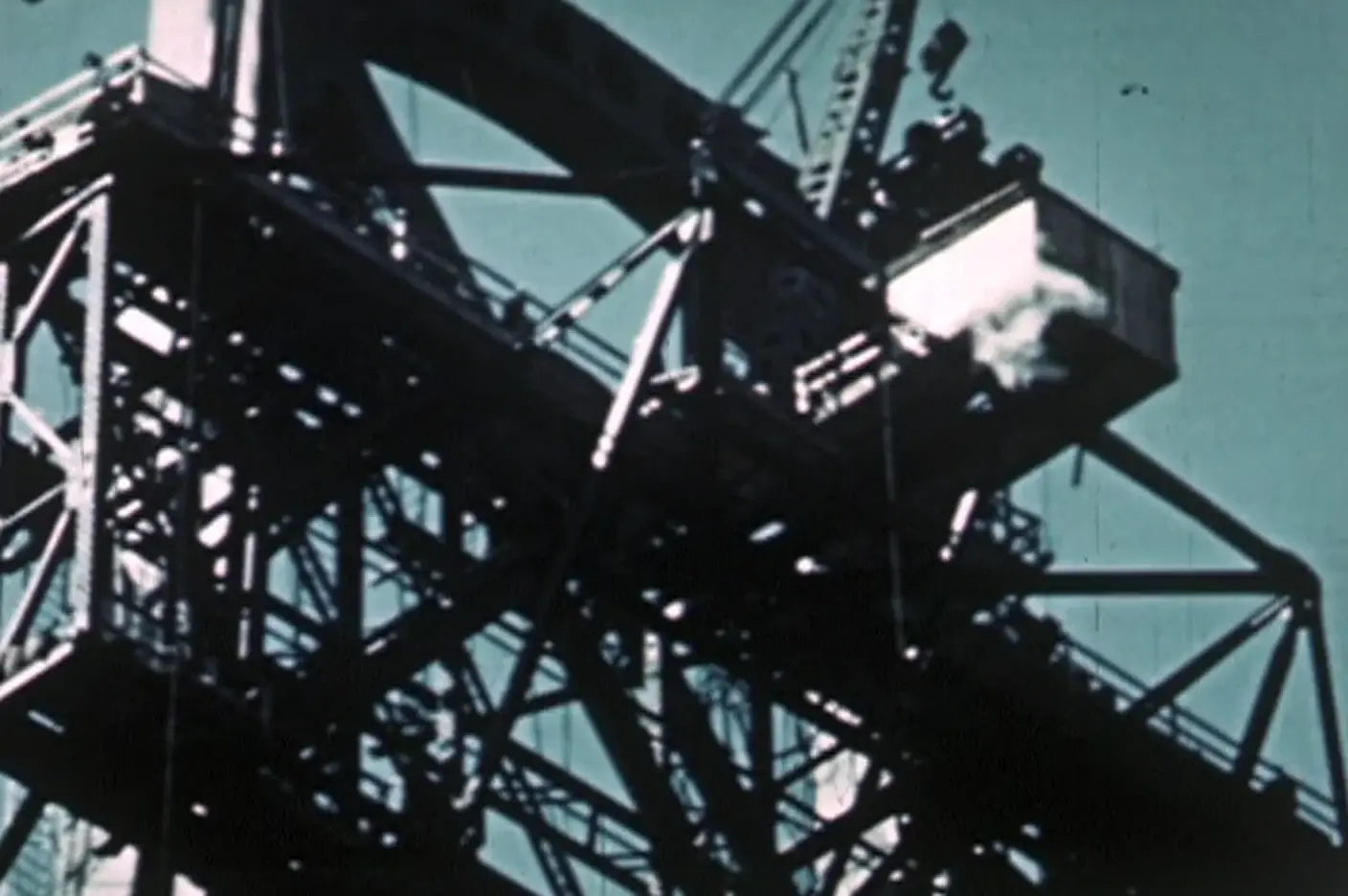
On a Saturday in July, men of the 6th Field Company, Royal Canadian Engineers, were taken onto the bridge and noted its key stress points. A small charge there could quickly cut a span. The plan was ready before the bridge was: in war, the Sun wrote, it could be “dropped in tangled wreckage” within minutes.

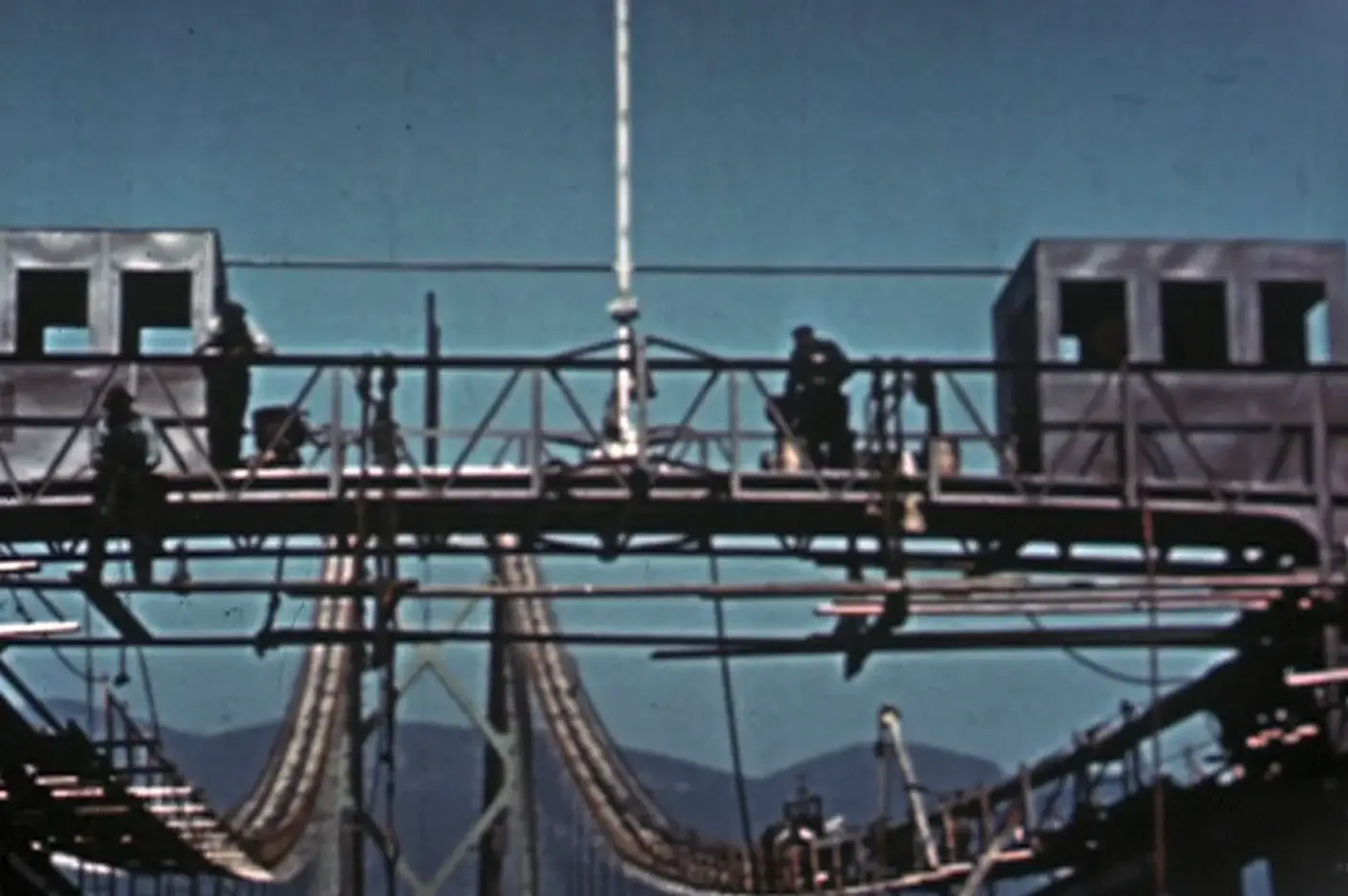
Colour film frame: dark steelwork of a tower against a pale blue sky, a hoist at the top.
Tower steel, from the company’s film.City of Vancouver Archives, AM1487-F07-: 2012-091.1, “1st Narrows Bridge” (A.J.T. Taylor films), at 19:33 · Public domain
Label, source and rights
Object
Film frame, 16 mm Kodachrome, silent
Reference
City of Vancouver Archives, AM1487-F07-: 2012-091.1, “1st Narrows Bridge” (A.J.T. Taylor films), at 19:33
Rights
Public domain (Canada), archive’s determination of 22 October 2013
Sources
The Vancouver Sun, 26 July 1938, p.10.
Evidence
Primary, read by the Museum
Cite
Lions Gate Bridge Museum, “Before it opens, the army works out how to drop it”, lionsgatebridge.org/museum#1938-07-23

Two months later

Marega’s lions take shape, in clay.

Museum find

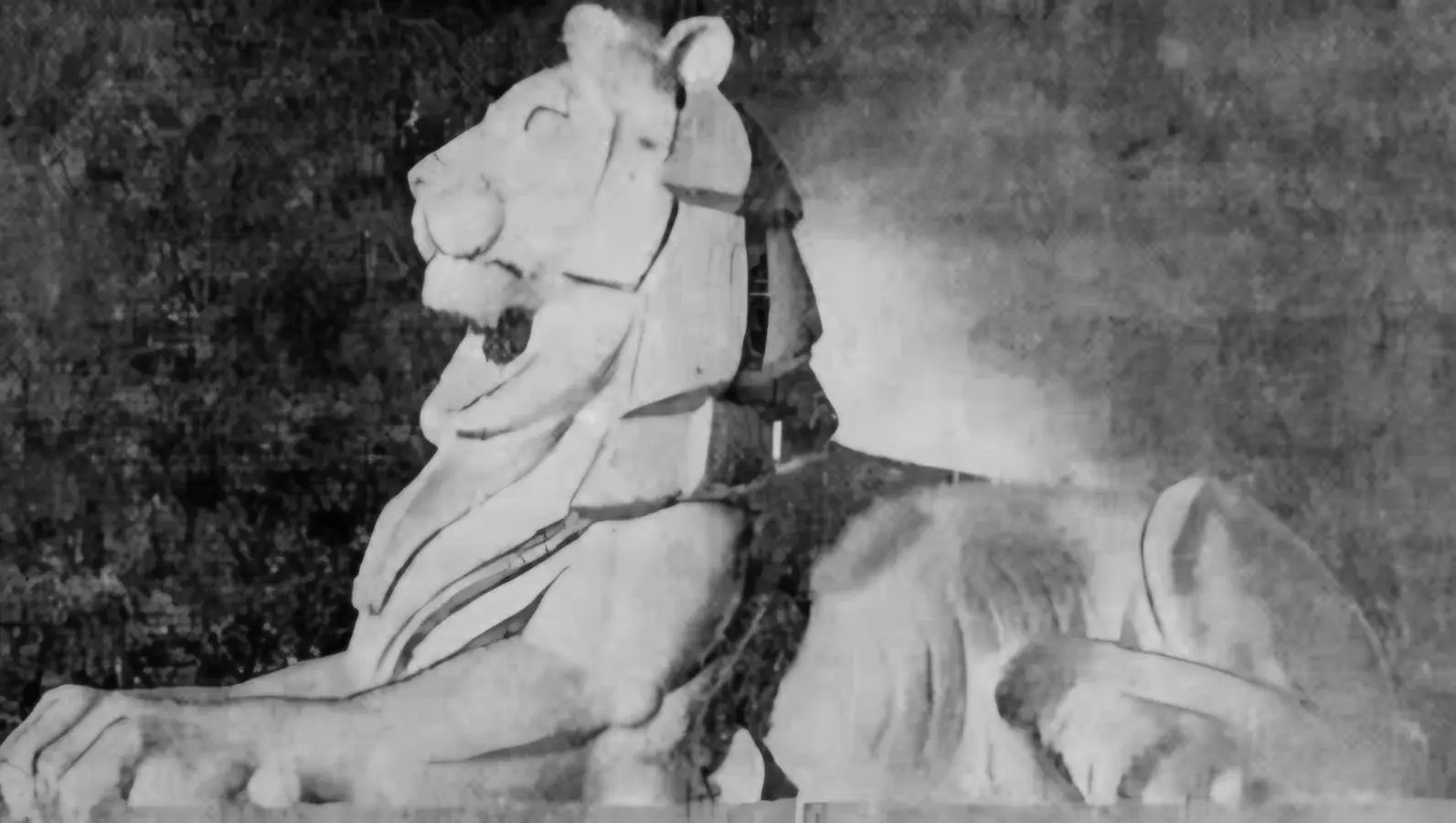
The Sun photographed the clay models with their maker, Charles Marega, putting on the finishing touches. They would be cast in plaster and then in concrete, to guard the Stanley Park end of the bridge: each lion 12 feet long.

Black-and-white newspaper photograph: a large clay model of a crouching lion in profile, in a workshop.
One of the clay lions, in profile. Photograph by W. B. Shelly, The Vancouver Sun, AI-assisted restoration by the Museum.The Vancouver Sun, 20 September 1938, p.11 · Public domain
Label, source and rights
Object
Photograph, from a newspaper page
Made by
W. B. Shelly, The Vancouver Sun
Reference
The Vancouver Sun, 20 September 1938, p.11
Rights
Public domain (Canada): photograph published before 1949
Sources
The Vancouver Sun, 20 September 1938, p.11. Full story: Charles Marega and the Lions Gate Bridge lions.
Evidence
Primary
Cite
Lions Gate Bridge Museum, “Marega’s lions take shape, in clay”, lionsgatebridge.org/museum#1938-09-20

Ten days later

The papers print the tolls, and the colours.

Museum find

car and driver
25¢
passenger or walker
5¢
safety factor
4 to 1

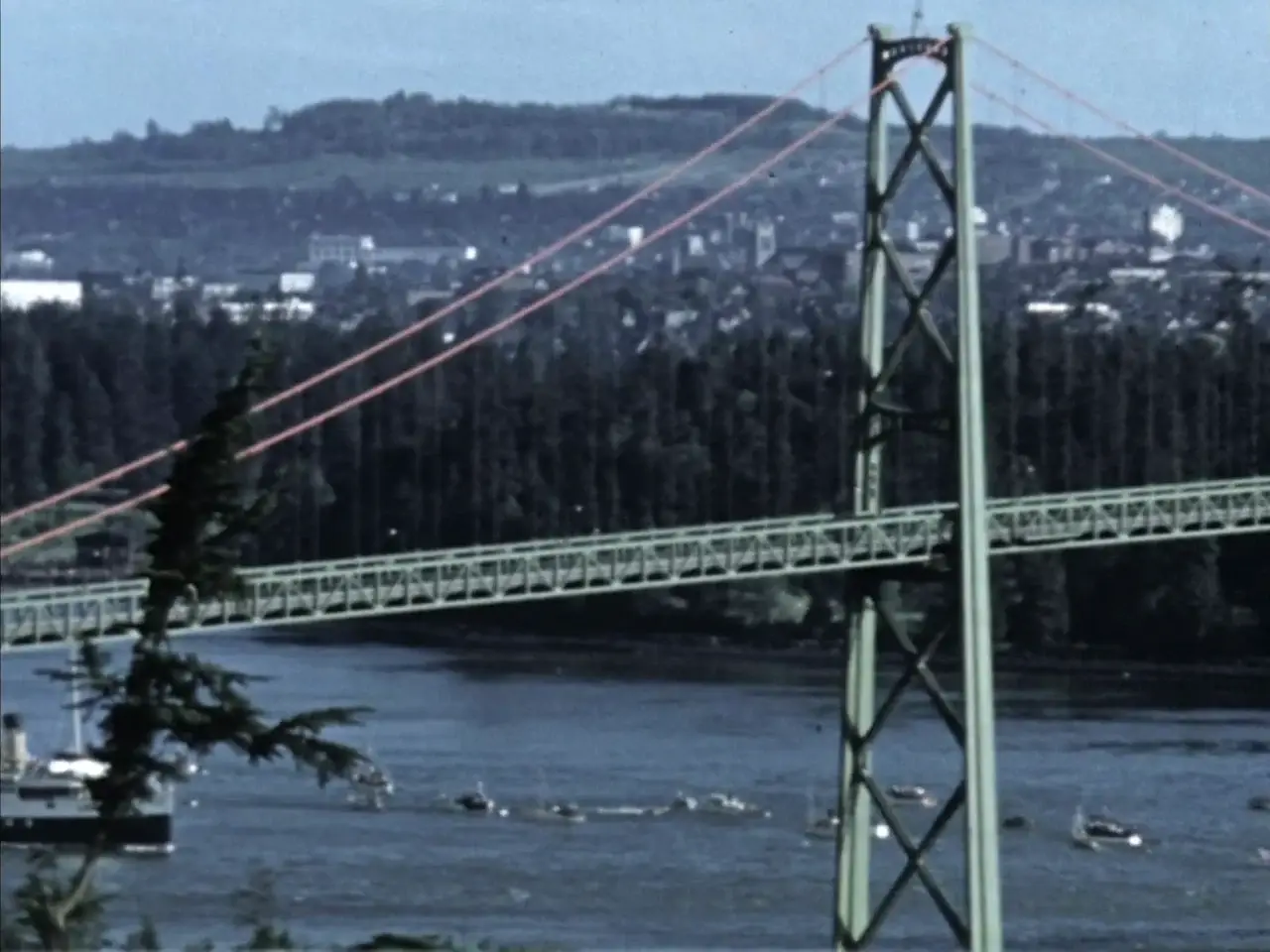
The Province had printed the company’s tolls the day before. A car and driver would pay 25 cents, each extra passenger 5, a walker 5. The first two were the rates in the 1927 act, the Sun later reported. The same day the Sun said the main cables would be “brilliant orange”, so that pilots could see them, over olive-green steel. It gave the safety factor as four to one.

What the Museum makes of it. Later accounts call the cables red. The Sun and the company’s 1939 booklet say orange.

The colours in 1939, on A.J.T. Taylor’s film.City of Vancouver Archives, AM1487-F07-: 2017-055.2, at 01:40 · Public domain
Label, source and rights
Object
Film frame, 16 mm, silent, colour
Made by
A.J.T. Taylor films
Reference
City of Vancouver Archives, AM1487-F07-: 2017-055.2, at 01:40
Rights
Public domain, archive’s determination of 13 June 2018
Sources
The Vancouver Daily Province, 29 September 1938, p.1, for the tolls; Daily Colonist, 30 September 1938 (Canadian Press); The Vancouver Sun, 30 September 1938, and 14 January 1955, for the 1927 act; company booklet, 1939, p.26.
Evidence
Primary, read by the Museum
Cite
Lions Gate Bridge Museum, “The papers print the tolls, and the colours”, lionsgatebridge.org/museum#1938-09-30

A signal station goes up at mid-span.

Museum find

It replaced the station at Prospect Point, “affording perfect control of marine traffic”, the film’s card says. For years the bridge signalled to ships with cones and balls hung from its beams. In fog, tugs answered with their whistles: one long and two short meant a tow.

The signal station being built at the centre of the bridge.City of Vancouver Archives, AM1487-F07-: 2012-091.1, “1st Narrows Bridge” (A.J.T. Taylor films), at 33:42 · Public domain
Label, source and rights
Object
Film frame, 16 mm Kodachrome, silent
Reference
City of Vancouver Archives, AM1487-F07-: 2012-091.1, “1st Narrows Bridge” (A.J.T. Taylor films), at 33:42
Rights
Public domain (Canada), archive’s determination of 22 October 2013
Sources
The Vancouver Sun, 6 October 1938; The Province, 18 December 1954, p.3.
Evidence
Primary
Cite
Lions Gate Bridge Museum, “A signal station goes up at mid-span”, lionsgatebridge.org/museum#1938-10

The Board of Trade crosses: the bridge’s first traffic.

Museum find

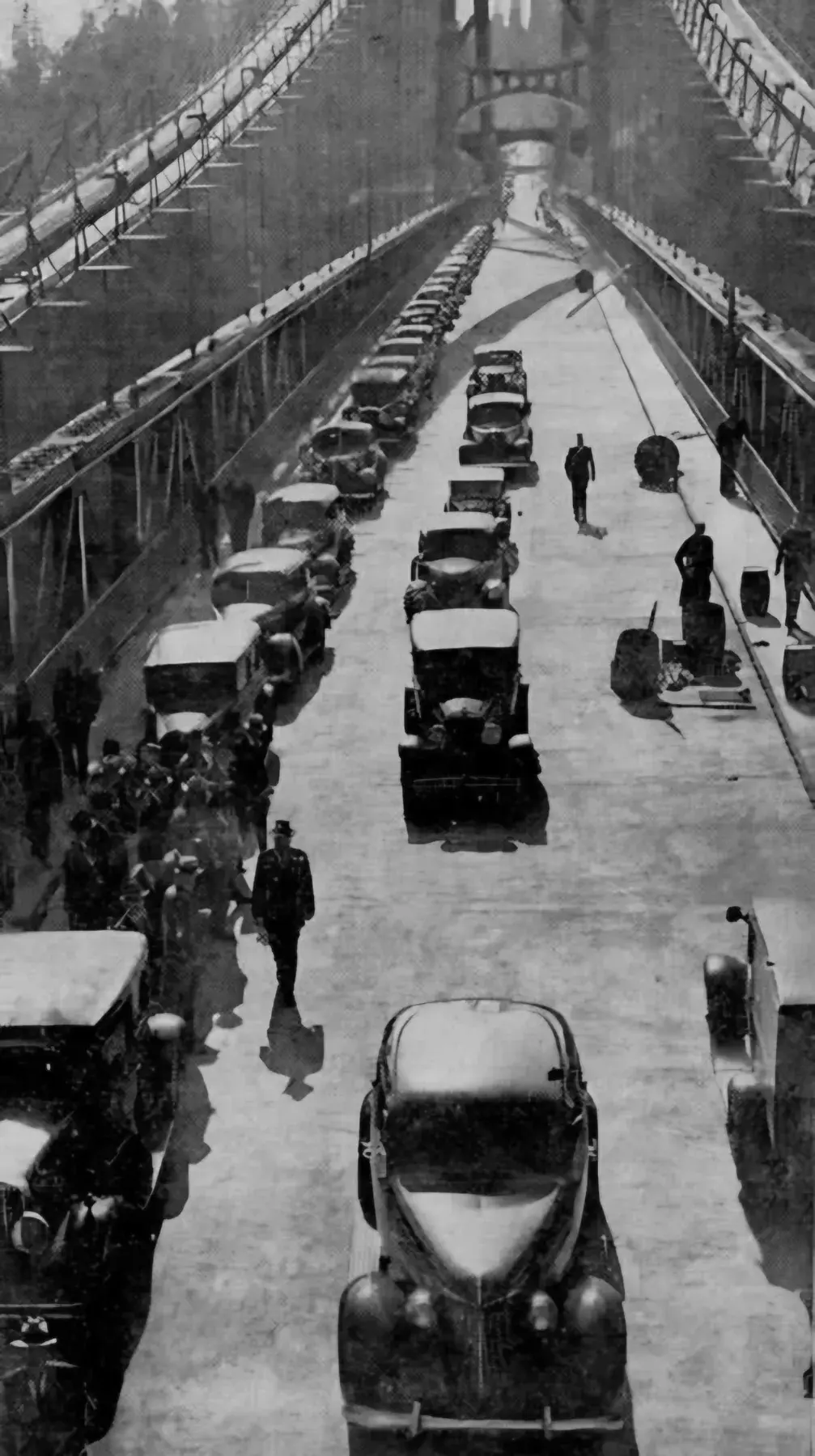
Scores of businessmen came over after lunch at the Stanley Park pavilion, guided by Major P. A. Curry of the bridge company. The Province wrote that they walked across the new pavement; the Sun said 80 cars drove over, and its photograph shows them. The deck was wide enough for three lanes, but a yellow line made it two.
Black-and-white newspaper photograph taken from above: a line of 1930s cars on the bridge deck between the railings, receding towards the far end.
The cars, seen from the signal station above the centre span. Photograph by W. B. Shelly, The Vancouver Sun, AI-assisted restoration by the Museum.The Vancouver Sun, 6 October 1938, p.1 · Public domain
Label, source and rights
Object
Photograph, from a newspaper page
Made by
W. B. Shelly, The Vancouver Sun
Reference
The Vancouver Sun, 6 October 1938, p.1
Rights
Public domain (Canada): photograph published before 1949
Sources
The Vancouver Sun, 6 October 1938, pp.1, 5; The Vancouver Daily Province, 6 October 1938, p.9; Daily Colonist, 7 October 1938 (Canadian Press).
Evidence
Primary. The papers differ on walking and driving.
Cite
Lions Gate Bridge Museum, “The Board of Trade crosses: the bridge’s first traffic”, lionsgatebridge.org/museum#1938-10-05

Eleven days later

Hundreds walk across before they are allowed to.

Museum find

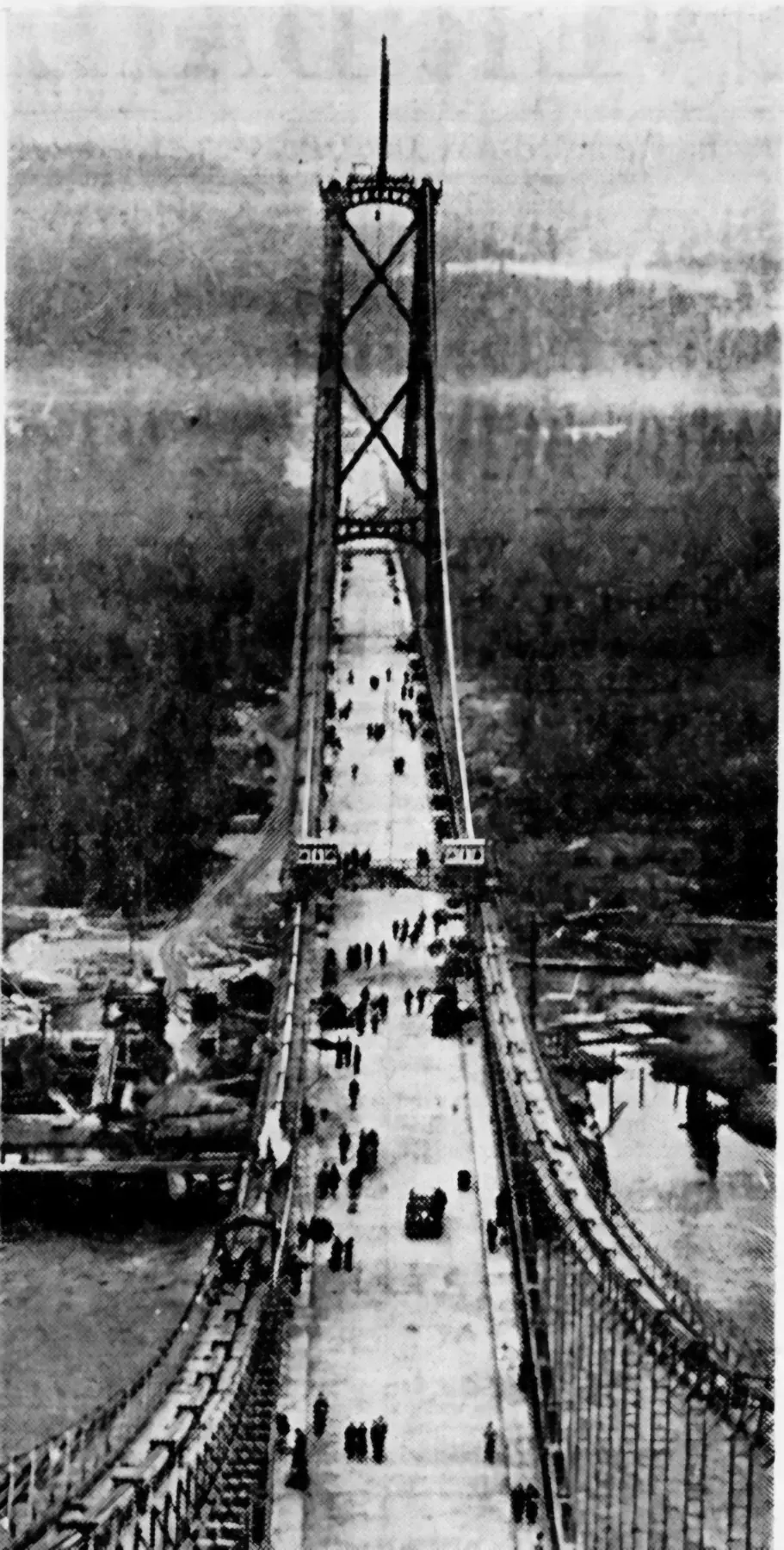
It was a Sunday. People strolled across the deck, 200 feet above the water, until the company had bars put up at both ends. The Province called it an “unauthorized” preview. Major Curry told the Sun the company had tried letting people on for half an hour: “We were swamped and had to close it again.”

Black-and-white newspaper photograph from a tower: the long bridge deck with people walking on it, the far tower and the North Shore beyond.
On the deck that Sunday. The Vancouver Daily Province, AI-assisted restoration by the Museum.The Vancouver Daily Province, 17 October 1938, p.2 · Public domain
Label, source and rights
Object
Photograph, from a newspaper page
Made by
The Vancouver Daily Province
Reference
The Vancouver Daily Province, 17 October 1938, p.2
Rights
Public domain (Canada): photograph published before 1949
Sources
The Vancouver Daily Province, 17 October 1938, p.2; The Vancouver Sun, 22 October 1938, p.1.
Evidence
Primary
Cite
Lions Gate Bridge Museum, “Hundreds walk across before they are allowed to”, lionsgatebridge.org/museum#1938-10-16

Three weeks later

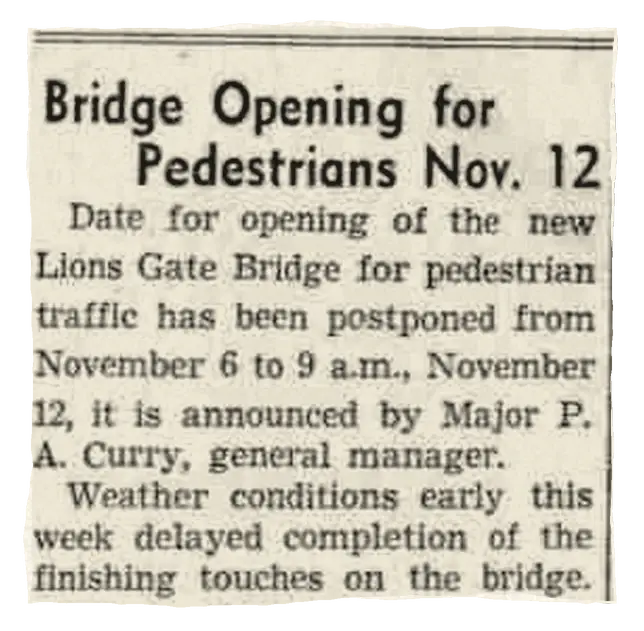
The opening date slips, one last time.

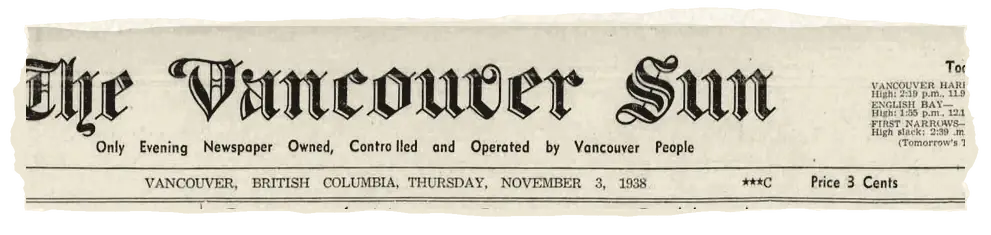
In September the engineers said the middle of November. In October it was 8 November, then 6 November for people on foot. Now the Sun printed the final word: 9 a.m., 12 November. Weather had held up the finishing touches.

Masthead of The Vancouver Sun, Thursday, November 3, 1938.Item headed Bridge Opening for Pedestrians Nov. 12: the date has been postponed from November 6 to 9 a.m., November 12.

The Vancouver Sun, 3 November 1938, p.1 · Extract, with credit

Label, source and rights
Object
Newspaper front page, extract
Made by
The Vancouver Sun
Reference
The Vancouver Sun, 3 November 1938, p.1
Rights
Short extract with credit (fair dealing)
Sources
The Vancouver Sun, 10 September, 27 and 29 October 1938; Daily Colonist, 30 September 1938.
Evidence
Primary
Cite
Lions Gate Bridge Museum, “The opening date slips, one last time”, lionsgatebridge.org/museum#1938-11-03

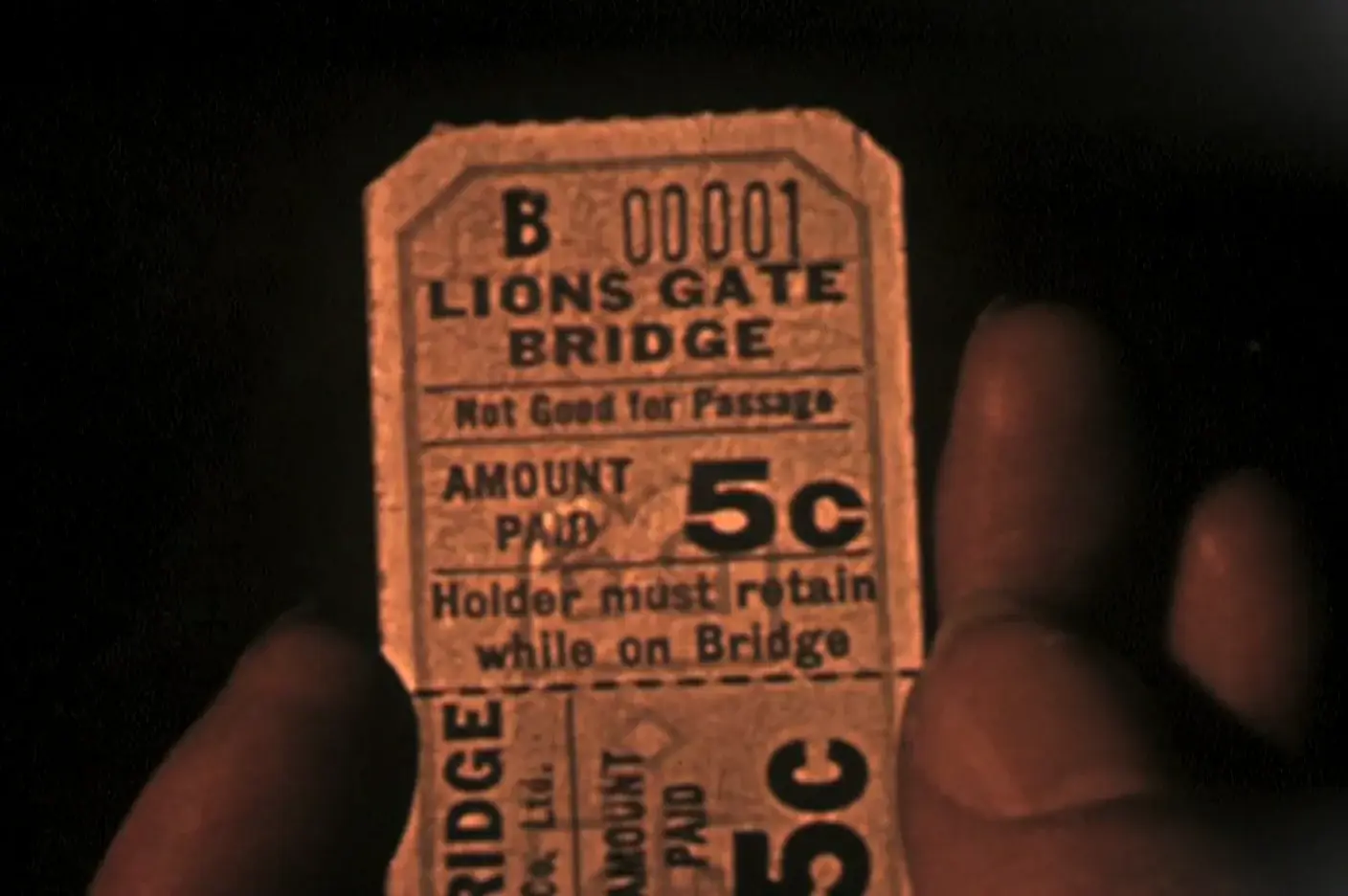
The camera films “the first ticket issued”: No. B 00001, 5 cents.

Museum find

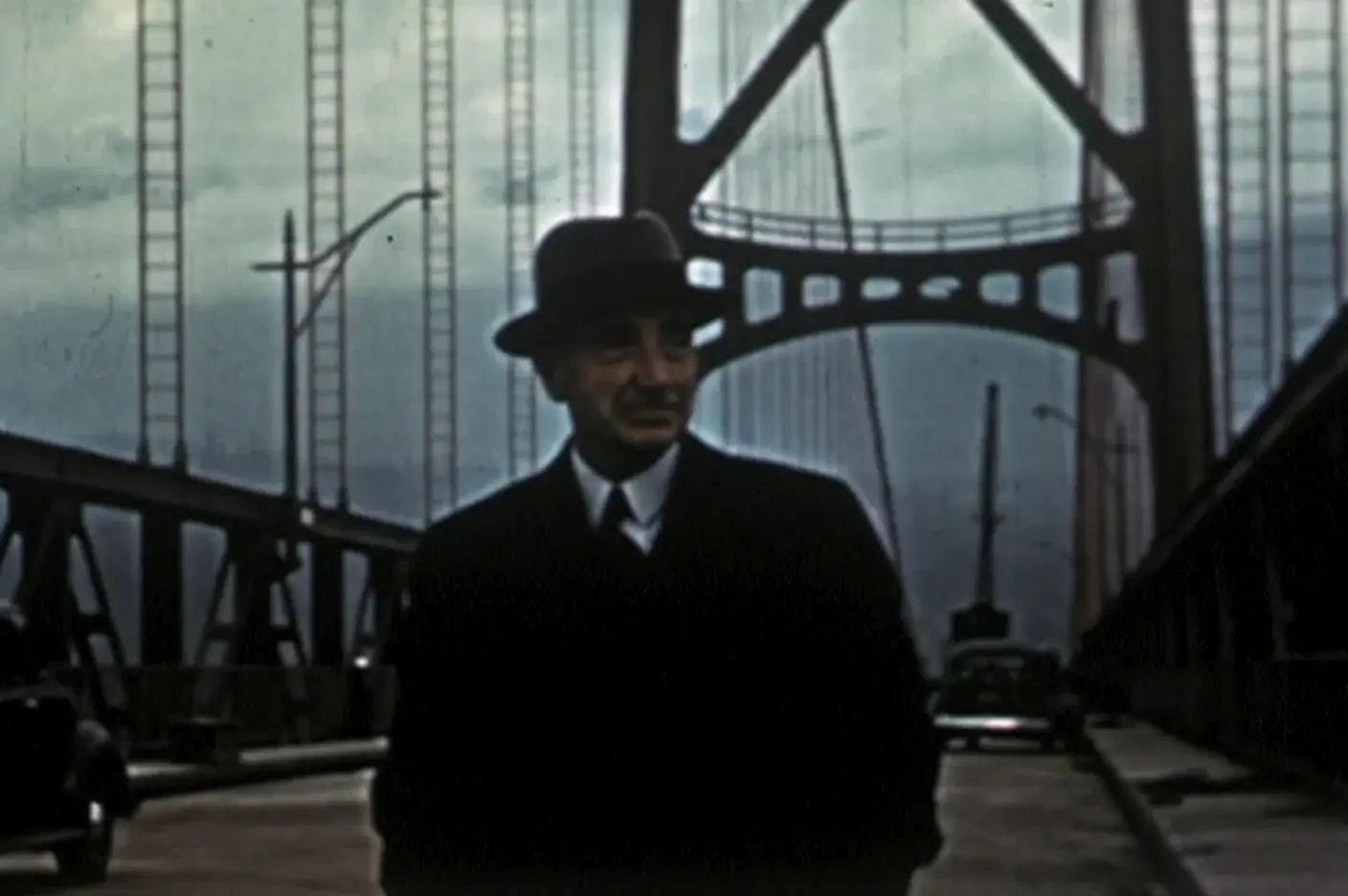
The film’s title card says John Anderson “inspects the structure and receives the first ticket issued”. He stands on the deck in a dark coat and hat. Then the ticket fills the screen.

What the Museum makes of it. The Museum reads this as a rehearsal, filmed for the company. Five cents was the fare for a walker or a passenger, not a car. Eighty cars had already crossed on 5 October, and on 16 October the company had opened the bridge for half an hour “as an experiment”. The first paying cars came ten days after this.

Label, source and rights
Object
Film frames, 16 mm Kodachrome, silent
Made by
A.J.T. Taylor films, 1937–39
Reference
City of Vancouver Archives, AM1487-F07-: 2012-091.1, “1st Narrows Bridge” (A.J.T. Taylor films), at 38:46–39:56
Rights
Public domain (Canada), archive’s determination of 22 October 2013
Sources
The Vancouver Sun, 22 October 1938, p.1; Daily Colonist, 30 September and 7 October 1938 (Canadian Press); West Vancouver Archives, Leyland fonds.
Evidence
Primary. The nature of the event is the Museum’s judgement.
Cite
Lions Gate Bridge Museum, “The camera films “the first ticket issued”: No. B 00001, 5 cents”, lionsgatebridge.org/museum#1938-11-04
Ticket No. B 00001.
Colour film frame: John Anderson in a dark coat and hat on the deck, the tower and cables rising behind him.
John Anderson on the deck.City of Vancouver Archives, AM1487-F07-: 2012-091.1, “1st Narrows Bridge” (A.J.T. Taylor films), at 38:46–39:56 · Public domain

IV

The opening 1938–39

Four dates are called the opening. This page says what each one was.

The bridge opens, on foot, in sleet.

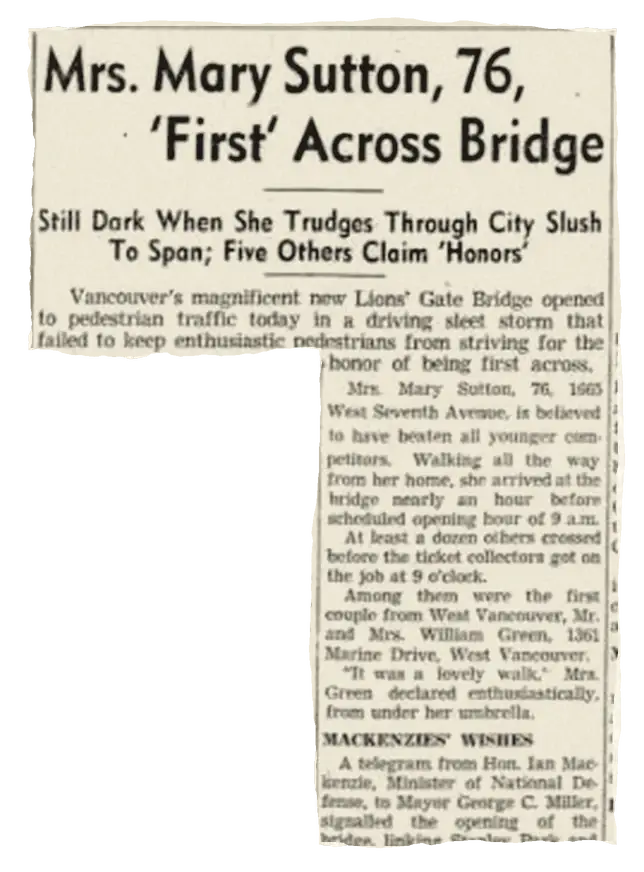
It was a Saturday. The Sun wrote that the bridge “opened to pedestrian traffic today in a driving sleet storm”. Tickets were due to start at 9 a.m., and at least a dozen people were across before then.

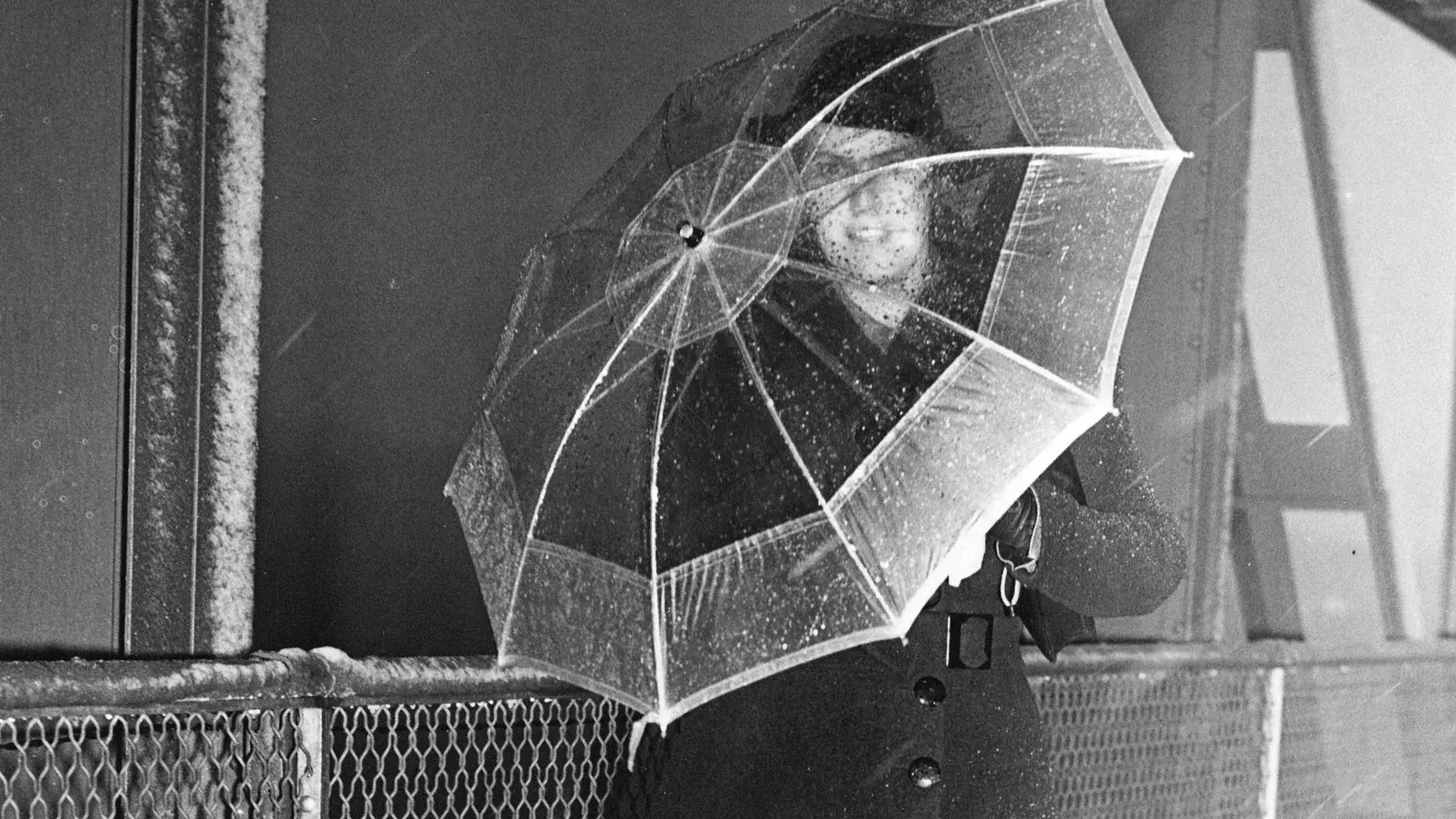
The paper gave the honour to Mrs. Mary Sutton, who set out from her home in the dark. Its headline made her 76; The Province wrote that she would be 76 in three weeks, so that morning she was 75. Five others claimed the honour too, and the Sun said such arguments “never will be settled”. A couple came straight from their wedding, the first lap of the honeymoon. Miss Doris Milligan crossed under a clear umbrella, and Major J. S. Matthews took her picture.

Label, source and rights
Object
Photograph; newspaper front page, extract
Made by
Major J. S. Matthews; The Vancouver Sun
Reference
City of Vancouver Archives, AM54-S4-: Port P822. The Vancouver Sun, 12 November 1938, pp.1, 16
Rights
Photograph: public domain, on the archive’s record (read 29 October 2026). Newspaper: short extract with credit (fair dealing)
Sources
The Vancouver Sun, 12 November 1938, pp.1, 16; The Vancouver Daily Province, 12 November 1938, p.1, for her age. Full story: Who was first across the Lions Gate Bridge?
Evidence
Primary
Cite
Lions Gate Bridge Museum, “The bridge opens, on foot, in sleet”, lionsgatebridge.org/museum#1938-11-12
Black-and-white photograph: a young woman seen through a clear umbrella at the bridge railing, in sleet, on opening day.
Miss Doris Milligan crosses the bridge. Photograph by Major J. S. Matthews.City of Vancouver Archives, AM54-S4-: Port P822. The Vancouver Sun, 12 November 1938, pp.1, 16
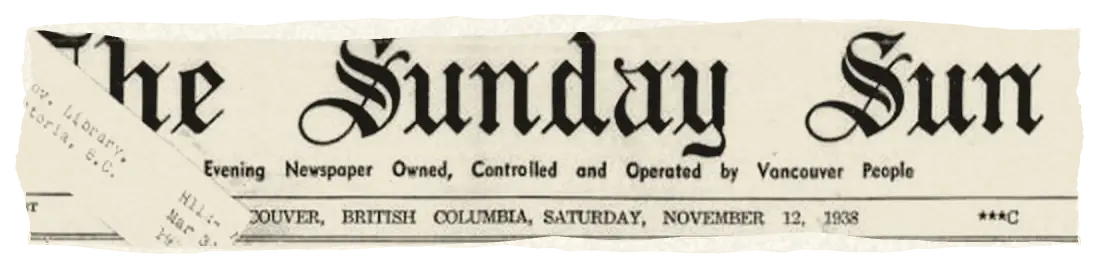
Masthead of The Sunday Sun, Saturday, November 12, 1938.Front-page story: Mrs. Mary Sutton, 76, First Across Bridge. Still dark when she trudges through city slush to span; five others claim honors.

Two days later

Cars cross, and car tolls begin.

car and driver
25¢
each passenger
5¢
vehicles, first week
over 15,000

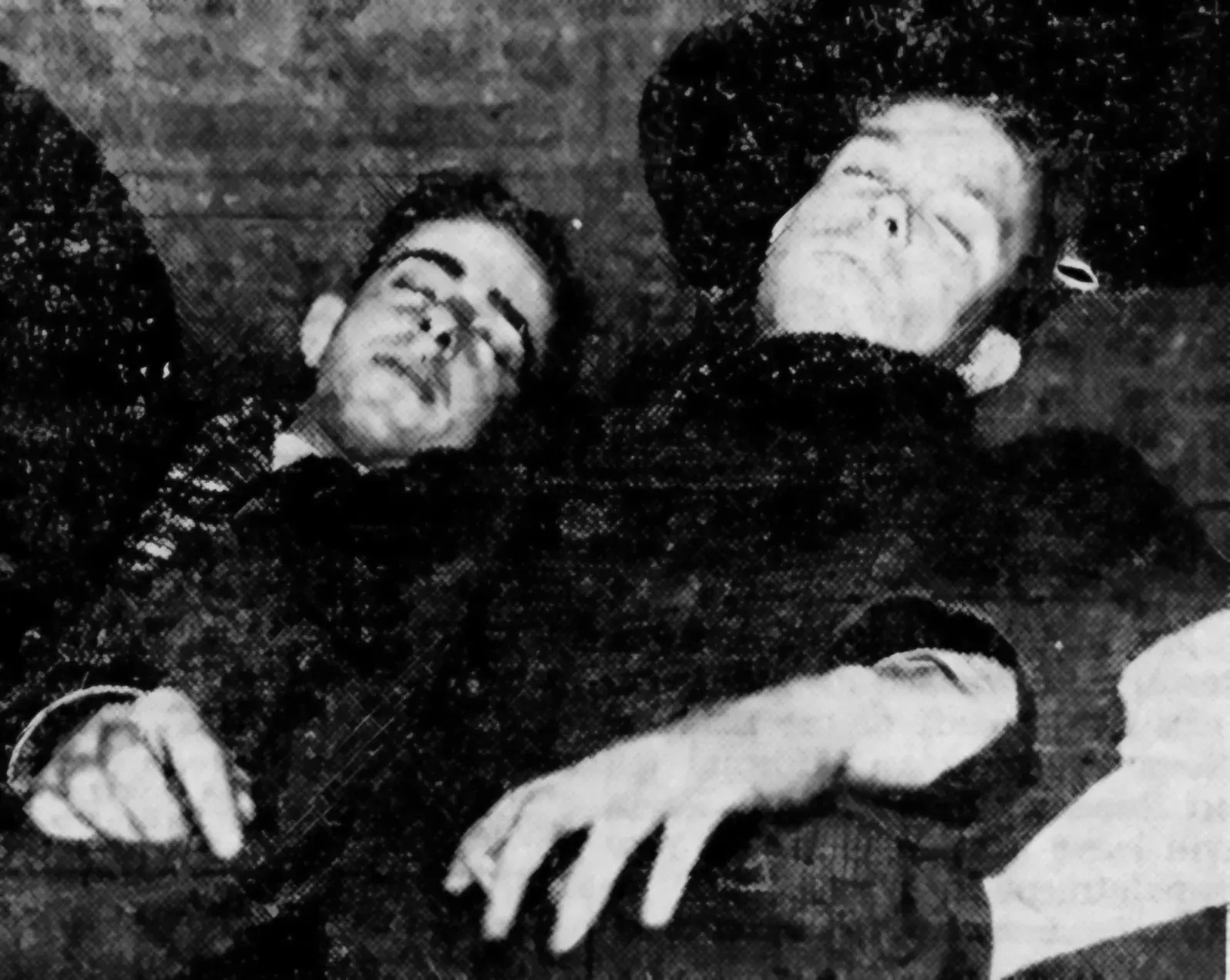
The cars had to wait because the road surface on the north approach needed time to set. Douglas Craig queued from 11 the night before to be first northbound. A car and driver paid 25 cents, each passenger 5.

Label, source and rights
Object
Film frame, 16 mm Kodachrome, silent; photograph from a newspaper page
Made by
A.J.T. Taylor films; The Vancouver Daily Province
Reference
City of Vancouver Archives, AM1487-F07-: 2012-091.1, “1st Narrows Bridge” (A.J.T. Taylor films), at 38:41. The Vancouver Daily Province, 14 November 1938, p.9
Rights
Public domain (Canada): film, archive’s determination of 22 October 2013; photograph published before 1949
Sources
The Vancouver Sun, 12 November 1938, p.16; 14 November 1938, p.1; 22 November 1938, p.2; The Vancouver Daily Province, 14 November 1938, p.9, and 23 November 1938, p.16; Daily Colonist, 30 September 1938.
Evidence
Primary
Cite
Lions Gate Bridge Museum, “Cars cross, and car tolls begin”, lionsgatebridge.org/museum#1938-11-14
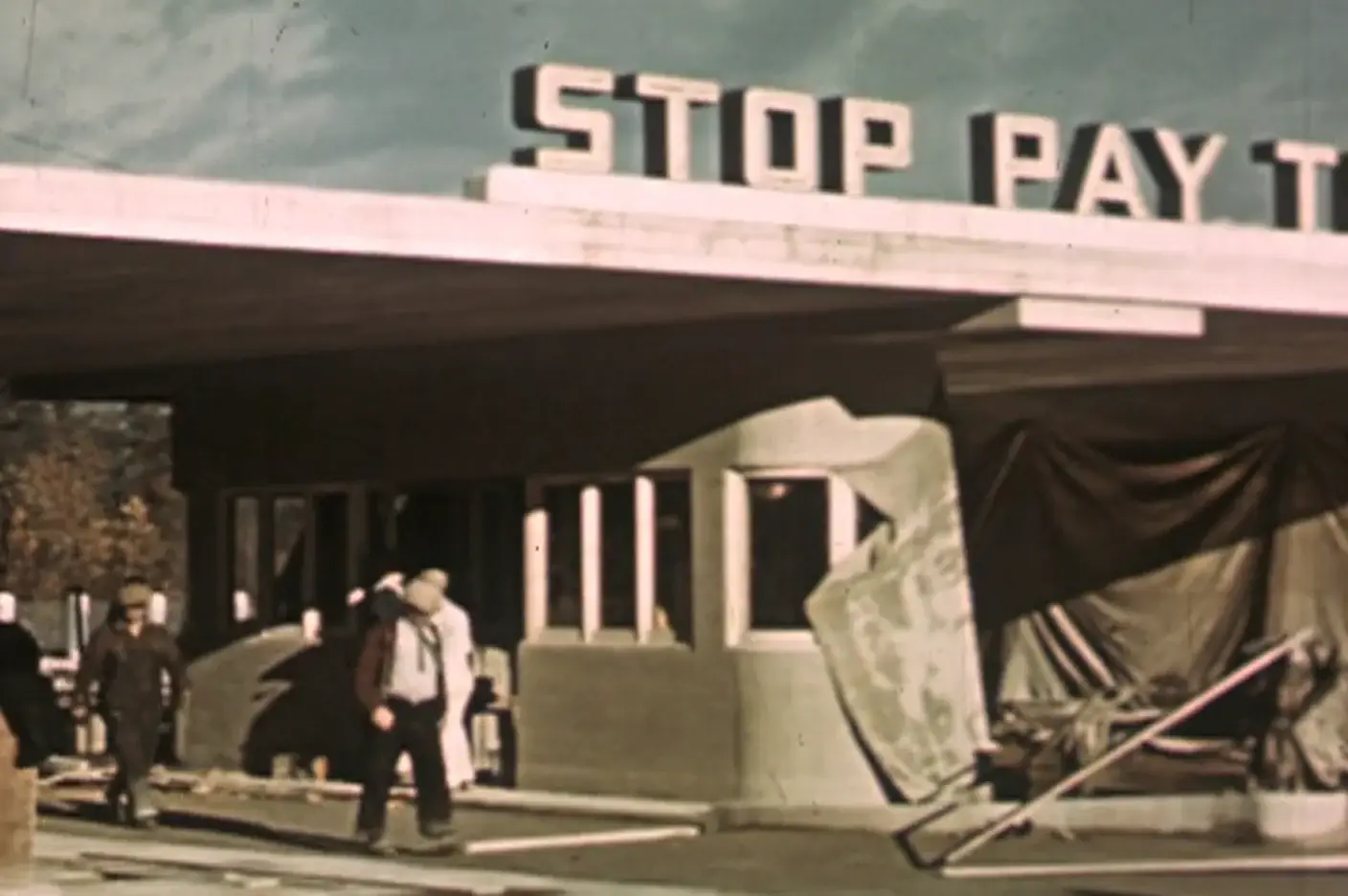
The toll plaza in the last days of work.
Black-and-white newspaper photograph: two young men asleep in the front seat of a car.
Douglas Craig and Jimmy Pratt asleep in their car after the night’s wait. The Vancouver Daily Province, AI-assisted restoration by the Museum.City of Vancouver Archives, AM1487-F07-: 2012-091.1, “1st Narrows Bridge” (A.J.T. Taylor films), at 38:41. The Vancouver Daily Province, 14 November 1938, p.9 · Public domain

The deck rises and falls with the weather.

Museum find

That cold morning the deck stood “about a foot” higher than on a summer day, the Sun reported: the cables shrink and lift it. Tell them the temperature, the load on the deck and the tide, the engineers said, and they could give its height to a fraction of an inch. The port’s 2024 guide still counts air temperature and traffic on the bridge in a ship’s clearance.

cold: cables shrink, deck riseswarm: cables stretch, deck fallsabout a footsouth towernorth towercold: cables shrink, deck riseswarm: cables stretch, deck fallsabouta footsouth towernorth tower
The change at mid-span, not to scale. Diagram by the Museum.
Label, source and rights
Object
Diagram
Made by
Lions Gate Bridge Museum
Sources
The Vancouver Sun, 14 November 1938, p.10; Vancouver Fraser Port Authority, Port Information Guide, January 2024.
Evidence
Primary, read by the Museum
Cite
Lions Gate Bridge Museum, “The deck rises and falls with the weather”, lionsgatebridge.org/museum#1938-11-14-deck

The lions go up.

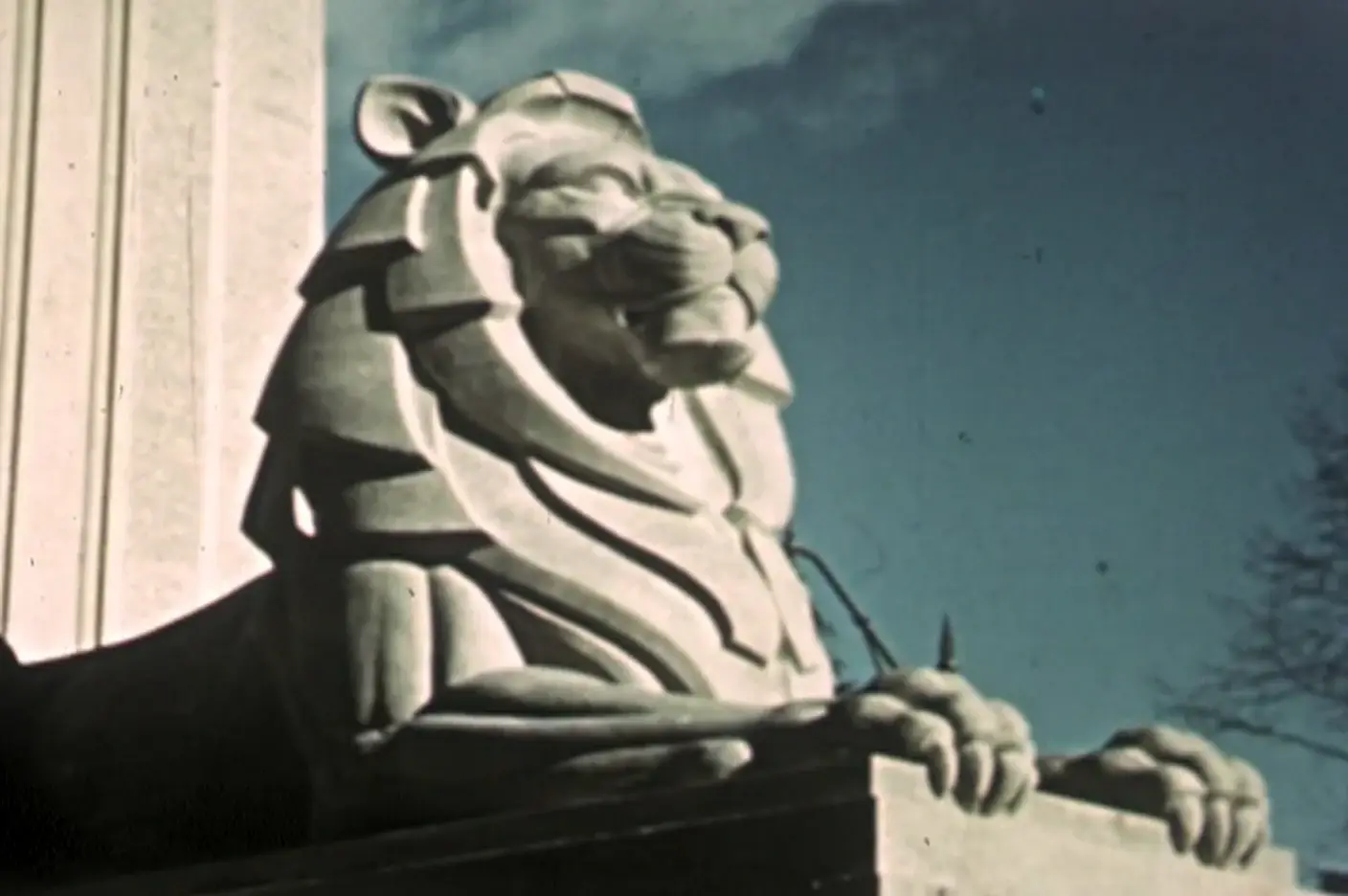
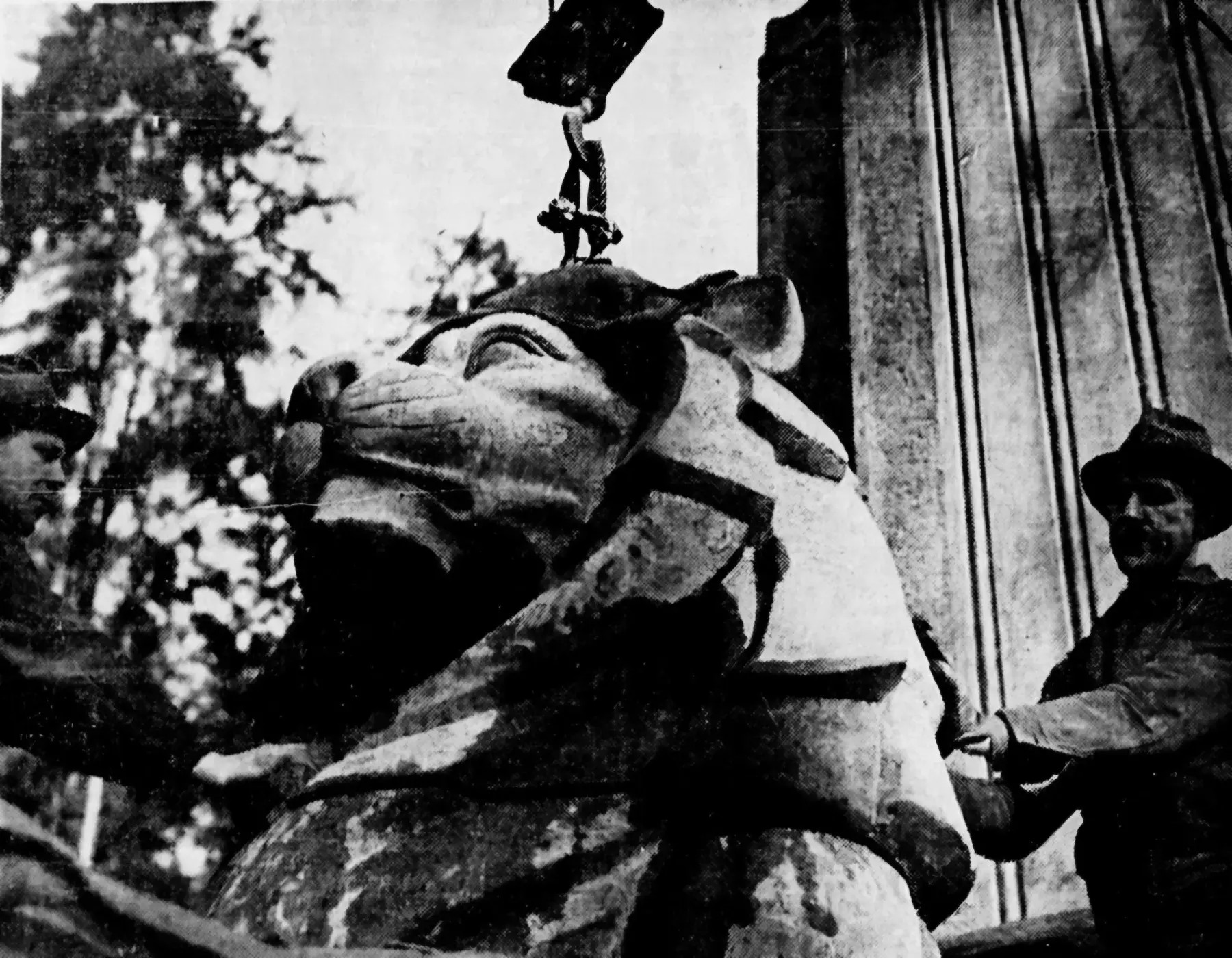
Charles Marega’s two concrete lions were “not ready yet” on opening day, and their bases stood empty. Early on Monday 23 January 1939, ten weeks later, derricks mounted on trucks lifted the bodies onto the south approach, and workmen lowered the two-ton heads on. Taylor commissioned them on a tight budget: “it has to be cheap,” Marega wrote to his family.

Label, source and rights
Object
Film frame, 16 mm Kodachrome, silent; photograph from a newspaper page
Made by
A.J.T. Taylor films; The Vancouver Daily Province
Reference
City of Vancouver Archives, AM1487-F07-: 2012-091.1, “1st Narrows Bridge” (A.J.T. Taylor films), at 40:07. The Vancouver Daily Province, 23 January 1939, p.22
Rights
Public domain (Canada): film, archive’s determination of 22 October 2013; photograph published before 1949
Sources
The Vancouver Sun, 12 November 1938, p.16, and 23 January 1939, p.20; The Vancouver Daily Province, 20 January 1939, p.28, and 23 January 1939, p.22; Vancouver Courier, 2019, for the letter.
Evidence
Primary
Cite
Lions Gate Bridge Museum, “The lions go up”, lionsgatebridge.org/museum#1939-01-23
“Sculptor Charles Marega’s splendid Lions guard the south approach,” says the film’s card.
Black-and-white newspaper photograph: a crane lowers a lion’s concrete head towards its body while two workmen guide it.
Workmen lower a two-ton head into place that morning. The Vancouver Daily Province, AI-assisted restoration by the Museum.City of Vancouver Archives, AM1487-F07-: 2012-091.1, “1st Narrows Bridge” (A.J.T. Taylor films), at 40:07. The Vancouver Daily Province, 23 January 1939, p.22 · Public domain

Hon. A. E. Guinness sails in on his four-masted yacht Fantome, 1,223 tons, to see the new bridge.

The Vancouver Sun, 22 March 1939.

Charles Marega dies at the Vancouver School of Art, at the end of a class. The Sun’s obituary calls the lions his latest work.

The Vancouver Sun, 25 March 1939, p.8; Daily Colonist, 25 March 1939.

A new toll register shows each payment on a neon indicator.

The Vancouver Sun, 17 May 1939, p.5.

The company holds its own opening. Taylor calls the bridge “a lusty child”.

Museum find

open already
6 months
tolls a month
about $20,000
guests
about 70

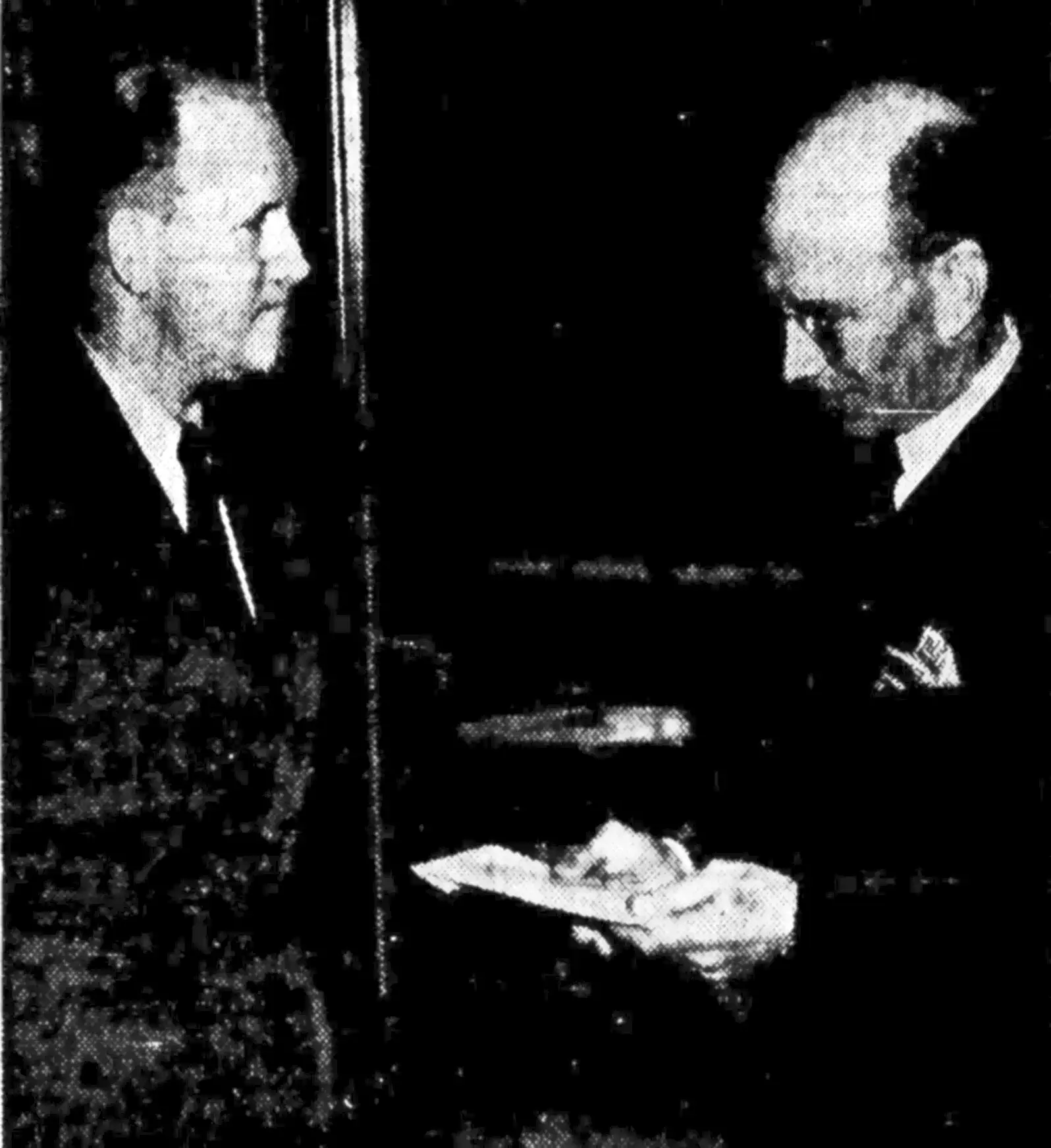
A line of cars drove from the Stanley Park pavilion over the bridge “with all the official dignity of a slow march”, and about seventy guests went on to the Capilano Golf and Country Club. There Allan Gentles, for the steel contractors, handed A.J.T. Taylor the consulting engineers’ certificate of completion. Taylor announced that he was leaving the company, and said: “This bridge, like a lusty child has been born, richly endowed in capacity to render service for long years ahead.”

Black-and-white newspaper photograph: two men in dark suits face each other indoors; one holds a paper.
Allan Gentles presents the certificate of completion to A.J.T. Taylor. The Vancouver Daily Province, 27 May 1939, p.21, AI-assisted restoration by the Museum.The Vancouver Daily Province, 27 May 1939, p.21 · Public domain
Label, source and rights
Object
Photograph from a newspaper page
Made by
The Vancouver Daily Province
Reference
The Vancouver Daily Province, 27 May 1939, p.21
Rights
Public domain (Canada): photograph published before 1949
Sources
The Vancouver Sun, 26 May 1939, p.1 and p.6 (“Like Lusty Child”); The Vancouver Daily Province, 27 May 1939, p.21. Later accounts, among them MONOVA and BC Magazine, shorten the line to “A lusty child has been born.”
Evidence
Primary, read by the Museum
Cite
Lions Gate Bridge Museum, “The company holds its own opening. Taylor calls the bridge “a lusty child””, lionsgatebridge.org/museum#1939-05-26

Three days later

The King and Queen drive across, and do not stop.

Museum find

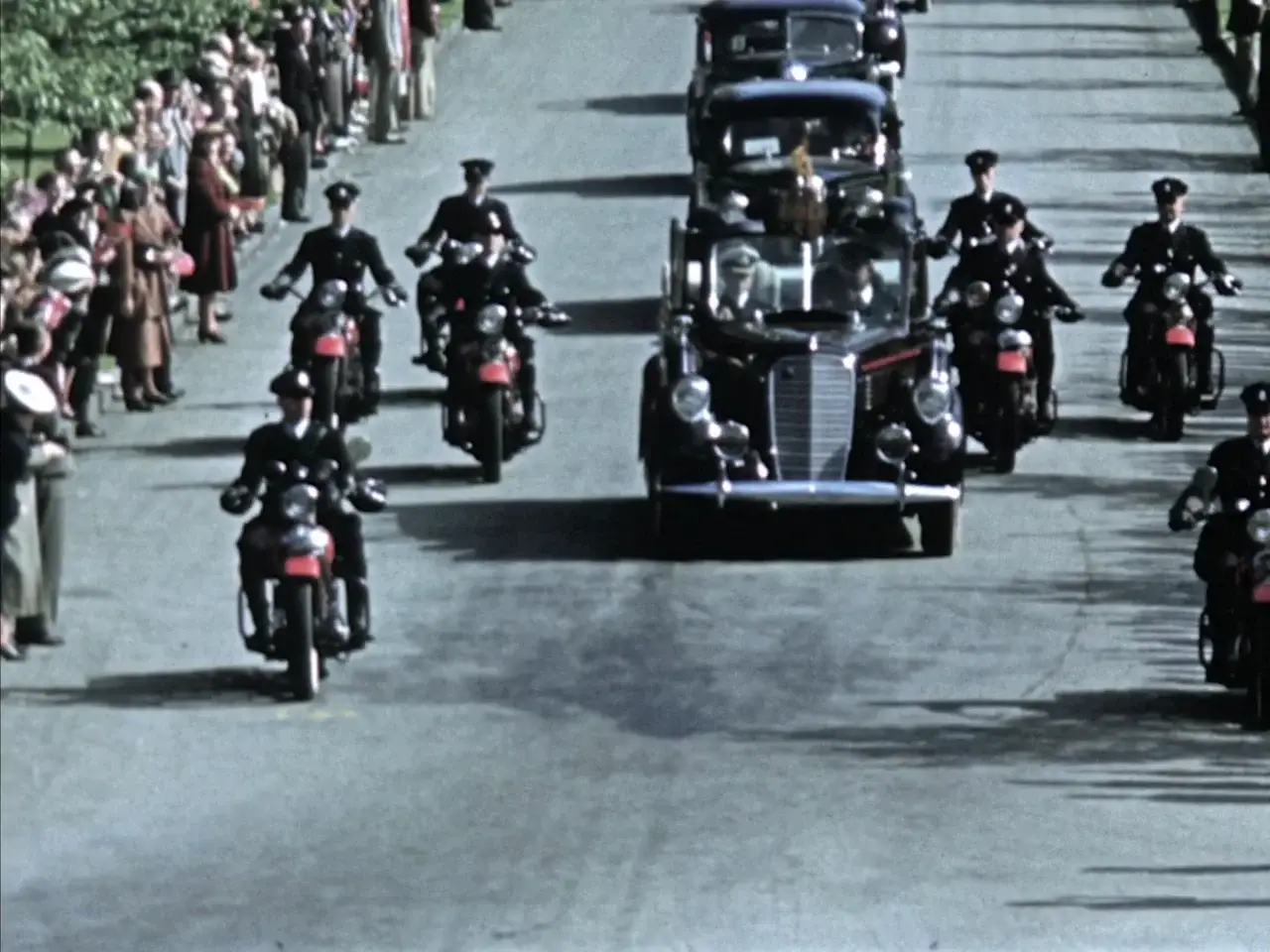
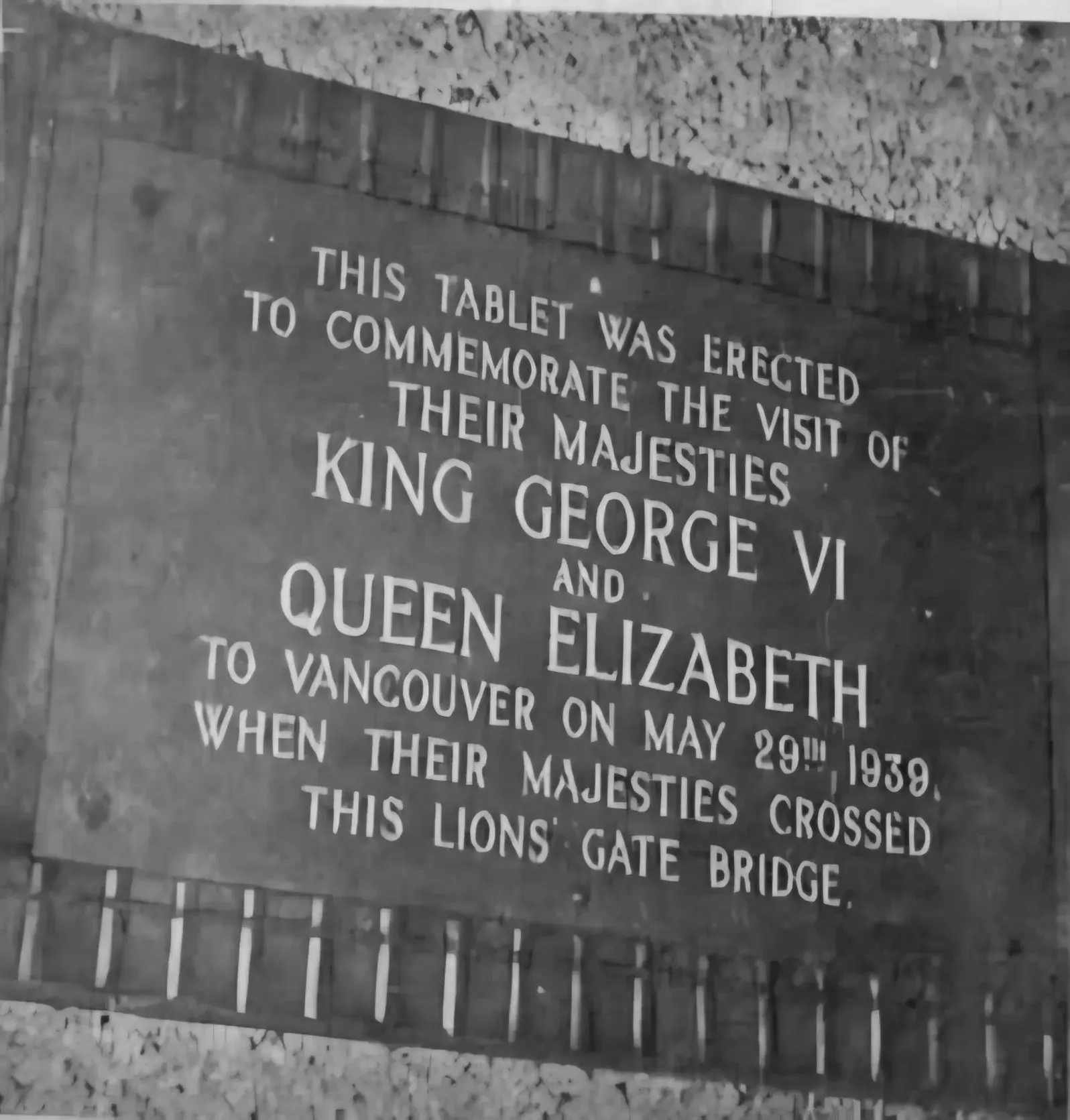
George VI and Queen Elizabeth came over the Second Narrows Bridge, up to the new British Pacific Properties and across the Lions Gate to their ship. The bridge closed to everyone at 1 p.m., and the royal car was due across at 4:15. The company had held its own ceremony three days earlier. The royal couple had no part in it.

Label, source and rights
Object
Film frame, 16 mm, silent, colour; photograph from a newspaper page
Reference
City of Vancouver Archives, AM1487-F07-: 2017-055.2, at 01:29. The Vancouver Sun, 30 May 1939, p.14
Rights
Public domain: film, archive’s determination of 13 June 2018; photograph published before 1949
Sources
Daily Colonist, 30 May 1939 (Canadian Press), for the route; The Vancouver Sun, 23 May 1939, p.3, and 27 May 1939, p.1 (about 4:15 p.m. at the bridge) and p.2 (the bridge closed from 1 p.m. to 5:30 p.m.), for the timetable. The Vancouver Sun, 30 May 1939, p.14, for the tablets.
Evidence
Primary
Cite
Lions Gate Bridge Museum, “The King and Queen drive across, and do not stop”, lionsgatebridge.org/museum#1939-05-29
The royal car, filmed by A.J.T. Taylor. The car is not on the bridge in this shot.
Black-and-white newspaper photograph of a bronze tablet on a pylon: erected to commemorate the visit of King George VI and Queen Elizabeth to Vancouver on May 29th 1939, when Their Majesties crossed this Lions’ Gate Bridge.
The bronze tablet unveiled that day says the King and Queen “crossed” the bridge. The Vancouver Sun, 30 May 1939, p.14, AI-assisted restoration by the Museum.City of Vancouver Archives, AM1487-F07-: 2017-055.2, at 01:29. The Vancouver Sun, 30 May 1939, p.14 · Public domain

The company draws its bridge.

feet, main span
1,550
feet, side spans
614
feet of clearance
200

A main span of 1,550 feet, side spans of 614, and 200 feet of clearance at mid-span above high water. The booklet ends its table of statistics with its proudest line: “Longest suspension bridge in the British Empire.”

Label, source and rights
Object
Printed drawing, in a 49-page booklet
Made by
The Vancouver Sun for the company; photographs by Leonard Frank
Reference
Lions Gate Bridge, Vancouver, Canada, 1939. Digitized by Langara College Library, Internet Archive
Rights
Public Domain Mark 1.0, on the item
Sources
Lions Gate Bridge, Vancouver, Canada, 1939, pp.23–24.
Evidence
Primary, the company’s own account
Cite
Lions Gate Bridge Museum, “The company draws its bridge”, lionsgatebridge.org/museum#1939
Printed elevation drawing of the bridge: Stanley Park anchorage on the left, two towers, the main span of 1,550 feet, the steel viaduct and earth embankment rising to the north.
General elevation, from the 1939 booklet, pp.23–24. Open the whole drawing.Lions Gate Bridge, Vancouver, Canada, 1939. Digitized by Langara College Library, Internet Archive · Public domain

V

The toll years 1939–63

Private until 1955, provincial after. A car and its driver paid a quarter until 1963.

An Empress passes under.

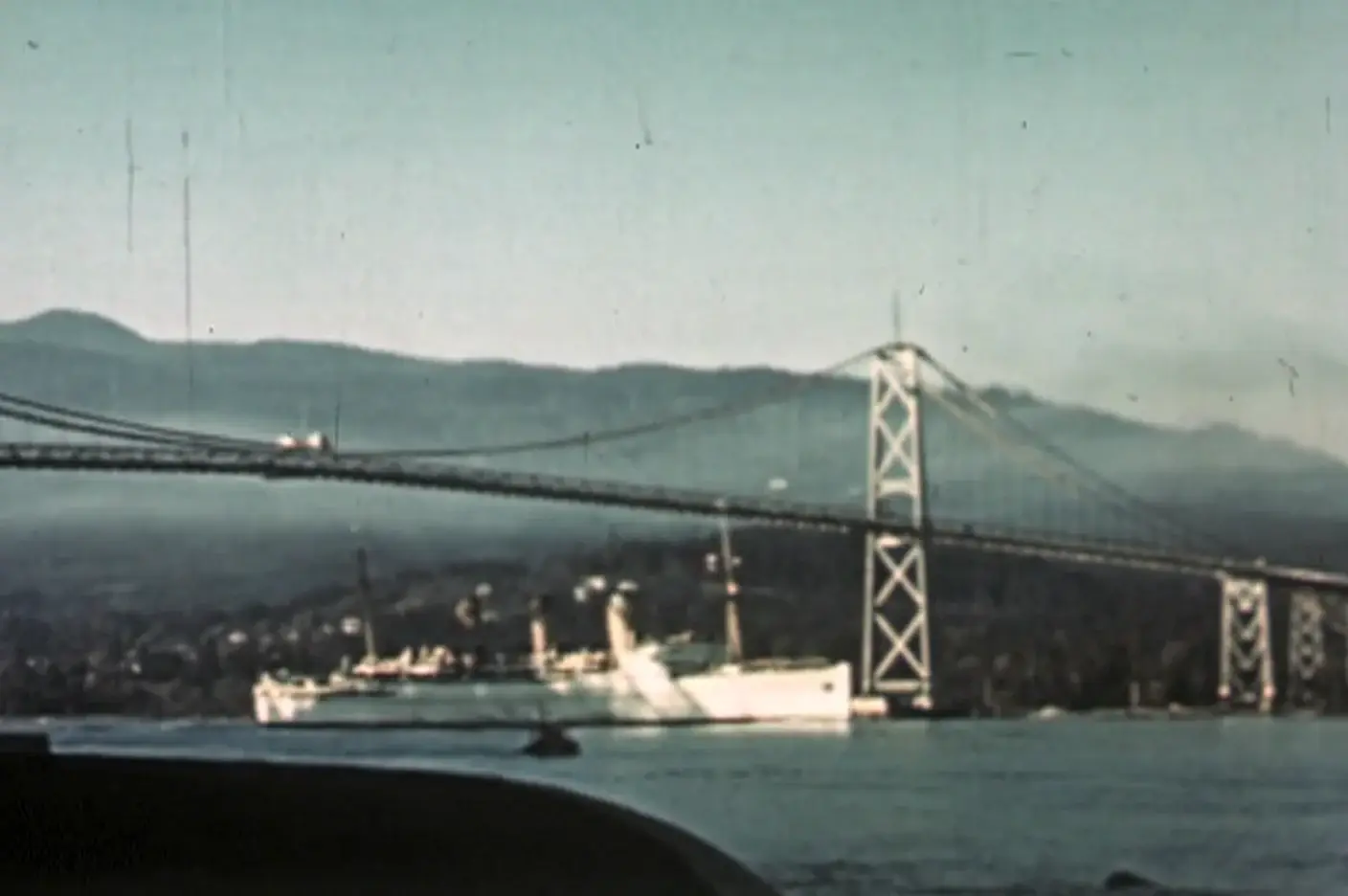
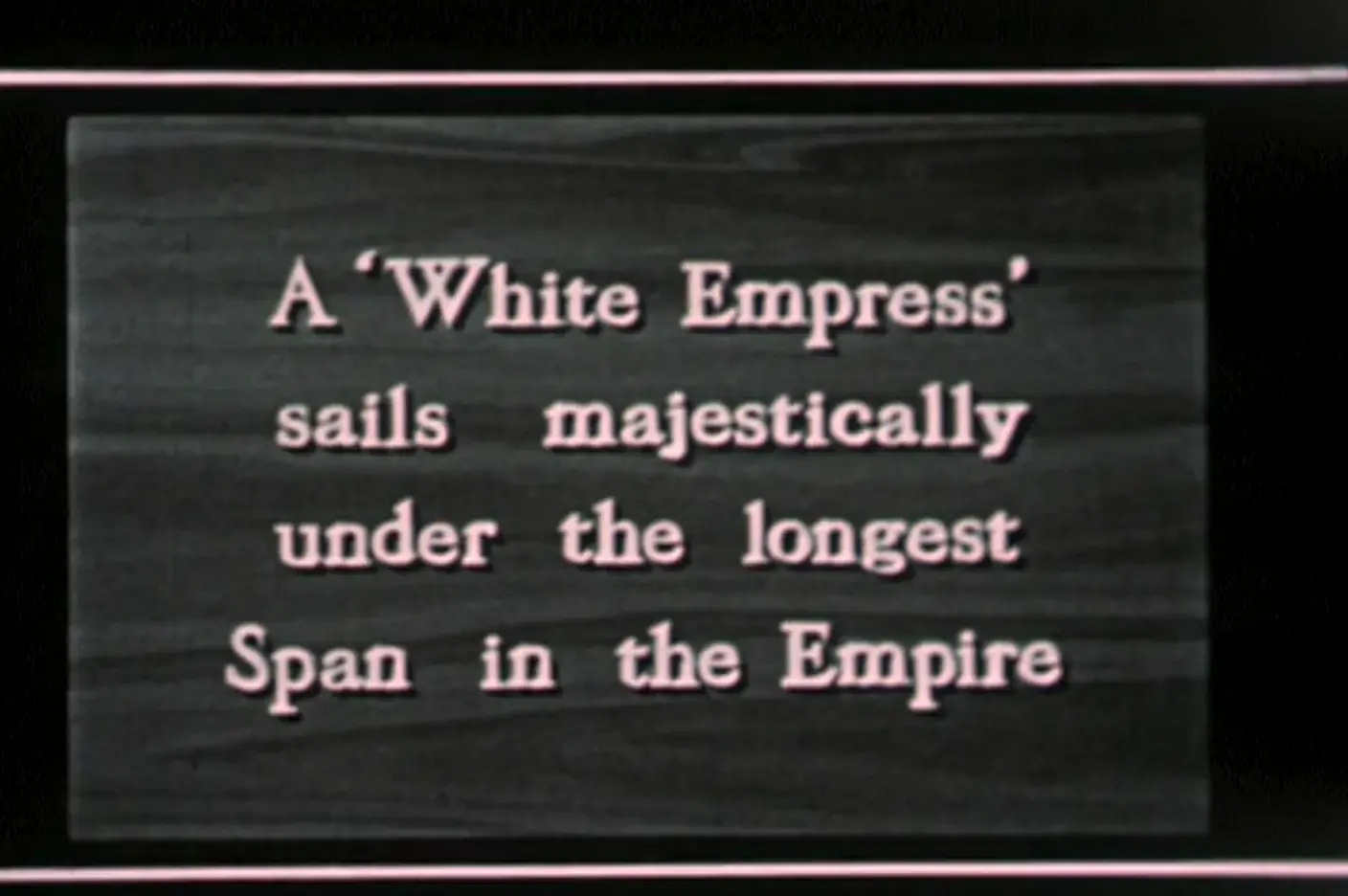
The photograph at the top of this page shows RMS Empress of Canada under the bridge, three months into the war. The company’s film had already shown two Canadian Pacific liners passing under: a “White Empress”, then the Empress of Japan, clearing the span “with 30 feet to spare”.

Label, source and rights
Object
Film frames, 16 mm Kodachrome, silent
Made by
A.J.T. Taylor films, 1937–39
Reference
City of Vancouver Archives, AM1487-F07-: 2012-091.1, “1st Narrows Bridge” (A.J.T. Taylor films), at 40:13 and 40:31
Rights
Public domain (Canada), archive’s determination of 22 October 2013
Sources
City of Vancouver Archives record for CVA 99-2949, for the photograph at the top of the page; the company’s film at 40:13 and 40:38 for the two ships. The archive dates the reel 1937–38; it also shows the lions, placed in January 1939.
Evidence
Primary
Cite
Lions Gate Bridge Museum, “An Empress passes under”, lionsgatebridge.org/museum#1939-12
Colour film frame: a large white liner passes under the bridge deck beside the north tower, a car on the deck above, mountains in haze behind.
A “White Empress” under the span.
Film title card: A ‘White Empress’ sails majestically under the longest Span in the Empire.
The film’s card.City of Vancouver Archives, AM1487-F07-: 2012-091.1, “1st Narrows Bridge” (A.J.T. Taylor films), at 40:13 and 40:31 · Public domain
1939–47Show 13 more datesHide these 13 dates

West Vancouver’s own buses make their first trip across.

West Vancouver Archives, Leyland fonds, catalogue entry.

Taylor goes to work for the British government in the war, coordinating British and American factories and tackling a torpedo shortage.

d’Acres & Luxton, Lions Gate, 1999, p.136.

Indian Affairs officials, exempt on duty under the 1936 lease, are still paying 25 cents a crossing, against 15 on the Second Narrows. The company proposes a Bridge Pass, in books of 25.

Library and Archives Canada, RG10 vol. 7745, file 23167-4, Bridge Pass papers, 19 July to 5 August 1940; Canada Gazette, Extra, 3 July 1939, for the Second Narrows toll.

The company reports an operating loss of $183,805 for 1940.

The Vancouver Sun, 23 April 1941, p.29. Headline and summary only.

The vessel Chilliwack runs aground in fog east of the bridge at 3 a.m.

The Vancouver Sun, 21 October 1941, p.8. Headline and summary only.

S. R. Banks publishes a 60-page account of the bridge through the Engineering Institute of Canada.

S. R. Banks, The Lions’ Gate Bridge, Engineering Institute of Canada, 1942 (60 pp.).

The company reports a loss of $131,490.80 for 1942.

The Vancouver Sun, 16 April 1943, p.27. Headline and summary only.

A gale fells more than 100 trees and blocks the main road to the bridge.

The Vancouver Sun, 24 April 1943, p.8. Headline and summary only.

The toll booths begin selling war bonds. The first buyer is a passing café owner, the Sun’s headline says.

The Vancouver Sun, 18 October 1943, p.1, headline and summary.

The company buys a small cabin at the north end of the bridge.

The Vancouver Sun, 10 August 1944, p.8. Headline and summary only.

A.J.T. Taylor dies in New York.

Encyclopedia of British Columbia; North Shore Heritage Preservation Society, 2024; MONOVA.

A magnitude 7.3 earthquake strikes Vancouver Island, and people in Vancouver run into the streets. A later writer says the bridge swayed “like a leaf”. The Museum has found no report of that from the time.

Earthquakes Canada, Natural Resources Canada, “The 1946 Vancouver Island earthquake”; the writer, George Finley, as quoted in Wikipedia, “1946 Vancouver Island earthquake”.

An aircraft carrier passes under.

HMCS Warrior clears the span with her island nearly level with the deck. Ships set the height of this bridge, and they kept testing it.

Label, source and rights
Object
Photograph
Made by
Jack Lindsay
Reference
City of Vancouver Archives, AM1184-S1-: CVA 1184-3461
Rights
Public domain, on the archive’s record (read 7 November 2026)
Sources
City of Vancouver Archives, CVA 1184-3461, “H.M.C.S. Warrior passing under the Lions’ Gate Bridge”, dated 10 February 1947.
Evidence
Primary
Cite
Lions Gate Bridge Museum, “An aircraft carrier passes under”, lionsgatebridge.org/museum#1947-02-10
Black-and-white photograph: the aircraft carrier HMCS Warrior passes under the suspended deck of the bridge.
Photograph by Jack Lindsay.City of Vancouver Archives, AM1184-S1-: CVA 1184-3461 · Public domain
1949–52Show 5 more datesHide these 5 dates

A company advertisement promises “two new lanes, ten toll booths, wider approaches, improved lighting” at the toll plaza.

The Vancouver Sun, 10 February 1949, p.9. Headline and summary only.

The bridge’s net profit for 1948 is $96,420.

The Vancouver Sun, 22 April 1949, p.29. Headline and summary only.

“Span Snarls”, says a Sun headline over a story on traffic jams.

The Vancouver Sun, 10 February 1951, p.6. Headline and summary only.

The city and the company agree on three-lane control at rush hour from May.

The Vancouver Sun, 19 February 1952.

A two-week count: about 1,800 vehicles an hour at the morning peak, 1,900 in the evening, and about 17,000 on a Wednesday, the busiest day.

The Vancouver Sun, 8 May 1952.

The middle lane begins to change direction.

lanes
3
feet wide
10
cost
about $18,000

For its first thirteen years the bridge ran as two lanes. That weekend, painters marked the bridge and the park road into three lanes of ten feet. Two motorcycle police decided each day which way the middle lane ran, and roadside signs told drivers.

Morning rushwestcentreeastEvening rushwestcentreeastMorning rushwestcentreeastEvening rushwestcentreeast
The middle lane from 1952, seen from above, north at the top. Diagram by the Museum.
Label, source and rights
Object
Diagram
Made by
Lions Gate Bridge Museum
Sources
The Vancouver Sun, 19 February and 8 May 1952; The Province, 17 May 1952; The Vancouver Sun, 30 September 1938, for the yellow line; Engineering News-Record, 16 February 1939, for the roadway width.
Evidence
Primary. A 1951 Sun headline already says “three-lane”.
Cite
Lions Gate Bridge Museum, “The middle lane begins to change direction”, lionsgatebridge.org/museum#1952-05-19
1953–55Show 7 more datesHide these 7 dates

The company’s annual report: debts of $3,713,500, assets of $5,079,438, and repayment expected before 1977.

The Vancouver Sun, 14 January 1955, quoting the 1953 report.

A freighter closes the Second Narrows Bridge. The Lions Gate carries about 3,000 extra cars in the morning rush.

The Vancouver Sun, 16 June 1954.

The company offers to build a $17 million twin bridge just east of this one. Its engineer, P. L. Pratley, has worked on the plans for three years.

The Vancouver Sun, 13 November 1954, p.1.

In fog, tugs sound one long and two short whistles to tell the bridge they have a tow.

The Province, 18 December 1954, p.3, “‘Name The Whistles’ In Vogue Now”.

A rumour: the province will buy the bridge and build a new one for about $17 million. “No comment,” says the Premier.

The Vancouver Sun, 18 January 1955, p.1.

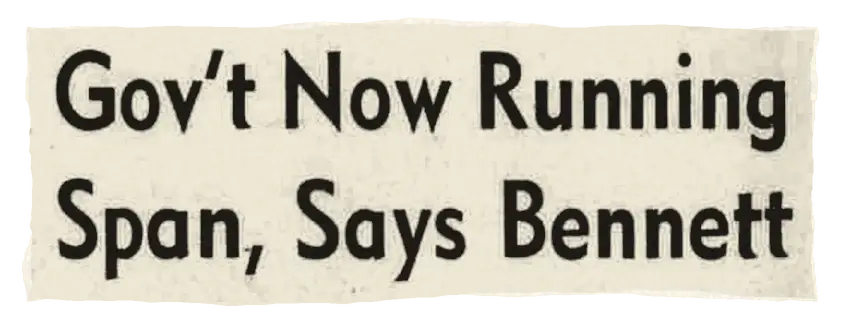
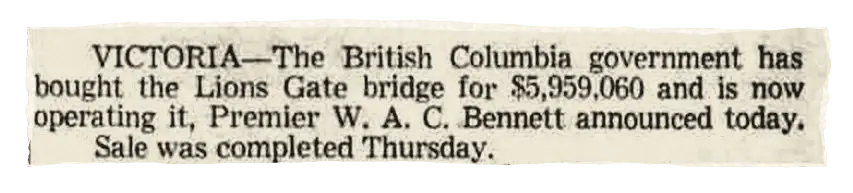
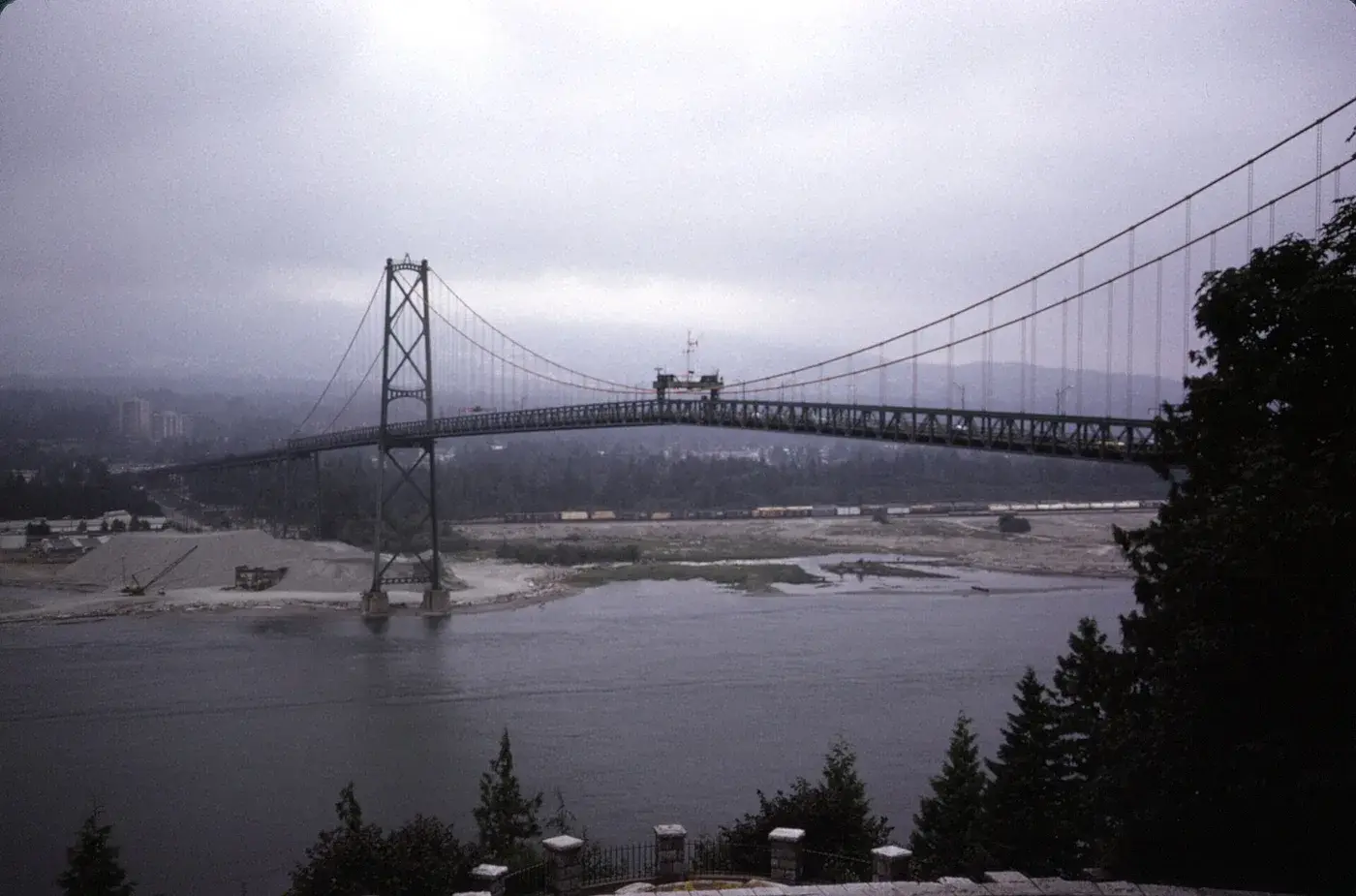
The province buys the bridge company.

price
$5,959,060

On this day the B.C. cabinet announced an order in council, a cabinet decision with the force of law. It let the province’s toll-bridge authority buy the company from its Guinness owners for $5,959,060. Two weeks earlier the Premier had told the company to “get busy” and build a second bridge itself. In the House, an opposition member said the province had been “taken down the river”.

What the Museum makes of it. Some accounts give 1952 or 1954. Newspapers of the week and the provincial files settle it: the province, in January 1955. The figure of $5,873,837 often given for the sale is what the bridge cost to build. The clippings are from the next day’s front page: “Sale was completed Thursday”, the 20th.

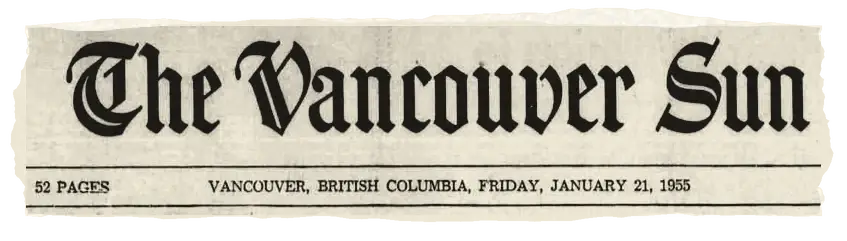
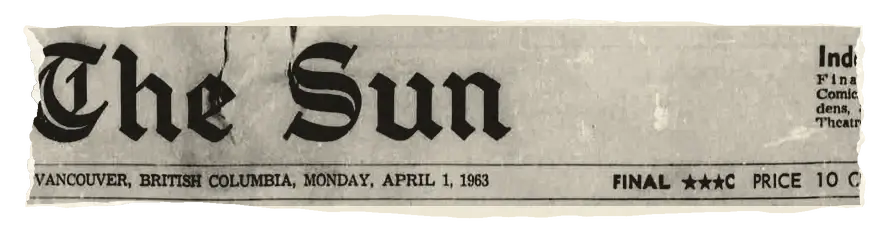
Masthead of The Vancouver Sun, Friday, January 21, 1955.Headline: Gov’t Now Running Span, Says Bennett.The first paragraph: “VICTORIA—The British Columbia government has bought the Lions Gate bridge for $5,959,060 and is now operating it, Premier W. A. C. Bennett announced today. Sale was completed Thursday.”

The Vancouver Sun, 21 January 1955, p.1 · Extract, with credit

Label, source and rights
Object
Newspaper front page, extract
Made by
The Vancouver Sun
Reference
The Vancouver Sun, 21 January 1955, p.1
Rights
Short extract with credit (fair dealing)
Sources
The Vancouver Sun, 5, 20 and 21 January, 10 February 1955; The Province, 12 July 1956, for the price; BC Archives GR-1146; The Canadian Encyclopedia, for the cost of building.
Evidence
Primary
Cite
Lions Gate Bridge Museum, “The province buys the bridge company”, lionsgatebridge.org/museum#1955-01-20
1956–62Show 10 more datesHide these 10 dates

Walkers and car passengers stop paying. Cars still pay 25 cents.

The Province, 12 July 1956.

The Highways Minister says a second First Narrows bridge is not being considered for now.

The Vancouver Sun, 17 August 1956.

A minister says the tolls make North Shore residents subsidize other bridges. The toll authority denies it.

The Vancouver Sun, 9 January 1957, pp.19 and 21. Headline and summary only.

A study sets 1966 as the target for a four-lane suspension bridge. It is never built.

d’Acres & Luxton, Lions Gate, 1999, p.153.

Cartoonist Len Norris mocks the bridge’s congestion in the Sun.

MONOVA, Building a Vancouver Icon.

The bridge nets a $1,370,000 profit, on tolls of $1,709,328.

The Vancouver Sun, 23 January 1959, pp.6 and 17. Headline and summary only.

Premier Bennett offers to give the bridge to Vancouver and West Vancouver if they pay for a new one.

The Vancouver Sun, 1 October 1959, p.2. Headline and summary only.

The First Narrows Bridge Gift Act: if Vancouver, West Vancouver and other municipalities build and open a second crossing beside it, the province’s toll-bridge authority will hand the bridge over to them.

Statutes of British Columbia 1960, chapter 67, First Narrows Bridge Gift Act, assented to 18 March 1960, s.3.

P&O’s 42,000-ton liner Oriana makes her first visit and passes under. A lookout on the bridge signals her captain.

The Vancouver Sun, 3 February 1961, pp.2 and 29. Headline and summary only.

Typhoon Freda blows down about 3,000 trees in Stanley Park.

CBC News, 15 October 2016, “Typhoon Freda slams B.C. coast in 1962”.

“After April 1 you won’t be missed.”

A toll collector wrote to the Sun, signing with two initials, and thanked the “over 99 per cent” of drivers who paid with good nature. The line above was for the rest.

Label, source and rights
Sources
The Vancouver Sun, 27 March 1963, p.4.
Evidence
Primary
Cite
Lions Gate Bridge Museum, ““After April 1 you won’t be missed.””, lionsgatebridge.org/museum#1963-03-27

Five days later

The tolls end, one minute after midnight.

The crossing took about half its usual 25 minutes that morning. Traffic cones funnelled five empty toll stations into two lanes. A few drivers still stopped at the booths out of habit.

Label, source and rights
Object
Newspaper front page, extract
Made by
The Vancouver Sun
Reference
The Vancouver Sun, 1 April 1963, p.1
Rights
Short extract with credit (fair dealing)
Sources
The Vancouver Sun, 1 April 1963, p.1. Full story: How much did it cost to cross the Lions Gate Bridge?
Evidence
Primary
Cite
Lions Gate Bridge Museum, “The tolls end, one minute after midnight”, lionsgatebridge.org/museum#1963-04-01
Masthead of The Sun, Monday, April 1, 1963.Caption: Happy commuters come to work over the Lions Gate Bridge today without making the usual stop at toll gate.

The Vancouver Sun, 1 April 1963, p.1 · Extract, with credit

VI

Wear and repair 1963–99

Traffic grew, the deck wore out, and plans for a new crossing came and went.

1963–74Show 13 more datesHide these 13 dates

Workers start taking down the toll gates. The job will take two weeks.

The Vancouver Sun, 2 April 1963, p.2.

Engineers tell the city that 36,000 vehicles a day now use a bridge designed for 30,000. Museum find

The Vancouver Sun, 25 April 1963, p.29. A consultants’ briefing figure, not a count.

The province’s annual report says the 25-year-old deck is worn, slippery in rain and prone to accidents, and that its concrete is only 3 inches thick. Museum find

BC Department of Highways, Annual Report 1963/64.

Vancouver council orders work on a twin Lions Gate bridge, the Sun’s summary says.

The Vancouver Sun, 9 February 1966, p.2. Headline and summary only.

Premier Bennett proposes a formula for a third crossing: 40 per cent federal, 40 per cent province and city, 20 per cent others.

The Vancouver Sun, 23 March 2019, quoting the 1967 proposal.

A truck hits the underpass on Marine Drive. Its roof is “peeled like a banana”, the Sun says.

The Vancouver Sun, 25 March 1968, p.2. Headline and summary only.

About 50,000 vehicles a day, 18 million a year, cross the bridge.

The Vancouver Sun, 30 January 1969, p.28. Headline and summary only.

Eaton’s builds a 150-foot model of the bridge in its main store and lights it up.

The Vancouver Sun, 13 August 1970. Headline and summary only.

A British royal party arrives by ship from Victoria and passes under.

The Vancouver Sun, 12 May 1971, p.2. Headline and summary only.

The province hires Buckland & Taylor to assess the whole bridge. The north approach’s concrete deck needs more than 1,000 potholes patched each year.

Darryl Matson, The Lions’ Gate Bridge Suspended Span Replacement, 2009; MONOVA, Building a Vancouver Icon.

For a week the bridge closes five hours a day for repairs.

The Vancouver Sun, 31 July 1973. Headline and summary only.

A weight limit of 13,600 kg is set for trucks.

Darryl Matson, The Lions’ Gate Bridge Suspended Span Replacement, 2009.

The old bridge, near the end of its first deck.

This is the bridge as it was built: a narrow road on a stiffening truss. Ten years earlier the province’s own report had called the 25-year-old concrete worn and slippery, and only 3 inches thick.

Label, source and rights
Object
Photograph
Made by
Miranda Kopetzky
Reference
Wikimedia Commons, Lions Gate Bridge from Stanley Park, 1974
Rights
CC BY-SA 4.0
Picture
Miranda Kopetzky. CC BY-SA 4.0. Wikimedia Commons file page.
Sources
BC Department of Highways, Annual Report 1963/64.
Evidence
Primary
Cite
Lions Gate Bridge Museum, “The old bridge, near the end of its first deck”, lionsgatebridge.org/museum#1974-08
Colour photograph from Stanley Park, August 1974: the bridge and its truss across grey water, West Vancouver beyond.
From Stanley Park, August 1974.Miranda Kopetzky · CC BY-SA 4.0 · Wikimedia Commons
1975–82Show 8 more datesHide these 8 dates

The north viaduct gets a new, lighter steel deck, in sections, at night. Its engineers call it a first in North America.

Matson, 2009; Canadian Society for Civil Engineering plaque, 2006.

A family’s account: nine cattle jump from a towed barge under the bridge. Seven are saved, some swimming ashore at Stanley Park and in West Vancouver; two drown.

Vancouver Is Awesome, 22 August 2019, by the owner’s family. No report of the day found yet.

A $20 million modification has grown to a $32 million overhaul, the Sun reports, and will bring night closures.

The Vancouver Sun, 11 May 1977, p.8, and 28 October 1977, p.1. Headline and summary only.

Night closures begin, Sunday to Thursday, 11:30 p.m. to 6 a.m., for about four months.

The Vancouver Sun, 9 August 1978, p.2, and 15 September 1978, p.27. Headline and summary only.

A 1999 book says emergency repairs this year cost about $8 million. The whole bridge cost under $6 million in 1938.

d’Acres & Luxton, Lions Gate, 1999, p.157. Not verified.

Someone proposes a cable car on the bridge to ease North Shore congestion.

The Vancouver Sun, 30 October 1980, p.3. Headline and summary only.

An engineering paper reports the whole viaduct deck replaced, with solid railings chosen because of wind turbulence.

Buckland, ‘The Lions’ Gate Bridge — renovation’, Canadian Journal of Civil Engineering 8(4), December 1981 (abstract).

Engineering Week: students hang a Volkswagen shell under the bridge. Accounts differ on the year.

d’Acres & Luxton, Lions Gate, 1999, pp.158–159; MONOVA.

A crane on a barge hits the bridge in the dark.

At about 7 p.m. on a Friday, at the end of the rush hour, a tug towed the pile-driving barge Green Giant through the First Narrows, from Roberts Bank to a repair yard in the inner harbour. The barge’s crane boom, about 61 metres long, stood almost upright. It hit the upper chord of a side truss on the west side of the bridge, 122 metres south of the middle of the span. The bridge swayed and pushed at least one car into the next lane. Nobody was hurt. The boom broke and fell back onto the barge, “like a house of cards”. At the repair yard a spokesman said he did not want to think what could have happened to the bridge if it had not broken.

Over the weekend a repair crew bolted a strengthening beam to the top of the damaged truss, and the southbound curb lane opened again on Sunday afternoon. Nobody had told the harbour master, Henry Vondette, beforehand, against the harbour rules. The tow was in the eastbound channel, not under the high middle of the span. There was a harbour bylaw for safe shipping, he said, “but you can’t legislate against stupidity.”

What the Museum makes of it. The first report came out on Saturday the 22nd, and it says “Friday”. The papers give the boom’s length as 60, 60.9 and 67 metres. The Museum uses 60.9 metres (200 feet), from The Province of the 26th, the one report with measurements. It also gives the clearance where the boom hit: about 63 metres, and 3 metres more at the middle.

Label, source and rights
Sources
The Vancouver Sun, 22 January 1983, p.3; The Province, 23 January 1983, p.6; The Vancouver Sun, 24 January 1983, p.A12, and 25 January 1983, p.B4; The Province, 26 January 1983, p.C8.
Evidence
Primary
Cite
Lions Gate Bridge Museum, “A crane on a barge hits the bridge in the dark”, lionsgatebridge.org/museum#1983-01-21
1983–85Show 3 more datesHide these 3 dates

Queen Elizabeth II’s party sails through English Bay and under the bridge.

The Vancouver Sun, 8 March 1983. Headline and summary only.

A businessman proposes lighting the bridge with 25,000 bulbs for Vancouver’s centennial.

The Vancouver Sun, 10 August 1984. Headline and summary only.

Fog delays the installation of a new lighting system.

The Vancouver Sun, 3 October 1985, p.5. Headline and summary only.

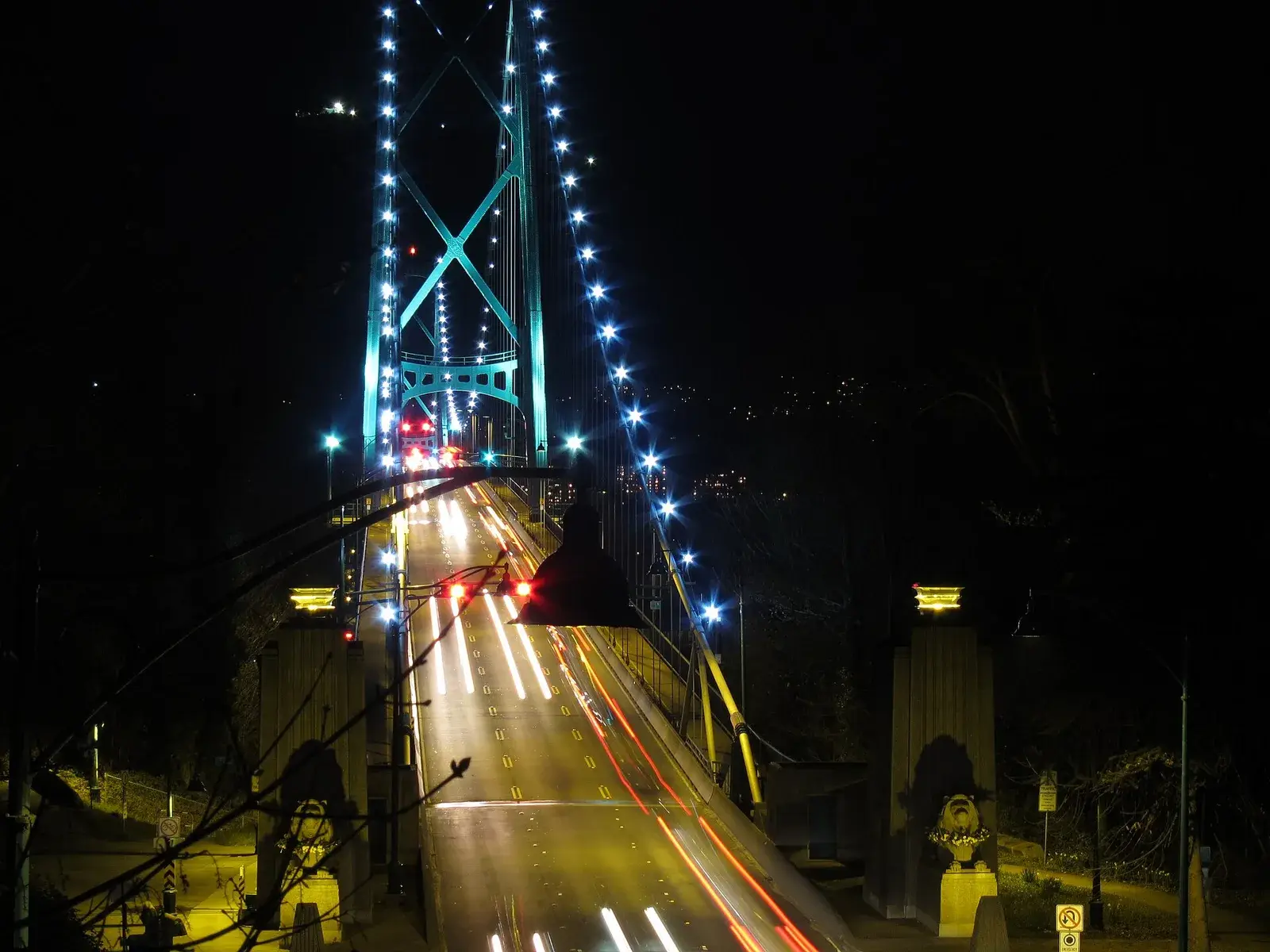
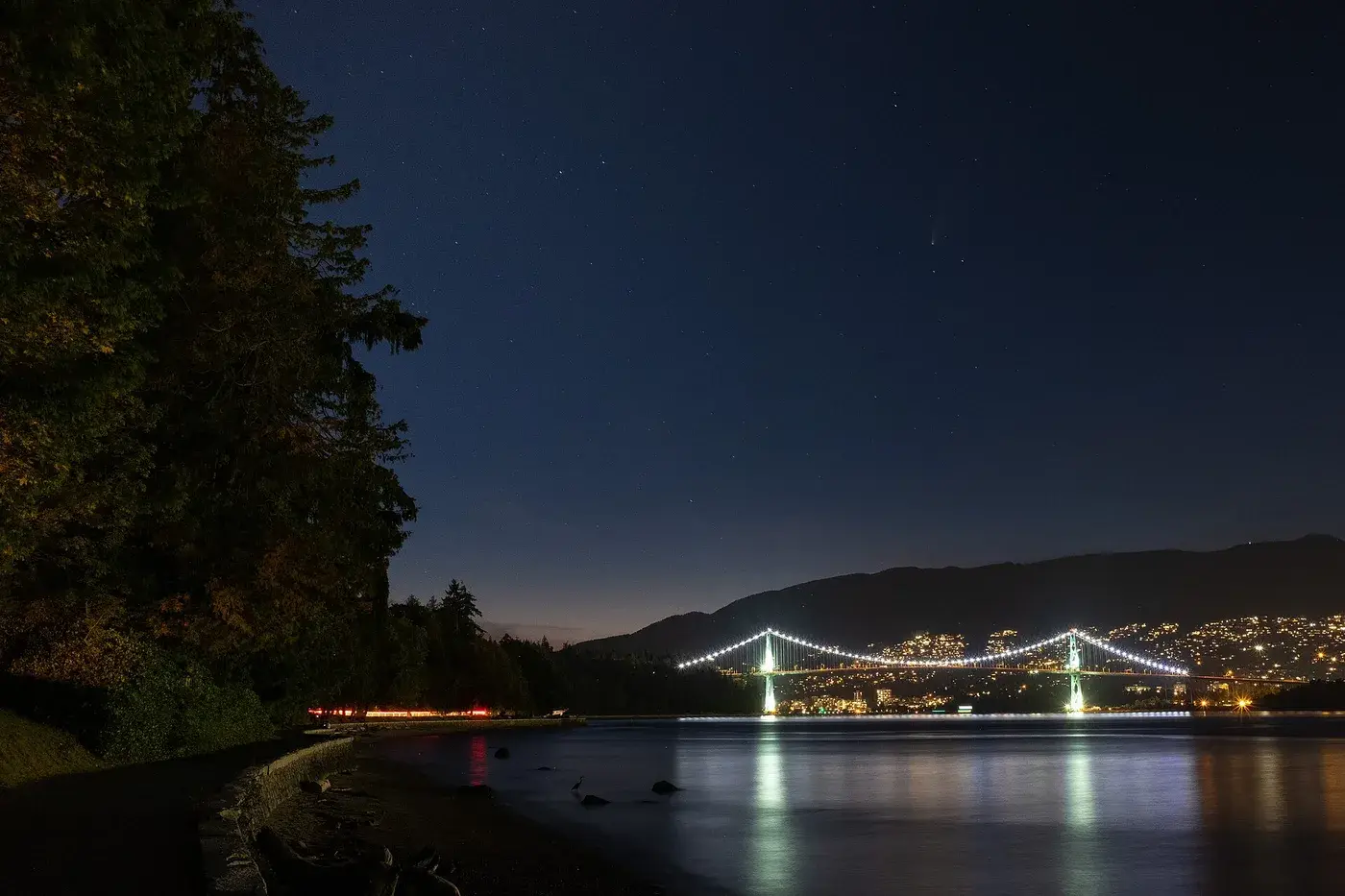
One hundred and seventy lights come on along the cables.

lights
170
watts each
100

At 7:30 p.m. Premier Bill Bennett gave the signal from the ferry Queen of Tsawwassen. The Guinness family paid for them. The firm that strung them, CHE Williams, had installed the bridge’s first lights in 1938. A Sun editorial proposed the name Gracie’s Necklace, for Grace McCarthy. Two months later a letter to West Vancouver council called them a “glaring, cheap bit of tinsel”.

Label, source and rights
Object
Photograph, 2012
Made by
Alexey Golubev
Reference
Wikimedia Commons, Lions Gate Bridge Night
Rights
CC BY-SA 4.0
Picture
Alexey Golubev. CC BY-SA 4.0. Wikimedia Commons file page.
Sources
North Shore News, 21 February and 18 April 1986; The Vancouver Sun, 20 and 24 February 1986; BC government release, 20 July 2009.
Evidence
Primary
Cite
Lions Gate Bridge Museum, “One hundred and seventy lights come on along the cables”, lionsgatebridge.org/museum#1986-02-19
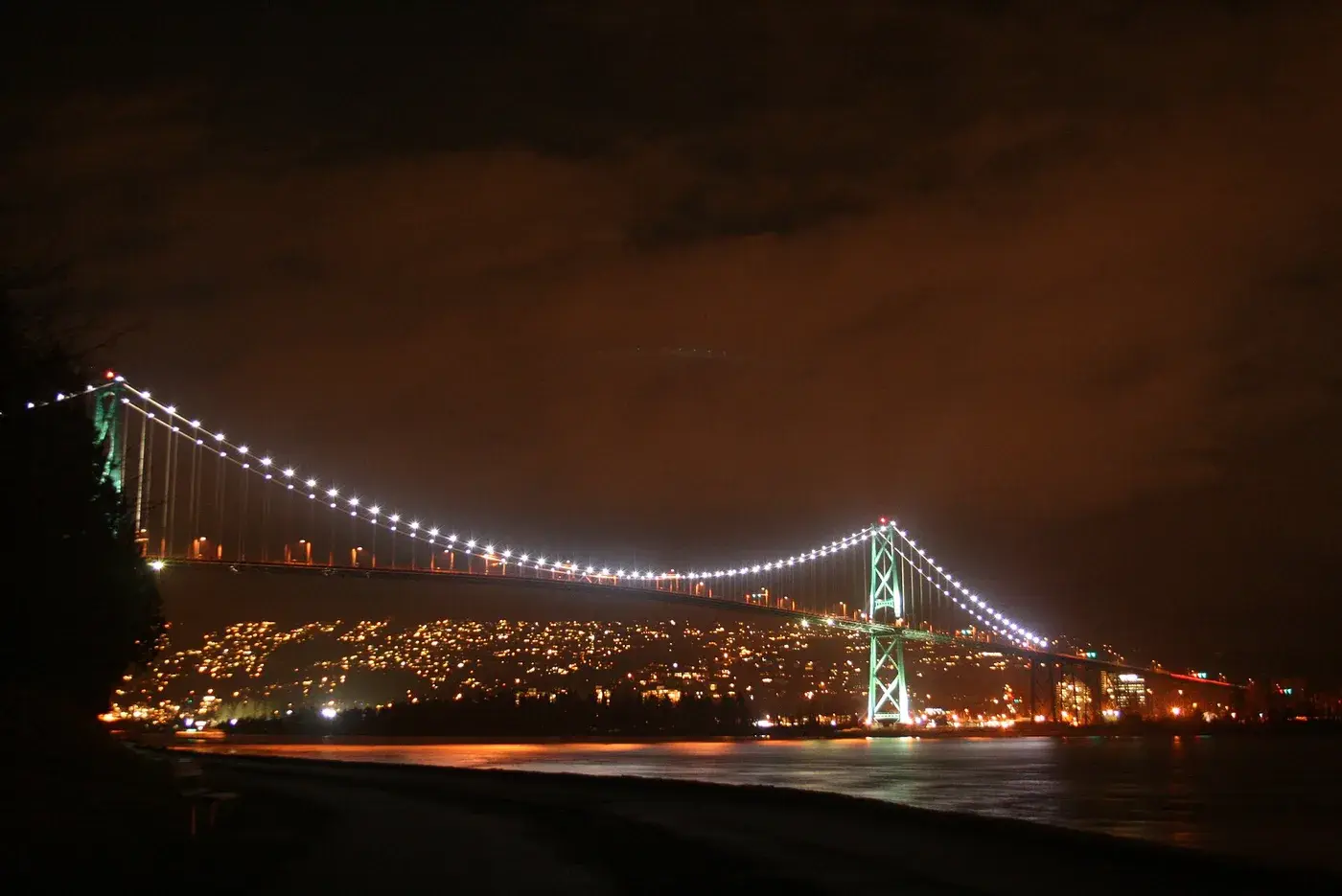
Colour night photograph from the Stanley Park shore: the bridge’s cables traced in points of white light, North Shore lights below.
The same line of lights in 2012, after the change to LED in 2009.Alexey Golubev · CC BY-SA 4.0 · Wikimedia Commons
1987–90Show 3 more datesHide these 3 dates

Two Greenpeace protesters hang in a hammock from the cables for nearly 24 hours.

The Vancouver Sun, 16 July 1987, p.3; The Globe and Mail, 16 July 1987. Headline and summary only.

UBC engineering students are said to have made the lights flash “UBC Engineers Do it Again” in Morse code. One of them told the story to Popular Science in 2008.

Bob Parks, “Extreme Engineering”, Popular Science, August 2008. One account; no report of the time found.

Fallen trees in a snowstorm close the bridge for four hours, said to be the first weather closure since 1975.

The Province, 28 January 1990, pp.1 and 4. Headline and summary only.

Three lanes on the old deck, ten years before it is replaced.

Label, source and rights
Object
Photograph, July 1990
Picture
Giorgio Galeotti. CC BY-SA 4.0. Wikimedia Commons file page.
Sources
Wikimedia Commons, Giorgio Galeotti, “Lions Gate Bridge - Vancouver, British Columbia, Canada - July 1990”.
Cite
Lions Gate Bridge Museum, “Three lanes on the old deck, ten years before it is replaced”, lionsgatebridge.org/museum#1990-07
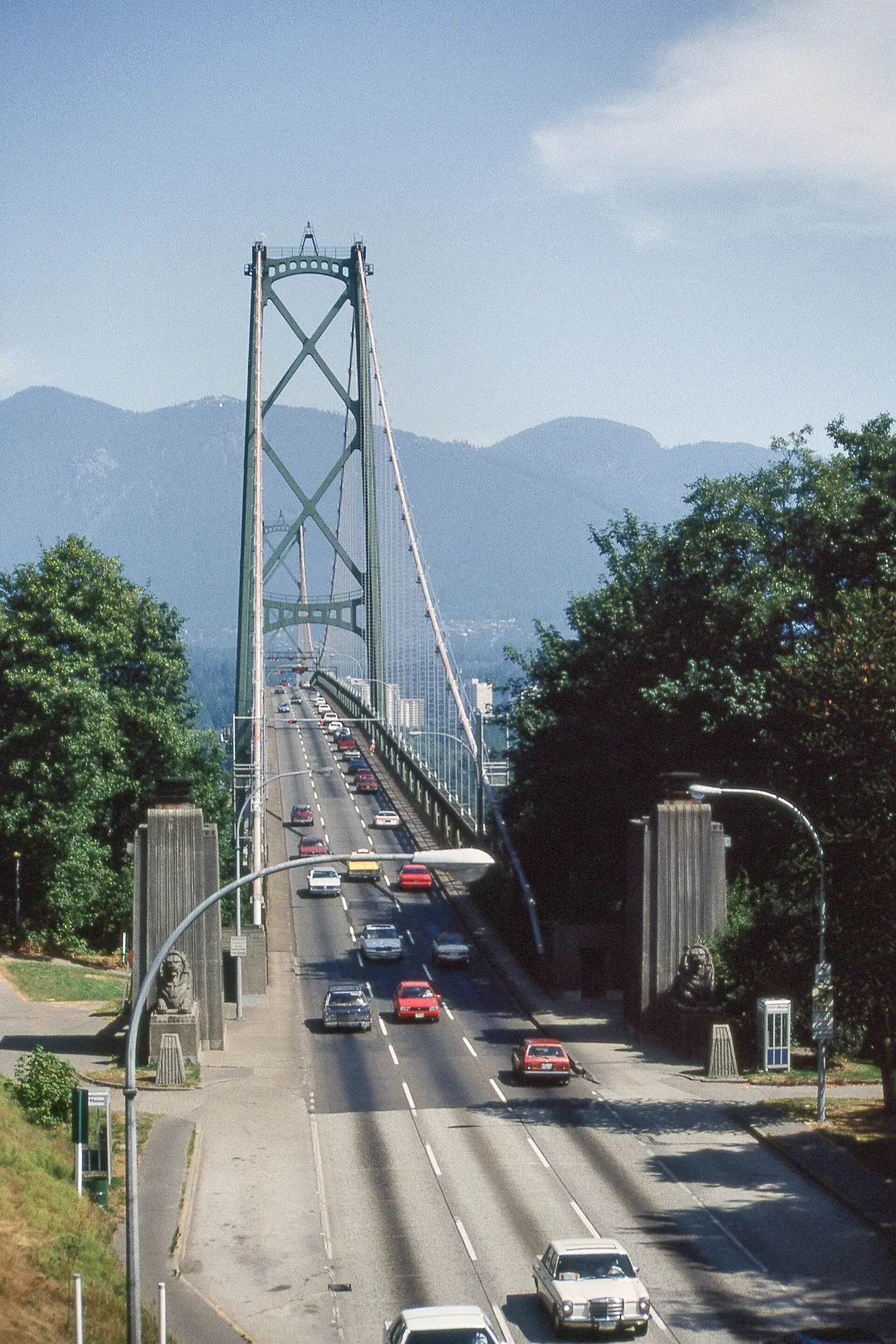
Colour photograph from above the south end of the bridge, July 1990: the concrete lions on their pillars, cars on three lanes, the tower and the North Shore mountains beyond.
From above the south end, with the lions on their pillars, July 1990.Giorgio Galeotti · CC BY-SA 4.0 · Wikimedia Commons
1991–99Show 16 more datesHide these 16 dates

A high-steel painter at work on the bridge makes the Sun’s front page: “A bridge too high”.

The Vancouver Sun, 17 September 1991, p.1. Headline and summary only.

Cyclists ride onto the bridge to campaign for a bike lane.

The Vancouver Sun, 27 June 1992, p.3. Headline and summary only.

An oil spill on the bridge jams 20,000 cars.

The Vancouver Sun, 27 November 1992, p.A1. Headline and summary only.

The province says it will take the aging bridge down, Don Luxton later recalls. Heritage Vancouver fights the plan for five years.

Vancouver Courier, June 2013, quoting Don Luxton.

The province opens public consultation on a Lions Gate crossing: over 1,000 comments, 21 options.

Mike Belyea, SFU MA thesis, 1998; d’Acres & Luxton, Lions Gate, 1999, p.164.

A model of a twin bridge is made. It later turns up in a Burnaby thrift store.

Eve Lazarus, ‘Saving History: Twinning the Lions Gate Bridge’, Vancouver Exposed, 2017.

A structural study says the bridge is safe only until 1999. After that it must be replaced or repaired.

Mike Belyea, The Choice of Alternatives in the Replacement of the Lion’s Gate Bridge, SFU MA thesis, 1998.

Vancouver council weighs more than 20 options for a new crossing.

Vancouver City Council minutes and report RR1, 20 February 1996.

The minister floats a toll of up to $2.

North Shore News, 20 August 1997.

A North Vancouver chamber of commerce survey: 87 per cent of 205 drivers oppose a toll.

The Vancouver Sun, 13 November 1997.

The province settles on rebuilding the bridge, still with three lanes.

d’Acres & Luxton, Lions Gate, 1999.

The contract goes to American Bridge/Surespan for $86.5 million.

Darryl Matson, The Lions’ Gate Bridge Suspended Span Replacement, 2009; MONOVA, Building a Vancouver Icon.

Vancouver’s bicycle committee notes the bridge’s sidewalks are 1 to 1.4 metres wide.

City of Vancouver Bicycle Advisory Committee, Lions Gate Bridge Sidewalk Safety, 2 November 1999.

VII

The new deck 2000–01

The whole suspended structure was replaced in pieces, at night, with traffic back each morning.

A hanger, one of the vertical cables that hold up the deck, breaks at its socket at 3:30 a.m. as crews remove its pin. The bridge stays shut until 6:50.

The Vancouver Sun, 19 October 2000.

The first 236 imported hangers, from India, are rejected: galvanizing scraped, sockets out of line. Completion slips to 2001.

The Province, 8 November 2000.

Forty-four of the 54 deck sections are still to go, and the bridge has closed 20 times.

Label, source and rights
Object
Diagram
Made by
Lions Gate Bridge Museum
Sources
North Shore News, 20 December 2000. The 54 sections and the order of work, from the north end: D. Matson, “The Lions’ Gate Bridge Suspended Span Replacement”, Transportation Association of Canada, 2009.
Cite
Lions Gate Bridge Museum, “Forty-four of the 54 deck sections are still to go, and the bridge has closed 20 times”, lionsgatebridge.org/museum#2000-12-20
54 deck sections, 20 December 2000south endnorth end: the work began here44 still to go10 in20 Dec: 10 in, 20 closures9 Sep 2000first section29 Sep 2001last section54 deck sections, 20 December 2000south endnorth end44 still to go10 in20 Dec: 10 in, 20 closures9 Sep 2000first section29 Sep 2001last section
Each box is one section of the suspended deck, not to scale. The new ones went in from the north end. Diagram by the Museum.

The bridge closes from Friday night to Monday morning. Crews replace the last two old sections over land.

The Province, 23 March 2001.

The last new deck section goes in.

sections replaced
54

The first section was replaced on the night of 9 September 2000. Crews took out the suspended structure in 54 pieces and lifted in new ones, and traffic came back in the morning. The new structure was about 35 per cent wider but no heavier, so the towers, cables and anchorages took no extra load from it. Its engineers believe this was a world first. Canada’s register of historic places calls it the first time that the deck, hangers and stiffening trusses of a suspension bridge were replaced together without closing the bridge to traffic.

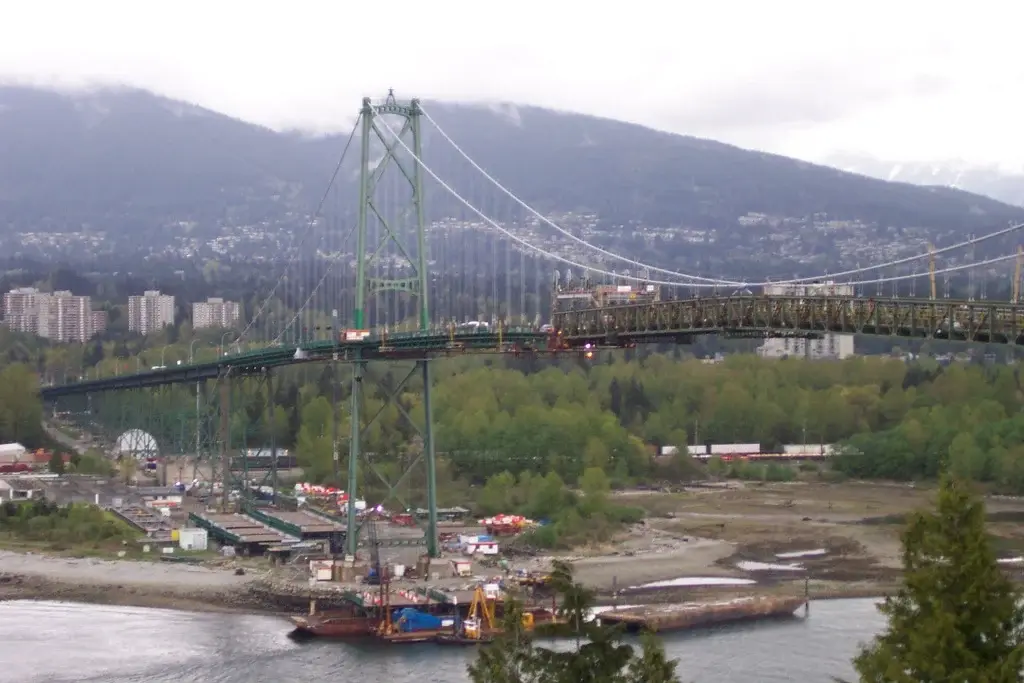
Colour photograph from Stanley Park, April 2001: the bridge with a stretch of new deck, work barges at the north shore below.
Progress in April 2001.Anthonymaw · CC BY-SA 3.0 · Wikimedia Commons
Label, source and rights
Object
Photograph, 22 April 2001
Sources
Buckland & Matson, Proc. ICE Bridge Engineering, 2003; Canadian Register of Historic Places.
Evidence
Engineers’ own claim, accepted by the register
Cite
Lions Gate Bridge Museum, “The last new deck section goes in”, lionsgatebridge.org/museum#2001-09-29

VIII

Today 2002–now

A national historic site, and a working road.

The last layer of paving goes down. It had to wait for warm weather.

Darryl Matson, The Lions’ Gate Bridge Suspended Span Replacement, 2009.

The Globe and Mail calls the rebuilt bridge a “modern miracle”.

Jane Armstrong, ‘Bridge retrofit a modern miracle’, The Globe and Mail, 7 January 2002.

The Historic Sites and Monuments Board of Canada confirms the bridge’s national historic significance.

Parks Canada, Canadian Register of Historic Places, Lions Gate Bridge.

A provincial regulation uses the bridge’s official name: First Narrows Bridge.

Provincial Public Undertakings Regulation, B.C. Reg. 513/2004.

Canada lists it as a National Historic Site.

The national register gives 10 December 2004 as the date of recognition. Ottawa announced it on 24 March 2005, citing the bridge’s “elegant design”.

What the Museum makes of it. The government’s release is dated 24 March 2004, but it quotes Stéphane Dion as Minister of the Environment, a post he took in July 2004, and the government’s archive files it under March 2005. The Museum takes 2005.

Label, source and rights
Sources
Canadian Register of Historic Places, no. 11711; Government of Canada, news release, “Government of Canada announces the designation of new national historic sites”, 24 March 2005 (dated 2004 on the release).
Evidence
Primary
Cite
Lions Gate Bridge Museum, “Canada lists it as a National Historic Site”, lionsgatebridge.org/museum#2004-12-10

Philip L. Pratley, an engineer of the bridge, is named a National Historic Person.

Parks Canada, Directory of Federal Heritage Designations, “Pratley, Philip Louis”, designated 3 August 2005.

Engineers unveil a plaque: National Historic Civil Engineering Site.

Canadian Society for Civil Engineering plaque record, 2006.

A storm fells about 10,000 trees in Stanley Park. At least 20 fall on the causeway, and police close the bridge.

North Shore News, 17 December 2006.

A two-year, $800,000 traffic study draws a North Shore News headline: “Study states the obvious at great expense”.

North Shore News, 30 March 2007. Headline and summary only.

The Sun interviews the man it calls the last living member of the 1938 construction crew.

The Vancouver Sun, 17 September 2007, p.11. Headline and summary only.

Another Volkswagen Beetle is lowered off the bridge, credited to UBC engineering students.

The Province, 5 February 2008, p.A10, “Gun prank flops as car drop scores”; The Vancouver Sun, 5 February 2008, p.A14.

The cable lights change to LED, expected to use about 90 per cent less power.

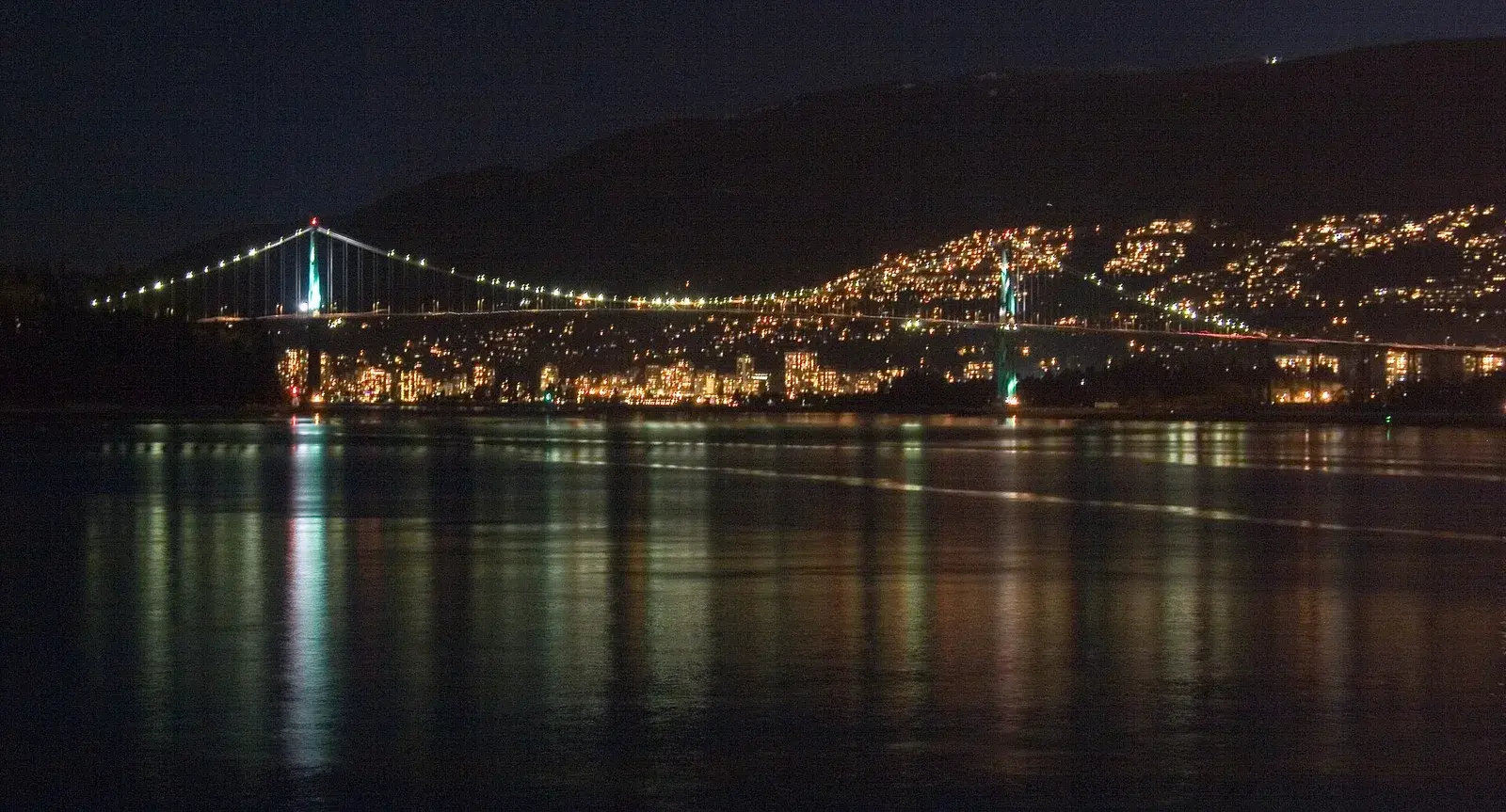
Colour night photograph from across the water: a line of lights along the bridge’s cables, the lit North Shore behind, reflections on the water.
17 February 2008.KimonBerlin · CC BY-SA 2.0 · Wikimedia Commons
Colour night photograph from the south end, looking north along the deck: lights along the cables and up the tower, the lion pillars on either side, trails of traffic.
20 March 2010.GoToVan · CC BY 2.0 · Wikimedia Commons
Label, source and rights
Object
Two photographs, 2008 and 2010
Pictures
KimonBerlin, 17 February 2008. CC BY-SA 2.0. Wikimedia Commons file page.GoToVan, 20 March 2010. CC BY 2.0. Wikimedia Commons file page.
Sources
BC government news release, 20 July 2009.
Cite
Lions Gate Bridge Museum, “The cable lights change to LED, expected to use about 90 per cent less power”, lionsgatebridge.org/museum#2009-07-20

A $40 million project replaces the old “Blue” bridge over the Capilano River. The new bridge has three lanes, and one southbound lane continues onto the Lions Gate Bridge.

North Shore News, 19 August 2009.

Final Destination 5 films on the bridge at night, with replica sections built at Lions Bay.

Hollywood North Buzz and Art of VFX, 2011.

During the Olympics about 27,000 vehicles a day cross in each direction, 12 per cent below normal.

Kurji & Miska, BC Ministry of Transportation paper, Transportation Association of Canada, 2011.

The lights go dark for Earth Hour.

North Shore News, 25 March 2011. Headline and summary only.

The Sun reports that the bridge’s height could limit cruise-ship growth.

Label, source and rights
Object
Photograph, 10 June 2011
Sources
The Vancouver Sun, 24 April 2012, p.C1. Headline and summary only.
Cite
Lions Gate Bridge Museum, “The Sun reports that the bridge’s height could limit cruise-ship growth”, lionsgatebridge.org/museum#2012-04-24
Colour photograph from high above the harbour: a white cruise ship on the water near the bridge, the trees of Stanley Park between, a fuel barge in the foreground.
Radiance of the Seas sails out towards the First Narrows, 10 June 2011.Roy Luck · CC BY 2.0 · Wikimedia Commons

A “Places That Matter” plaque is unveiled, with a Guinness family member present.

Vancouver Heritage Foundation, Places That Matter: Lions Gate Bridge, 17 July 2013.

An old plan to bar private cars by 2030 resurfaces. The minister says no closure is planned.

Global News, North Shore News, Daily Hive and Georgia Straight, March 2015.

A metal bump 1.75 inches high across all three lanes causes long delays.

Global News, 21 August 2015.

Expansion joints and bearings are replaced in a $4.2 million job. The province lists the bridge among five lifeline bridges brought up to seismic standards.

The Province, 10 June 2016; BC Government news release, 2016.

The Canada 150 dollar coin includes the bridge in its design.

CBC News, 2 November 2016, “St. Catharines man’s design chosen for Canada 150 loonie”.

The province announces ship-collision protection for the south tower.

Label, source and rights
Object
Photograph, 20 May 2018
Sources
BC Government news release 2018TRAN0040-000530; ReNew Canada, 2018.
Cite
Lions Gate Bridge Museum, “The province announces ship-collision protection for the south tower”, lionsgatebridge.org/museum#2018
Colour photograph: a ship stacked with containers passes close to a green tower of the bridge, the deck and cables above.
The container ship Ever Summit at the First Narrows, 20 May 2018.Darren Kirby · CC BY-SA 2.0 · Wikimedia Commons

A pod of killer whales is filmed near the bridge.

CTV News, 16 April 2019.

The ministry explains how the middle lane works: staff watch more than 40 cameras and switch it by hand.

TranBC (BC Ministry of Transportation blog), 29 August 2019.

A precision sector light is installed under the bridge to guide ships through the First Narrows.

Sabik, video “Precision Sector Light PEL-4 installed on the iconic Lions Gate Bridge”, 26 November 2020. Sabik’s web page of 25 October 2024 dates the work to October 2024; the Museum follows the earlier video.

Two 82-metre container cranes from Shanghai pass under the bridge at low tide, their booms lowered.

CTV News, 29 November 2020; GCT Global Container Terminals, news release, 27 November 2020.

Police stop an attempt to block the bridge and arrest seven people.

The Province, 4 May 2021.

The province announces a $4.7 million upgrade of the middle-lane signals.

Label, source and rights
Object
Photograph, 23 February 2017
Sources
BC Gov News, 25 May 2021.
Cite
Lions Gate Bridge Museum, “The province announces a $4.7 million upgrade of the middle-lane signals”, lionsgatebridge.org/museum#2021-05-25
Colour photograph from a car crossing north: traffic in both directions, a row of red and green signals across the road, the green tower and snowy mountains ahead.
Crossing north under the lane signals, 23 February 2017, before the upgrade.formulanone · CC BY-SA 2.0 · Wikimedia Commons

The bulk carrier Marvel I breaks down just after passing under and lightly grounds near Ambleside.

Global News and New Westminster Record, March 2022.

Three full closures switch over the electrical systems.

BC Government news release 2022TRAN0035-000638; BC Ministry of Transportation.

Thousands of protesters form a human wall along the bridge and causeway, against Iran’s government.

The Vancouver Sun, 30 October 2022.

A sheet of metal catches on a signal gantry and closes the bridge for about an hour.

North Shore News, 26 September 2023.

The bridge and the Stanley Park causeway close from 7:30 to 11 a.m. for scheduled tree removal.

The Vancouver Sun, online, 2 February 2024, “Traffic alert: Lions Gate bridge, Stanley Park causeway to see partial, full closures this weekend”, a notice before the closure.

The day a ship brings down the Baltimore bridge, the province says the risk here is very small.

Global News, 26 March 2024.

A new port rule: some outbound ships must take a tethered tug through the First Narrows.

Vancouver Fraser Port Authority notice, 2025.

The Ironworkers Memorial Bridge closes overnight, and officials send drivers to the Lions Gate.

BC Government news release 2026TT0028-000236.

Still three lanes.

vehicles a day, 2025 average
56,582

The middle one still changes direction. The province’s counter at the south end recorded an average of 56,582 vehicles a day in 2025.

Label, source and rights
Sources
BC Ministry of Transportation and Transit, TRADAS traffic counts.
Evidence
Primary
Cite
Lions Gate Bridge Museum, “Still three lanes”, lionsgatebridge.org/museum#2026-11-12

Now

The next crossing

How it connects

Five lines through the same history. Each step is a date on the axis above.

Three threads

Two more are people, under People: A.J.T. Taylor and the Guinness family.

The 200 feet of clearance

1927–now

Ottawa refused the first design for lack of clearance. The deck moves with the weather, so a ship’s clearance is a calculation. The largest ships still wait for low tide.

10 August 192724 April 193017 July 19342 August 19346 September 19342 May 193814 November 1938December 193910 February 19472 February 196121 January 198324 April 20122018November 202026 March 202418 February 202527 September 2026

Library and Archives Canada; The Vancouver Sun, 14 November 1938; Vancouver Fraser Port Authority, 2024.

People and institutions on this page

Black-and-white portrait photograph of A.J.T. Taylor, from the company’s booklet of 1939.

A.J.T. Taylor

1887–1945

Engineer and promoter, born in Victoria. He went to England in 1926 to find money for the bridge and spent over a decade on it. He died in New York.

9 dates
  1. 1926
  2. 1928
  3. About 1933–35
  4. August 1935
  5. 4 November 1938
  6. 23 January 1939
  7. 26 May 1939
  8. 1940
  9. 20 July 1945

Encyclopedia of British Columbia; d’Acres & Luxton, Lions Gate, 1999; North Shore Heritage Preservation Society, 2024.

Picture: From the company’s booklet, 1939. Langara College Library · Public Domain Mark 1.0 · Internet Archive

Black-and-white photograph of Walter Guinness in army uniform, about 1920.

The Guinness family

in this story from 1931

Three brothers, Rupert, Arthur Ernest and Walter Guinness, led the British investors behind British Pacific Properties and the bridge company. The family sold the bridge company in 1955 and paid for its lights in 1986.

8 dates
  1. 1926
  2. 1928
  3. 18 November 1931
  4. About 1935
  5. 22 March 1939
  6. 20 January 1955
  7. 19 February 1986
  8. 17 July 2013

North Shore Heritage Preservation Society, 2024; The Vancouver Sun, 1955 and 1986.

Picture: Walter Guinness, about 1920. Bain News Service, Library of Congress · Public domain · Wikimedia Commons

Black-and-white photograph, May 1934: West Vancouver council members and others at a long table, signing the bridge agreement.

West Vancouver

the municipality

It sold the hillside, signed the bridge agreement and put a model of the bridge on a parade float. The bridge lands at its door.

9 dates
  1. 1 April 1931
  2. 18 November 1931
  3. 12 May 1934
  4. July 1936
  5. 12 August 1936
  6. 4 February 1939
  7. 11 December 1939
  8. 1947
  9. 1 October 1959

d’Acres & Luxton, Lions Gate, 1999; A.J.T. Taylor films, City of Vancouver Archives.

Picture: West Vancouver council signs the bridge agreement, May 1934. Leonard Frank, West Vancouver Archives · CC BY 2.0 · Wikimedia Commons

Province of British Columbia

owner since 1955

It bought the bridge in 1955, ended the tolls in 1963, and replaced the deck in 2000–01. It still runs the bridge.

36 dates
  1. March 1927
  2. 1 April 1931
  3. 4 January 1955
  4. 14 January 1955
  5. 18 January 1955
  6. 20 January 1955
  7. 1 August 1956
  8. 17 August 1956
  9. 9 January 1957
  10. 1 October 1959
  11. 1960
  12. 1 April 1963
  13. 1964
  14. 1965
  15. 1967
  16. 1972
  17. 1975
  18. 19 February 1986
  19. 1993
  20. July 1993
  21. 18 April 1997
  22. 14 August 1997
  23. 1998
  24. 9 September 2000
  25. 29 September 2001
  26. December 2001
  27. 2004
  28. 20 July 2009
  29. March 2015
  30. June 2016
  31. 2018
  32. 25 May 2021
  33. 29 April 2022
  34. 26 March 2024
  35. 8 March 2026
  36. 12 November 2026

The Vancouver Sun, 20 January 1955; The Vancouver Sun, 1 April 1963; Buckland & Matson, 2003.

More of the Museum

For researchers and machines: timeline.json · timeline.md · one entry at /museum/entries/<id>.json. Reading, indexing, summarising and linking are welcome. Each exhibit gives its own rights.